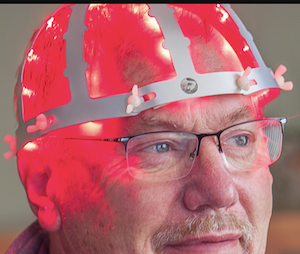
Red light therapy (RLT), also known as photobiomodulation, is an innovative treatment that uses low-wavelength red and near-infrared light to stimulate cellular function. This non-invasive technique involves exposing the body to light emitted by LED devices or lasers, which penetrate the skin and are absorbed by the mitochondria—the energy powerhouses of cells.
This process boosts ATP production, enhancing cell repair, reducing inflammation, and promoting healing.
RLT has shown promising applications across various health domains. It’s widely explored for skin rejuvenation, helping to reduce wrinkles, scars, and acne by encouraging collagen production. More intriguingly, recent research, including work by experts like Dr. Michael Hamblin, suggests RLT could be a groundbreaking avenue for addressing brain-related conditions.
Preliminary studies indicate potential benefits for Alzheimer’s disease, with some patients regaining speech after months of silence, and Parkinson’s, where improvements in movement and speech have been observed. Additionally, RLT is being investigated for autoimmune diseases, depression, and even addiction, thanks to its ability to modulate immune responses and enhance neurotransmitter activity.
While still considered investigational, RLT’s potential to offer non-pharmacological relief for these debilitating conditions makes it an exciting frontier in medical science, warranting further exploration and optimism.
This is Dr. Michael Hamblin, the world's leading expert on photobiomodulation.
— Amy Morgan, RN (@thedetoxqueen) July 31, 2025
He proved that red light therapy can reverse Alziemer's and autoimmune diseases.
After 27 years of research, here's what he exposed that could cripple the $5 trillion healthcare industry: pic.twitter.com/bNU6mEgMqf