Background
Sudan’s Christian minority, about 5% of the population, has endured systemic persecution since the 1980s, when President Omar al-Bashir imposed Sharia law, declaring Islam the state religion and Arabic the official language. This followed decades of civil war between the Islamist north and the Christian-animist south, claiming over two million lives. Apostasy laws punished conversion from Islam with death, leading to forced Islamization, church demolitions, and bombings of Christian villages, hospitals, and schools. The 2011 secession of predominantly Christian South Sudan left northern Christians isolated and vulnerable. Al-Bashir’s ouster in 2019 brought brief hope, but a 2021 military coup reinstated Islamists. The April 2023 civil war between the Sudanese Armed Forces (SAF) and Rapid Support Forces (RSF)—both tied to Bashir’s regime—has intensified attacks, with over 165 churches closed or destroyed and Christians targeted as infidels by Islamist extremists exploiting the chaos.
Atrocities
Sudanese Christians face genocidal violence from RSF militias, descendants of the Janjaweed responsible for the 2003 Darfur genocide, and SAF forces, both harboring Islamist elements. The RSF has looted Christian properties, desecrated graves, forced clergy evacuations, and converted churches into military bases, as seen in the May 2023 assault on Khartoum’s Anglican Cathedral. SAF airstrikes have bombed shelters like Omdurman’s Evangelical Church, killing civilians. Converts from Islam endure family shunning, imprisonment, and executions, while all Christians risk abduction and murder amid the war’s anarchy.
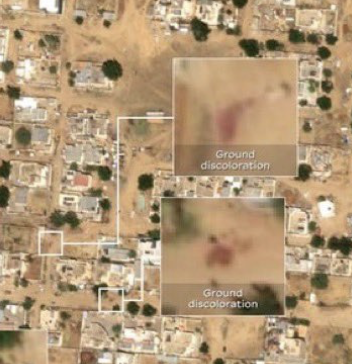
The RSF’s October 2025 capture of El Fasher after an 18-month siege exemplifies this horror. Over 2,000 civilians died in the first 48 hours from executions, hospital assaults, and ethnic targeting of Fur and other non-Arab groups, many Christian. The assault on Saudi Maternity Hospital killed 460 patients, staff, and companions—shot dead in beds or corridors—prompting UN condemnation for war crimes and humanitarian law breaches. Satellite imagery reveals body clusters and bloodstains from house-to-house clearances, evoking Rwanda’s genocide.
🚨HUMAN SECURITY EMERGENCY🚨
— Humanitarian Research Lab (HRL) at YSPH (@HRL_YaleSPH) October 27, 2025
El-Fasher has fallen to RSF. HRL finds evidence of mass killings including door-to-door clearance operations and objects consistent with reported bodies on berm entrapping El-Fasher.#KeepEyesOnSudan
🛰️@AirbusSpace @Maxarhttps://t.co/1HApllgNL5 pic.twitter.com/yrCbM5HxeP
In White Nile state, RSF massacred 433, including infants, in village raids. June 2025 airstrikes on El Fasher’s Episcopal, Inland, and Catholic churches killed five, including priest Father Luka Jumu, injuring dozens sheltering there. RSF fighters force Christian women into marriages and conversions for aid, while SAF recaptures, like Wad Madani in January 2025, saw beheadings of 13-29 South Sudanese Christians.This civil war has claimed 150,000 lives, displaced 12 million, and fueled famine and disease in Darfur. UAE-supplied weapons and drones bolster RSF advances, enabling ethnic cleansing. Christians, viewed as enemies by both sides, scavenge animal feed for survival, their resilience a faint light in unrelenting darkness.
Lack of Commentary
The pro-Palestine and BLM-aligned leftist groups, vocal on Gaza and systemic racism, maintain an utter silence on Sudan’s Christian massacres, exposing selective outrage. While campus protests and global strikes demand justice for Palestinians, Sudan’s 150,000 deaths and 12 million displaced—many Black African Christians—elicit no hashtags, marches, or boycotts.
Heartbreaking footage shows a Christian mother in Sudan being terrorized by extremists before she and her children were murdered.
— David J Harris Jr (@DavidJHarrisJr) October 30, 2025
Evil is real. Pray for Sudan. 🙏🏽 pic.twitter.com/Li3Bn7xGTM
This hypocrisy stems from Sudan’s intra-Muslim conflict lacking anti-Western leverage; it can’t fuel narratives against Israel or U.S. imperialism. Arab media fixates on Palestine, normalizing African suffering, while Western leftists overlook non-Arab victims to avoid “Islamophobia” accusations. Social media threads lament this disparity: “Muslims killing Muslims doesn’t provide leverage.” The result? Forgotten genocides, as RSF atrocities echo Darfur’s horrors without a whisper from those who champion equity.