
Using plastics in road construction offers a sustainable way to repurpose waste while enhancing pavement performance. Two prominent approaches dominate: polymer-modified bitumen, where shredded waste plastics are blended with asphalt to create a stronger binding mix, and geocell systems, which use high-density polyethylene (HDPE) honeycomb structures for soil stabilization and base reinforcement.
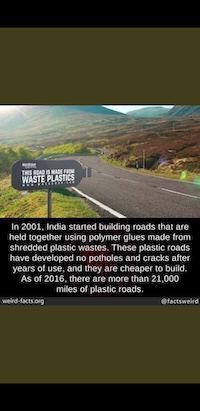
India has pioneered polymer-modified roads since the early 2000s, led by Professor Rajagopalan Vasudevan’s “polymer glue” technique. Waste plastics—primarily carry bags, packaging, and low-value films—are shredded, heated to 160-170°C, and coated onto aggregates or directly mixed with hot bitumen (typically 6-10% plastic by weight). This replaces part of the petroleum-based bitumen and creates a flexible, oily coating. Companies like KK Plastic Waste Management patented specialized poly-blends, enabling large-scale adoption. By 2025, India has laid over 100,000 km of such roads across 11+ states, including national highways. The process consumes millions of tons of plastic waste annually (e.g., 1 ton per km, equivalent to 1 million carry bags), diverting it from landfills and oceans.
China excels in geocell technology for road bases, especially in soft soils, deserts, and high-load areas. HDPE strips are ultrasonically welded into expandable honeycomb panels (geocells), filled with gravel, sand, or local infill. This confines material laterally, distributing loads and preventing rutting or settlement. Chinese manufacturers dominate global supply, using virgin or recycled HDPE for cells 50-200 mm deep. Geocells reduce base thickness by 50-80%, enable use of marginal soils, and provide 75+ year design life under heavy traffic.
How the Chinese are building their roads with Geocells so it never cracks. pic.twitter.com/WW5ZLOhFnd
— Arcfunmi (@Arcfunmi) November 11, 2025
Durability findings are compelling. Polymer-modified roads resist cracking, rutting, and water damage better than conventional asphalt; Indian studies show no potholes or stripping after 4-15 years, with lifespan 2-3 times longer. They withstand extreme temperatures and monsoon flooding without leaching. Geocells boost bearing capacity 5-7x, minimizing settlement in weak subgrades; accelerated load tests confirm superior stiffness and fatigue resistance versus unreinforced bases.
Cost comparisons favor plastics over the lifecycle. For India’s polymer roads, initial costs match or rise 5-10% from processing, but savings come from using 6-10% less bitumen — approximately $700-$1,120 per km (based on saving ~1 ton of bitumen at current prices). Lower maintenance and longer life make them 20-50% cheaper over 20 years. Geocells cut material needs by 50-80%, reducing aggregate and excavation; projects achieve 30-80% total savings, especially on poor soils.
Recycling benefits are dual: both methods consume hard-to-recycle plastics (e.g., mixed films), creating high-value sinks. Polymer roads use post-consumer waste directly; end-of-life milling allows full reuse. Geocells incorporate recycled HDPE and enable on-site material reuse.
However, a key drawback is the potential release of microplastics from surface abrasion over decades.
Overall, plastic-enhanced roads demonstrate proven engineering gains and circular-economy potential, with India and China leading scalable models for global adoption.