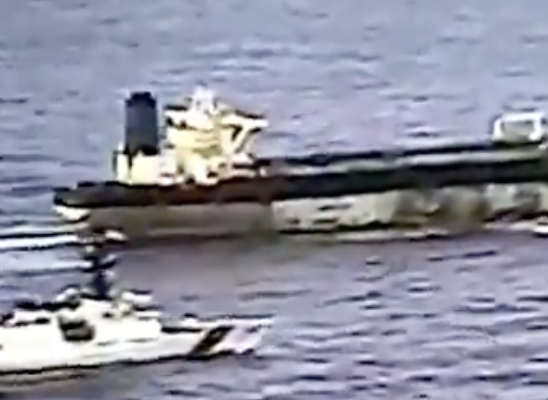
In a decisive push that’s stirring global headlines, President Donald Trump is targeting Venezuelan oil tankers to recover billions owed to American companies. Far from an act of piracy, this is legitimate enforcement of court rulings against a regime that seized U.S. assets and refused to pay up. The Trump administration’s actions are rooted in international law, protecting American interests after years of Venezuelan defiance.
Trump Isn’t “Pirating Ships” — He Must Seize and Sell 300 Venezuelan Oil Tankers to Satisfy an International Court Judgment Owed to U.S. Companies
— Michelle Maxwell ™ (@MichelleMaxwell) January 7, 2026
A lot of people are reacting emotionally to the idea of oil tankers being seized, but most of the outrage comes from not…
The trouble started in the 2000s under Hugo Chávez, who nationalized foreign oil operations, breaking contracts and grabbing assets without compensation. Major U.S. players like ExxonMobil and ConocoPhillips were hit hard. These firms didn’t back down – they pursued justice through international arbitration and U.S. courts, securing binding judgments worth tens of billions.
Venezuela, under Nicolás Maduro, has ignored these rulings entirely. That’s where judgment enforcement comes in: a standard legal process allowing creditors to seize a debtor’s commercial assets, like bank accounts or shipments, to settle debts. Sovereign nations aren’t exempt, and Venezuela’s oil tankers – carrying state-owned crude – qualify as commercial property, not protected military or diplomatic items.
Let’s look at the figures. Unpaid awards total around $35 billion. With oil at about $62 per barrel, a typical large tanker holds 2 million barrels, valued at roughly $124 million gross, or $115 million after a court sale. Simple math shows it would take about 300 such tankers to cover the debt – explaining why isolated seizures won’t suffice.
Ignore the hyperbole and hysterics over at CNN. Here is the real story:
— Barry Jacobsen (@Barry4the44th) December 30, 2025
Trump Isn’t “Pirating Ships” — He Must Seize and Sell 300 Venezuelan Oil Tankers to Satisfy an International Court Judgment Owed to U.S. Companies
A lot of people are reacting emotionally to the idea of oil… pic.twitter.com/fw56M6pwzP
Specific losses underline the case. ConocoPhillips suffered when Venezuela expropriated its Hamaca and Petrozuata projects, winning an $8.7 billion award that has grown beyond $10 billion with interest. ExxonMobil lost its Cerro Negro venture, securing $1.6 billion initially, with further claims pushing their tally over $2 billion. Chevron and other U.S. firms add to the pile, all backed by enforceable court decisions.
Critics label it aggression or punishment, but the Trump team insists it’s not – no random raids or military moves, just precise, court-authorized actions in cooperative jurisdictions. Venezuela evades by using intermediaries and avoiding key ports, making enforcement strategic and infrequent.
In essence, this is the rule of law at work: Venezuela took what wasn’t theirs, lost fairly in court, and stiffed the bill. Trump’s seizures are a rightful response, safeguarding U.S. businesses and deterring future rogue actions.