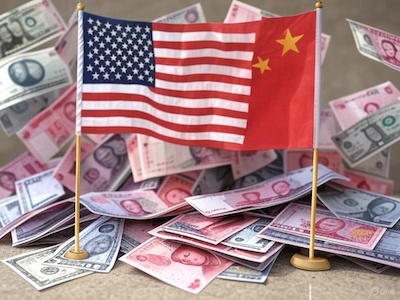
The Legacy of China’s Unpaid Sovereign Bonds
The Qing Dynasty and Republic of China issued billions in sovereign bonds to foreign investors, including Americans, to finance wars, infrastructure, and operations. These gold-backed instruments, like the 1911 Hukuang Railways loan, were secured by taxes and customs. The Republic honored many until 1939, but chaos from civil war and invasion disrupted payments.
The People’s Republic’s Default
In 1949, the People’s Republic of China (PRC) emerged victorious, inheriting these obligations under international succession laws. Yet, the Chinese Communist Party (CCP) swiftly repudiated them, labeling them “odious” imperialist burdens. By the 1950s, the PRC formally denied liability to the U.S. and others, leading to defaults as bonds matured unpaid around 1960. While settling with Britain in 1987 for market access, the PRC has ignored American holders, whose claims, with interest, could exceed $1 trillion.
Legal Battles and Sovereign Immunity
U.S. bondholders have pursued lawsuits, but sovereign immunity under the Foreign Sovereign Immunities Act has thwarted them. Cases like Jackson v. PRC in the 1980s and recent Noble Capital suits were dismissed on jurisdictional grounds or statutes of limitations. These bonds now trade as collectibles, not enforceable debts, despite occasional legislative pushes to link repayment to PRC’s U.S. market access.
Reciprocal Debt Logic – Why honor our payments?
If the CCP insists these historical debts don’t count due to regime change or odious nature, then by the same logic, there’s no sacred reason the United States must honor its Treasury bonds held by the CCP.
The PRC holds over $800 billion in U.S. debt; repudiating it could mirror China’s stance, challenging mutual financial trust. This symmetry highlights hypocrisy in global debt norms, potentially escalating tensions if invoked amid trade wars or geopolitical strife.
Ongoing Implications
Today, these bonds symbolize unresolved grievances, fueling calls for reciprocity. As of October 2025 (the latest available data), the People’s Republic of China holds approximately $689 billion in U.S. Treasury securities—down from peaks over $1 trillion—while the U.S. continues to pay interest on these holdings without question. This creates a stark hypocrisy: If the Chinese Communist Party insists that pre-1949 debts don’t count due to regime change or their “odious” nature, then by the same logic, there’s no sacred reason the United States must honor U.S. Treasury bonds held by the CCP.
Without resolution, they underscore fragility in international finance, where power often trumps precedent, and mutual financial interdependence remains a potential flashpoint amid escalating U.S.-China tensions.
No major legislative breakthroughs or enforcement actions have advanced these claims in early 2026, with the most recent high-profile lawsuit (Noble Capital LLC v. People’s Republic of China) dismissed on sovereign immunity grounds in September 2025.