Listen up, folks—the radical left never learns, do they? They’re always peddling these grand socialist utopias where the government swoops in like some bloated superhero to “fix” housing, only to turn prime real estate into crime-ridden wastelands faster than you can say “rent control.” Case in point: Boston’s Columbia Point project, a gleaming beacon of progressive pipe dreams when it opened in 1954, only to crumble into a squatter’s paradise by the 1980s. Now, fast-forward to January 2026, and we’ve got New York City’s fresh-faced Mayor Zohran Mamdani charging ahead with his own government takeover scheme, vowing to seize properties from “bad landlords” and crank up the public housing machine. Spoiler alert: If history’s any guide, this ends with boarded-up buildings, stolen pipes, and taxpayers footing the bill for another epic fail. Let’s dissect the Boston bust and why Mamdani’s madness is doomed to repeat it.
The Shiny Socialist Dream: Columbia Point’s Grand Opening
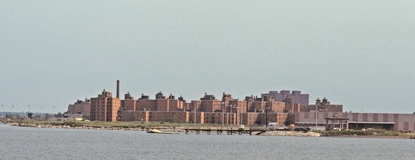
Back in the early 1950s, Columbia Point was the left’s wet dream—a massive public housing complex plunked on a scenic peninsula jutting into Boston Harbor. Built by the Boston Housing Authority, it boasted 1,504 apartments across 27 brick buildings, three and seven stories tall, making it the biggest setup in New England. The place opened its doors in 1953 to fanfare, hailed as a model for lifting working-class families out of slums. Integrated from the jump—over 90 percent white tenants at first, with about 7 percent black families—it promised modern living with harbor views, a subway stop, schools, and community centers. Politicians patted themselves on the back, tenants lined up for spots, and everyone figured this was the future: government benevolence turning poverty into paradise.
But here’s the rub—the site was a disaster waiting to happen. Stuck on an isolated spit of land next to a city dump, it was cut off from jobs, stores, and the rest of Boston. No wonder the dream started cracking before the paint dried.
The Rot Sets In: Isolation, Crime, and White Flight
By the 1960s, Columbia Point was already spiraling. White families bolted in droves amid racial tensions and economic shifts, leaving behind a concentrated pocket of poverty. The modernist design—those sterile high-rises beloved by egghead architects—turned corridors into crime alleys. Maintenance? Forget it. The Boston Housing Authority let the place rot, with broken elevators, leaky roofs, and trash piling up like liberal excuses.
Crime exploded: murders, rapes, gangs ruling the roost. By the mid-1970s, vacancy rates hit the roof—hundreds of units empty while squatters moved in. Tenants stopped paying rent en masse in protest strikes, demanding fixes that never came. The isolation amplified everything; no nearby jobs meant welfare dependency, no community ties meant chaos. It was Pruitt-Igoe on the bay, a textbook flop of big-government hubris where good intentions paved the road to hell.
Total Collapse: Zero Paying Tenants and a Copper-Stripped Ghost Town
Fast-forward to the late 1970s and early 1980s: Columbia Point was a zombie apocalypse. By 1979, the courts slapped the Boston Housing Authority into receivership after tours revealed “deplorable conditions.” Vacancy soared past 70 percent in spots, with entire buildings abandoned. User nailed it—zero paying tenants in the end, as rent strikes morphed into outright abandonment. Squatters took over, stripping out every scrap of value: copper pipes yanked for scrap, leaving no running water; wiring gutted; fixtures vanished.
The place stood as a national embarrassment, mostly vacant and dangerous, a symbol of public housing’s epic belly flop. It took a 99-year lease to private developers in the 1980s to salvage it, reborn as Harbor Point—a mixed-income haven with market-rate units subsidizing the low-income ones. Private management, not government sloth, turned the tide. But the damage? Billions wasted, lives ruined, and a stark warning ignored by today’s lefty dreamers.
Mamdani’s Mad Dash: Seizing NYC Housing for the “Greater Good”
Enter Mayor Zohran Mamdani, sworn in on January 1, 2026, after a campaign promising to “freeze the rent” and bulldoze bad landlords. This 34-year-old socialist firebrand wasted no time: His first executive orders revived the Mayor’s Office to Protect Tenants, appointing controversial activist Cea Weaver to crack down on negligent owners. The plan? Identify slumlords racking up violations, slap them with fines, and if they can’t pay—bam—force sales to the city or nonprofits for government-run housing.
Mamdani’s already meddling: Just days in, his crew tried intervening in the bankruptcy sale of over 5,100 rent-stabilized units from the Pinnacle Group, citing $12 million in unpaid fines and tenant complaints about leaks, pests, and decay. He wants hearings for renters to air grievances, task forces to build on city land, and red-tape cuts to “accelerate” supply. Sounds noble, right? But a federal judge smacked down his bid to halt the sale on January 8, 2026, calling it a overreach and letting the $451 million deal to Summit Properties proceed. Early setback, but Mamdani’s not quitting—he’s doubling down on “precedent-setting” actions against bankrupt owners, eyeing property seizures to “protect tenants.”
Lessons Unlearned: Why Government Housing Spells Doom
Columbia Point screams the truth: Government-run housing flops when it concentrates the poor, skimps on maintenance, and ignores economics. Isolation bred despair; bureaucracy bred neglect. Mamdani’s push risks the same—freezing rents starves revenue for upkeep, while seizures scare off investors. NYC’s already got a housing crunch; turning landlords into villains won’t build more units, it’ll empty them out. We’ve seen this movie: Properties decay, squatters swarm, pipes get stripped, and suddenly you’ve got ghost towers subsidized by your tax dollars.
Recent revelations hammer it home—Mamdani’s appointee Weaver’s past rants on “white supremacy” in homeownership stirred backlash, while economists warn his fixes could take three years to dent affordability, if ever. Meanwhile, critics blast the scheme as a path to “uninvestable” markets, where regulations choke supply and decay spreads like wildfire.
The Bottom Line: NYC, Don’t Let Mamdani Build Your Columbia Point
America First means ditching these failed experiments and unleashing private enterprise—mixed-income models like Harbor Point prove it works. Mamdani’s government grab is a recipe for Boston-style busts: prime land wasted, tenants trapped in squalor, and the rest of us paying the freight. Wake up, New York—before your skyline turns into a socialist scrapyard. Time to boot the radicals and build housing that lasts, not flops.