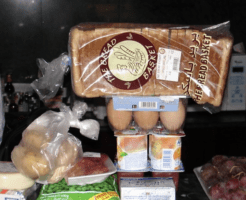
A lot of big stuff happening in the news lately — the arrest of Venezuela’s narco-dictator, Nicolas Maduro … Somali fraudsters being exposed in Minneapolis … Democrats urging anti-ICE lunatics to commit more and more violence … Iranians rioting to overthrow the Ayatolla … a communist takeover in New York City — but what will it mean to the average voter when he casts his ballot in November? Probably not much. Most politicos agree that all of these events will be overshadowed by the degree of financial pain experienced by voters, which they loosely refer to as the “affordability crisis.”
Are they right? Probably, but the truth is that “affordability” is a relative word. Groceries are affordable to someone making $1 million a year, but unaffordable to someone with an income below the poverty level. It’s always been that way; it will always be that way. Which means that most of the blather about affordability is nonsense. It’s nothing more than a political talking point, but, nevertheless, Donald Trump and Republicans have fallen into the affordability trap.
Vote-buying schemes like the proposed $1,776 “warrior dividend,” farm subsidies, “tariff dividends,” and a cap on credit-card interest rates put money into the pockets of selected groups of people, but they have nothing to do with the mechanics of the marketplace. Supply and demand dictate prices in a laissez faire economy, but since we don’t have, and never have had, a laissez faire economy, the roles of supply and demand are overridden by government printing presses, a variety of government sleight-of-hand shenanigans, and, above all, government force.
The reality that few politicians ever mention is that most prices never return to previous levels. A drop in inflation from 9-plus percent to 2.5 percent does not mean prices have fallen. It simply means that prices are not rising as fast as they were in the past, but they are still rising. It’s unfortunate that President Trump is not explaining this to Americans rather than touting how much prices have dropped and how much more they’re going to come down “very quickly.”
In effect, he’s adopted the same strategy that Joe Biden’s handlers had him touting — trying to convince people that they should ignore how they feel about their financial situation and ingest government happy talk. Unfortunately for Trump and Republicans who are running in the midterms, in the age of the Internet, with millions of podcasts and even more millions of social media users, you can no longer fool all of the people all of the time, which is why the “don’t believe your lying eyes and ears” strategy is risky.
It’s true that there are certain items where a drop in prices can occur, primarily because of natural changes in supply and demand. Gasoline and housing are two notable examples of this. Most products and services, however, are trapped in the inflation spiral by everyone trying to keep up with their own rising costs, which equates to ever-higher wages, and wages are usually the number-one cause of higher prices. It’s called the inflation “spiral” because wages drive up the cost of goods and services, which in turn causes wages to rise still more in an effort to make the higher prices more “affordable.”
In 1950, the federal minimum wage was raised from 40 cents to 75 cents. Today it ranges from $7.25 to $18, depending upon the state. It’s not hard to understand: Raising wages from 75 cents to $7.25 or, worse, $18 requires a dramatic increase in prices. This is why McDonalds is now more expensive than a gourmet restaurant was in the 1950s. The average person does not realize that all this is nothing more than a devaluation of the currency, which occurs primarily as a result of government overspending. That’s a bit of a problem, because government overspending is as certain to continue as death and taxes.
It’s possible that Trump and Republicans will be able to convince enough voters that prices are stabilizing to keep control of the House and Senate in the midterms, but it’s a slippery slope that could end in disaster if recent Democrat victories in Virginia and New Jersey (not to mention an election in Tennessee that was much closer than it should have been) are prologue to what’s coming. Calling himself the “affordability president” is inviting voter scrutiny and dissatisfaction, and changing the message to “lowering prices” isn’t much better.
What Republicans should be focusing on in their messaging is explaining, in simple terms, what the Biden administration did to turbocharge inflation, and assure them that Democrats will do it again, bigger and faster than before, if they regain power. They should also explain, over and over again, how importing new voters from third-world countries has driven up costs across the board, especially in housing, healthcare, and groceries, and that if Democrats regain control, the borders will once again be blown wide open and the result will be another dramatic spike in inflation.
Simply put: Don’t promise to lower prices; promise to stop Democrats from increasing prices even faster than before by keeping them out of power! Borrowing from Ronald Reagan, one simple question says it all: “Are you better off today than you were under Joe Biden and Democrats?” In this case, the answer is a resounding “Yes” to anyone but a deranged Democrat.
Robert Ringer is an American icon whose unique insights into life have helped millions of readers worldwide. He is also the author of two New York Times #1 bestselling books, both of which have been listed by The New York Times among the 15 best-selling motivational books of all time. Original here.
