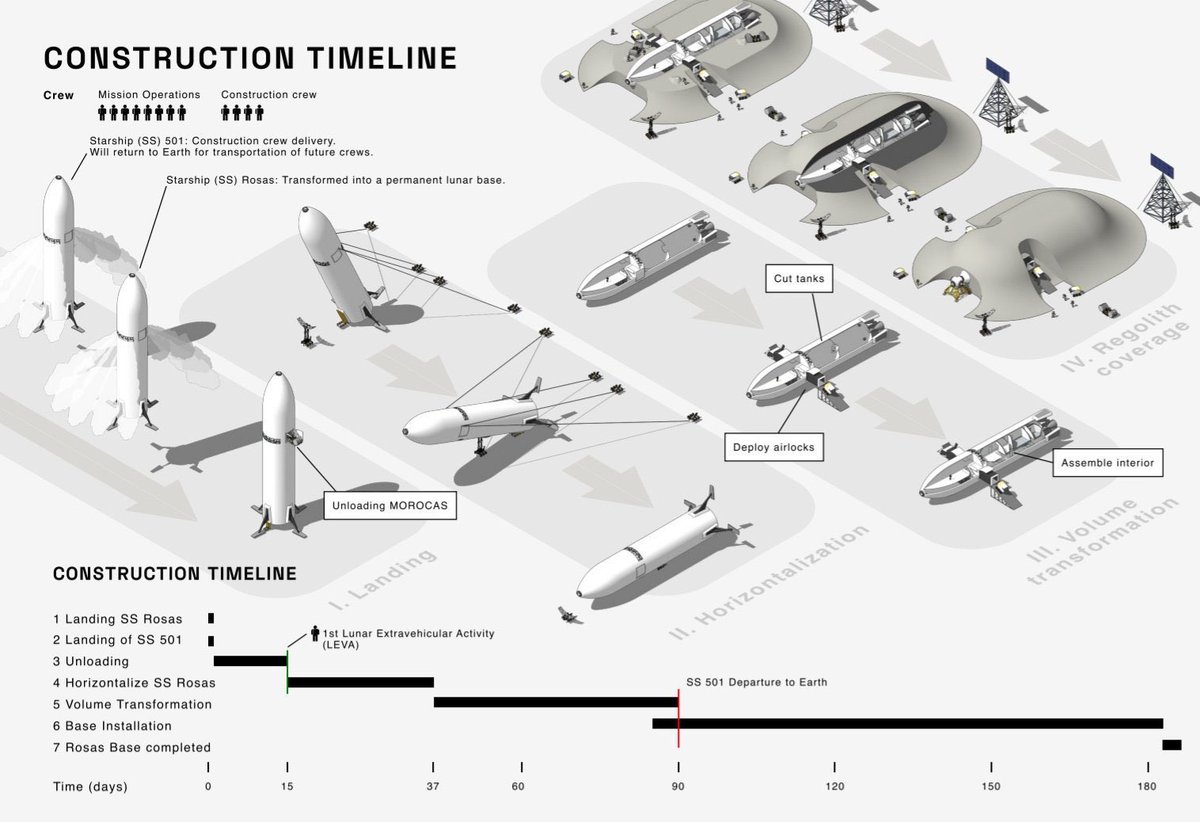
In an X post at the weekend, Elon said that while a Mars colony is still his ultimate plan, it makes sense to go to the Moon right away. Musk explained that frequent lunar launches every 10 days and quick two-day trips allow faster progress than Mars missions, which wait for 26-month alignments and take six months each way. The Moon base would use local water ice and regolith for self-sufficiency, aligning with NASA’s Artemis program where Starship handles 2028 landings. While some online voices call it a Mars abandonment, supporters and experts like Scott Manley say mastering the Moon paves the way for Mars, securing humanity against Earth risks.
For those unaware, SpaceX has already shifted focus to building a self-growing city on the Moon, as we can potentially achieve that in less than 10 years, whereas Mars would take 20+ years.
— Elon Musk (@elonmusk) February 8, 2026
The mission of SpaceX remains the same: extend consciousness and life as we know it to…
This will be so awesome 🤩 https://t.co/HhzBezqcRM
— Elon Musk (@elonmusk) February 9, 2026
Plans to Build a Moon Base: Global Efforts and Ambitions
The Moon is set to host humanity’s next frontier, with permanent bases driven by science, resource extraction like water ice, and preparation for deeper space travel. As of early 2026, multiple nations, agencies, and private companies are racing to establish outposts, blending competition with selective collaboration through agreements like the Artemis Accords.
NASA’s Artemis Program
NASA leads with Artemis, targeting sustainable human presence. Artemis II, a crewed lunar flyby, is planned for March 2026. Artemis III aims for a crewed south pole landing in 2027-2028 using SpaceX’s Starship Human Landing System. Long-term plans include Artemis Base Camp at the south pole, supported by the Lunar Gateway orbital station starting around 2028. Over 40 countries have joined the Artemis Accords, including ESA, JAXA, CSA, and UAE.
SpaceX and Elon Musk’s Vision
SpaceX has shifted priority to a “self-growing city” on the Moon, targeting an uncrewed landing in March 2027 and initial base infrastructure (Moon Base Alpha) by 2028, built from Starship elements. This accelerates lunar development over Mars timelines.
Blue Origin and Jeff Bezos’ Efforts
Blue Origin, founded by Jeff Bezos, is heavily invested in lunar access via its Blue Moon lander family. The company paused New Shepard tourism flights for at least two years to focus on lunar goals. A robotic Blue Moon Mark 1 (Endurance/Pathfinder) targets a south pole landing in late 2026 for cargo delivery and demonstration. The larger Blue Moon Mark 2 supports crewed missions, contracted for NASA’s Artemis V in 2030, helping establish permanent presence through cargo and human transport.
China-Russia International Lunar Research Station (ILRS)
China and Russia lead ILRS at the south pole. Preparatory missions continue through 2025, with construction from 2026-2035 and full operations by 2036. A nuclear power plant is planned for 2035. Partners include over a dozen nations like Pakistan, Azerbaijan, and South Africa. Chang’e-7 launches in 2026 for resource mapping.
Other International and Private Players
The European Space Agency advances modular habitats supporting up to dozens of people, aiding NASA and JAXA. JAXA and ISRO collaborate on LUPEX (Chandrayaan-5) for south pole ice analysis in 2028-2029. ISRO targets crewed landings by 2040; South Korea aims for a base by 2045. Other nations like India, Japan, and UAE contribute via Artemis or independent missions.This multi-player push—U.S.-led Artemis with SpaceX and Blue Origin, China’s ILRS coalition, and emerging efforts—fuels a new era. By the 2030s, rival bases could enable shared tech like in-situ resources and power, or heighten tensions over strategic sites.(Word count: 348)
It’s not like it’s a totally new idea for him. He has been pushing for a lunar base for a while now.
FLASHBACK: Elon Musk says that "we should have a Moon Base Alpha."
— Resist the Mainstream (@ResisttheMS) February 10, 2026
"Which is the next step after the Apollo program, to have a base on the moon. You could have a gigantic science station doing research about the nature of the universe on the moon."pic.twitter.com/R1Lc9M0zlV
So why is the Moon such a good idea? It’s largely because the economics of data and electrical power have altered so dramatically since the advent of AI.
If you want to read a very smart article about the economies of scale on the Moon, read this article.