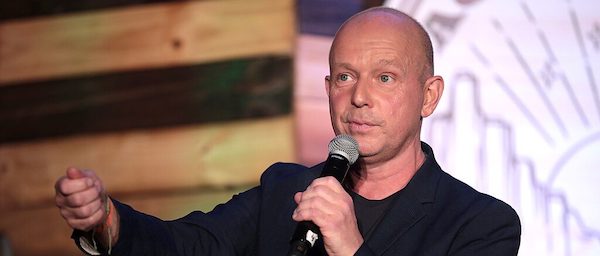
Ah, California, the land where dreams go to get taxed into oblivion and the governor’s race looks like a casting call for a bad reality show. With Gavin Newsom term-limited out after turning the Golden State into a glittering tent city, the 2026 election is shaping up as a free-for-all under the state’s infamous “jungle primary” system. For the uninitiated, that’s where every candidate, regardless of party stripes, dukes it out in a June 2 primary, and the top two vote-getters advance to the November 3 general, even if they’re both Democrats, both Republicans, or one of each sharing a awkward debate stage. It’s democracy’s way of saying, “Why not make it more chaotic?” As of mid-February 2026, the field is crowded with egos, billionaires, and sheriffs, but the standings suggest Republicans might finally crash the party that’s been Democrat-only since Arnold Schwarzenegger flexed his way out in 2011.
The Cast of Characters: Who’s Running This Circus?
Picture this: over a dozen hopefuls, from Capitol Hill climbers to local kingpins, all vying to inherit a state drowning in deficits, wildfires, and fleeing taxpayers. On the Republican side, we’ve got Steve Hilton, the British-born Fox News alum who’s made a career out of skewering Sacramento’s follies with a posh accent and a libertarian streak. He’s pitching economic overhauls like slashing regulations to make California affordable again—America First policies that echo draining the swamp, but with more beaches. Then there’s Chad Bianco, the no-nonsense Riverside County Sheriff who’s all about law and order, cracking down on crime waves that have turned cities into shoplifting festivals. He’s the guy who’d rather build walls than welcome mats for illegal immigrants straining the budget.
Democrats? They’re a splintered mess, like a family reunion where everyone hates the casserole. Eric Swalwell, the congressman known for his fiery anti-Trump rants, is in the mix, promising progressive tweaks to Newsom’s playbook. Katie Porter, the whiteboard-wielding rep, is pushing consumer protections and green energy, but her support’s as volatile as California’s gas prices. Billionaire Tom Steyer’s self-funding his way in, blanketing airwaves with ads about fixing electricity rates after dumping 27 million dollars into his campaign chest—mostly his own cash. San Jose Mayor Matt Mahan, a moderate with tech billionaire backers, entered late and raked in 7 million in his first week, touting optimism and urban fixes. Xavier Becerra, the former attorney general turned HHS secretary, is lagging but betting on his Latino roots. Antonio Villaraigosa, ex-LA mayor, is banking on name recognition from yesteryear. Throw in state controller Betty Yee, schools chief Tony Thurmond, developer Rick Caruso, and a few longshots like Ian Calderon or Daniel Mercuri, and you’ve got a ballot longer than a CVS receipt.
Polling: Republicans Stealing the Spotlight
If polls are the crystal balls of politics—and they’re about as reliable as a California earthquake forecast—they’re painting a picture that has Democrats sweating like they’re stuck in LA traffic. An Emerson College poll from February 13-14, surveying 1,000 likely voters, puts Hilton at 17 percent, with Swalwell and Bianco tied at 14 percent each. Porter trails at 10 percent, Steyer at 9 percent, Becerra at 4 percent, Mahan and Villaraigosa at 3 percent apiece, Thurmond and Yee at 2 percent, and the rest scraping 1 percent or less. A hefty 20 percent are undecided, which in poll-speak means they’re waiting for the attack ads to really heat up.
Flash back to December 2025: An FM3 Research poll had Hilton at 18 percent, Swalwell and Bianco at 17 percent, Porter at 13 percent. Earlier Emerson data from December 4 showed Bianco at 13 percent, Hilton and Swalwell at 12 percent, Porter at 11 percent. A Public Policy Polling survey from January 20-21 gave Bianco 18 percent, Hilton 17 percent, Porter 14 percent, Swalwell 11 percent. RBI Strategies from January 25-29: Bianco 16 percent, Hilton 15 percent, Swalwell 14 percent, Porter 13 percent. An EMC Research poll, an internal for Swalwell, bumped Bianco to 21 percent, Swalwell to 18 percent, Hilton to 17 percent. RealClearPolitics averages it out with Bianco and Hilton tied at 15.5 percent.
Among independents, who make up a chunk of the electorate, an Independent Voter Project poll showed Bianco at 26 percent, Hilton at 24 percent, with “none of the above” beating out Swalwell at 21 percent and Porter at 20 percent. In Los Angeles County, Caruso jumps to 19 percent, but statewide he’s a blip. The trend? Republicans are consolidated around two strong outsiders, while Democrats are fragmented across a dozen insiders, risking a shutout from the general election. That’s right—California could see two Republicans in the runoff, a plot twist wilder than a Hollywood reboot.
Fundraising: Cash Kings and Self-Funded Shenanigans
Money talks, and in this race, it’s screaming. Hilton hauled in 4.1 million dollars from July to December 2025, leading most without dipping into his own pocket. Bianco pulled 2 million in the same stretch. Steyer? He’s the outlier, loaning his campaign 27 million and burning through 26 million on ads already, yet polling at single digits—like buying a Ferrari to drive in stop-and-go traffic. Mahan’s tech-fueled 7 million in a week shows Silicon Valley’s still got deep pockets for moderates. The rest? Tepid hauls, with many holding fire until primary crunch time. In a state where ads cost more than a Malibu mansion, expect the billionaires and big donors to turn this into a spending spree that could top 100 million total.
Recent Revelations: Infighting and Forum Fireworks
The race isn’t just numbers—it’s got drama. Hilton’s been trading barbs with Bianco, calling him out as a “right-wing conspiracist” in a recent dust-up, while Bianco fires back on Hilton’s establishment ties. Swalwell faced a legal challenge to his eligibility from a conspiracy theorist, but it fizzled faster than a bad tweet. A February 26 forum in Los Angeles, hosted for Jewish community leaders, features Hilton, Mahan, Steyer, Swalwell, and Villaraigosa duking it out on stage—expect sparks on Israel, crime, and the economy. Meanwhile, Steyer’s electricity ads are blanketing the state, but voters seem more tuned out than turned on. And in a state where independents could swing it, “none of the above” polling high signals widespread disgust with the status quo.
Who’s Likely to Win? Betting on the Underdogs
As of now, the smart money—or at least the polling tea leaves—points to a Republican breakthrough. Hilton and Bianco are neck-and-neck for the top spots, with their America First vibes on crime, taxes, and immigration resonating in a state fed up with progressive excess. Swalwell’s got momentum among Dems, but the party’s vote is so split that he might squeeze into second if Porter and Steyer fade. Porter’s feisty, but her numbers are dipping like the San Andreas Fault. Steyer’s cash might buy visibility, but not votes. Mahan’s late surge could surprise if tech money translates to turnout. Betting markets give Swalwell a 59 percent shot at the governorship, Mahan 14 percent, Bianco 8 percent—but those are for the final win, assuming he makes the runoff.
In the jungle primary, it’s anyone’s game, but Republicans have the edge in unity. If two GOPers advance, the general becomes a conservative cage match; if one slips in with a Dem, expect a bloodbath over California’s soul. Either way, this could be the year the red wave finally crashes on blue shores, proving even California isn’t immune to common sense.
So, buckle up, folks. By November 2026, we might just see a governor who prioritizes Americans first, for a change. Wouldn’t that be a hoot?