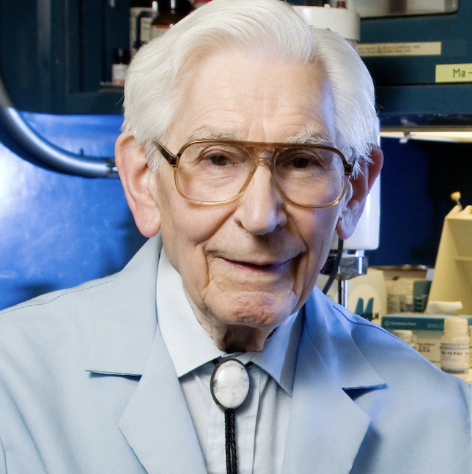
Who Took On the Trans Fat Machine
In the shadow of processed food empires and entrenched medical dogma, a lone German-born scientist waged a relentless, six-decade battle against an invisible killer hiding in America’s pantries. Dr. Fred Kummerow refused to back down, even as industry giants, skeptical colleagues, and slow-moving regulators pushed back. His weapon? Relentless evidence. His goal? Saving millions from heart disease.
From Berlin to the Lab Bench
Born in Berlin in 1914 amid the chaos of World War I, young Fred immigrated to the United States with his family in 1923. They landed at Ellis Island and settled in Milwaukee, where the Great Depression hit hard. He scraped by with odd jobs—including work at a brewery—to fund his education. A childhood chemistry set ignited his passion. He earned a B.S. in chemistry and a Ph.D. in biochemistry from the University of Wisconsin–Madison, then joined the University of Illinois at Urbana-Champaign faculty in 1950, where he would build a career dissecting lipids and nutrition.
The Shocking Discovery (1957)
While most experts fixated on dietary cholesterol and saturated fats as the villains behind rising heart attacks, Kummerow took a different path. In 1957, he obtained artery samples from heart attack victims. What he found stunned him: every diseased artery was loaded with artificial trans fats—man-made substances born from the partial hydrogenation process used to create shelf-stable margarine, shortening, and countless processed foods.
He published his explosive findings in the journal Science, linking these fats directly to artery-clogging plaque. Trans fats didn’t just sit there—they interfered with blood flow by disrupting prostacyclin production, promoting inflammation, clots, and oxidized cholesterol buildup. Kummerow argued the real culprit wasn’t eggs or butter, but the industrial tinkering with oils that began around 1910.
His early warnings were dismissed or ignored. The food industry loved trans fats for their convenience and profitability. Colleagues clung to the cholesterol theory. But Kummerow kept digging, running pig studies that showed diets heavy in artificial fats caused far more plaque than high-cholesterol ones.
He warned the FDA about trans fats for 60 years. Then he sued them at 98.
— Vinnie Tortorich (@VinnieTortorich) March 23, 2026
In 1957, Dr. Fred Kummerow published a paper in Science linking trans fats to heart disease. He found them in the arteries of every heart attack victim he studied. The food industry said trans fats were… pic.twitter.com/veWNlFOVlY
Decades of Resistance and Small Victories
By 1968, Kummerow pressured the American Heart Association to urge the shortening and edible oils industry to slash trans fat levels in margarines and shortenings, swapping them for essential fatty acids like linoleic acid. The industry partially complied, and heart disease death rates began to drop noticeably.
He testified before the Federal Trade Commission in 1975, sounding the alarm again. Still, the machine rolled on. Trans fats remained in thousands of products, quietly contributing to inflammation, higher LDL, lower HDL, and a national epidemic of coronary disease.
Kummerow never stopped. He published hundreds of papers, challenged orthodoxy, and ate an egg daily himself—practicing what he preached while warning that oxidized cholesterol, not natural cholesterol, was the real danger.
The Final Assault: Petition and Lawsuit
At age 94 in 2009, Kummerow filed a detailed citizen petition with the FDA, demanding they declare partially hydrogenated oils a “poisonous and deleterious substance” and ban them outright. His 3,000-word document laid out the science in stark terms: trans fats fuel plaque, clots, and heart attacks. “Everybody should read my petition,” he said, “because it will scare the hell out of them.”
The FDA sat on it for years—far beyond the required 180-day response window. At age 98 in 2013, Kummerow sued the agency to force action. Just three months later, the FDA issued a tentative determination: artificial trans fats were no longer “generally recognized as safe” for any use in food.
Victory at 100: Science Wins
In 2015, the FDA finalized the ruling, ordering a phase-out by 2018. Kummerow, now over 100 and still active in his lab, declared simply: “Science won out.” The ban is credited with potentially preventing tens of thousands of premature deaths each year. After more than 60 years of fighting industry inertia, regulatory delays, and scientific skepticism, one persistent biochemist had toppled a cornerstone of the processed food machine.
Kummerow continued researching into his final years, turning his sharp eye toward links between oxidized fats and neurodegenerative diseases. He died in 2017 at age 102, a contrarian hero whose lonely crusade proved that evidence, backed by unbreakable persistence, can eventually defeat even the most entrenched interests.
His legacy is on grocery shelves today: a food supply freer of artificial trans fats, thanks to one man who refused to let the machine win.