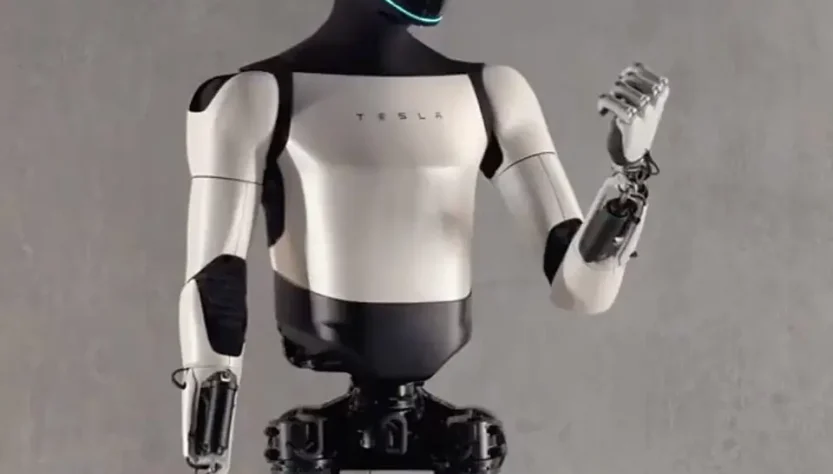
Elon Musk: @Tesla_Optimus will beat any human surgeon in 3 years at scale.
— Rohan Paul (@rohanpaul_ai) March 29, 2026
– “Don’t go into medical school. ?”
– Elon: “Yes. Pointless.”
And in 5 years, everyone will have access to medical care thats better than what the presidents receives todaypic.twitter.com/Fg63Klju7n https://t.co/kuXvVf48z3
Elon Musk has strongly advised against attending medical school, calling it “pointless” in the near future. He bases this on the rapid advancement of AI combined with humanoid robots like Tesla’s Optimus, which he believes will soon outperform human doctors and surgeons in precision, consistency, and scale.
Musk’s Core Statement
In a January 2026 interview on the Moonshots podcast with Peter Diamandis, Musk was asked directly whether people should still go to medical school. He replied: “Yes. Pointless.” He suggested this view could apply broadly to many forms of traditional education as AI and robotics reshape industries.
Why Robots Like Optimus Will Change Medicine
Musk’s reasoning centers on the fundamental limitations of human doctors compared to AI-powered machines:
- Human constraints: Training to become a skilled doctor or surgeon takes many years (often 10+). Even top professionals have limited working hours, can experience fatigue, hand tremors, or errors, and struggle to keep up with constantly evolving medical knowledge. There is also a global shortage of great surgeons.
- Robot advantages: Optimus (or similar humanoid robots) paired with advanced AI will offer superhuman precision. Robots don’t get tired, don’t shake, and can operate with extreme accuracy for long periods. AI allows instant sharing of new knowledge and skills across all units simultaneously—no individual doctor can match that scale of improvement.
- Scalability and abundance: Once production ramps up, there could be millions or billions of such robots. Musk predicts there will eventually be more Optimus units performing high-quality surgeries than all human surgeons on Earth combined. This could make elite-level medical care abundant and potentially very low-cost, available to everyone rather than just the wealthy or powerful.
He envisions a future of “radical abundance” in healthcare, where AI and robots deliver care better than what presidents receive today—freeing humanity from current shortages and inconsistencies.
Predicted Timeline
Musk has provided specific near-term milestones tied to Optimus and AI progress:
- Within ~3 years (around 2029): Optimus robots are expected to become better surgeons than the best humans, capable of performing “great surgical operations” at scale.
- Around 4 years: With some margin, robots could clearly surpass any human surgeon in capability.
- By ~5 years (early 2030s): Widespread access to superior medical care becomes reality, with robots handling sophisticated procedures (potentially even those too difficult for humans) and vastly outnumbering human practitioners.
- By 2030: Musk has referenced scenarios with more capable robot surgeons than all human ones worldwide.
These timelines assume continued rapid progress in AI vision, reasoning, robotic hardware, and manufacturing scale at Tesla and related companies.
Broader Context and Implications
Musk ties this to his work on Optimus as a general-purpose humanoid robot, along with other efforts like Neuralink (which already uses robotic precision for brain implants). He sees this not as job loss in a negative sense, but as a positive transformation: shifting human roles toward oversight, complex decision-making, or entirely new fields, while AI/robots handle repetitive or high-precision tasks.
Critics note that medicine involves more than surgery—such as patient empathy, ethics, diagnosis nuances and regulatory hurdles—so full replacement may take longer or look different than predicted. Still, Musk’s advice reflects his belief that young people planning long training paths should consider how transformative technologies like Optimus could disrupt traditional careers.
In short, he argues it’s smarter to focus on building or working with these emerging technologies rather than pursuing fields likely to be automated at superhuman levels in the coming years. This fits his larger vision of AI and robotics creating a world of plenty, where scarcity in healthcare (and many other areas) becomes a thing of the past.
Here’s what’s happening right now. It will only become more common.
Another great Robots in healthcare usecase.
— Rohan Paul (@rohanpaul_ai) March 29, 2026
Aletta is a robot that fully automates blood draws.
The patient sits down; the robot uses ultrasound to find a vein, helps position the arm, collects the sample, and applies a bandage—fully automatedpic.twitter.com/J30hdzZZTf