Redistricting has always been the political equivalent of drawing lines in the sand during a bar fight—everyone ends up bloody, and nobody remembers why they started swinging. Now the Supreme Court is eyeballing Section 2 of the Voting Rights Act, that 1965 relic designed to stomp out Jim Crow voting tricks but which has morphed into a license for carving up electoral maps like a Thanksgiving turkey based on skin color.
The case at hand, Louisiana v. Callais, boils down to whether the Bayou State needs to shoehorn a second majority-black congressional district into its six-seat setup, where blacks make up about 32 percent of the population. Challengers cry dilution; Louisiana says enough already with the racial roulette. Argued on October 15, 2025, the justices looked like they were ready to tell everyone to put the crayons down and draw straighter lines.
The VRA: From Civil Rights Hammer to Racial Woketool
Picture 1965: Bloody Sunday in Selma, dogs and firehoses on the evening news, and Congress, in a rare bipartisan spasm, passes the Voting Rights Act to ensure blacks could vote without getting clubbed for it. Signed by Lyndon Johnson on August 6, it banned literacy tests, poll taxes, and other Southern specialties that kept minorities sidelined. Section 2 was the broadsword, prohibiting any voting practice that diluted minority votes based on race or color. Early on, it was about access—registering voters, not rigging maps.
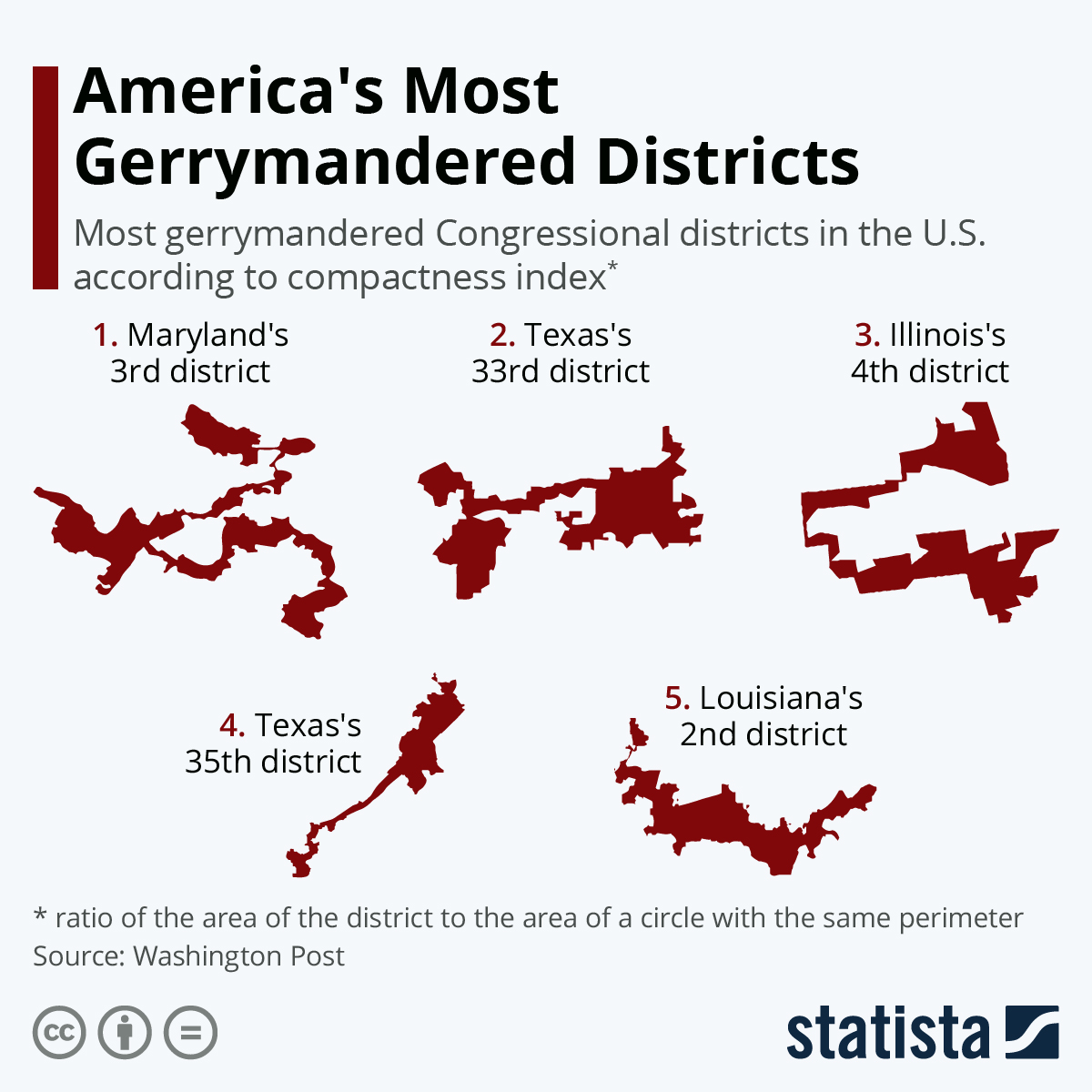
Fast-forward to 1982 reauthorization and the Thornburg v. Gingles decision in 1986, which laid out the three-pronged test for dilution claims: a minority group big and compact enough to form a district, cohesive in voting, and routinely outvoted by the white bloc. Suddenly, Section 2 wasn’t just preventing tricks; it was mandating “remedial” districts packed with minorities to guarantee representation. By the 1990s, this birthed bizarre shapes—districts snaking like drunken rivers to hit racial quotas, courtesy of Justice Department enforcers treating the census like a casting call for The Color Purple.
The Act’s preclearance formula under Section 5 got gutted in Shelby County v. Holder in 2013, freeing states from federal babysitting. But Section 2 soldiered on, clashing with the Equal Protection Clause. Courts have long said you can’t let race be the predominant factor in drawing lines—see Shaw v. Reno in 1993—but VRA suits keep demanding it anyway. Alabama’s 2023 Allen v. Milligan case forced a second black-plurality district in a state with six seats and 27 percent black population, affirming Section 2’s bite but nodding to strict scrutiny. Louisiana’s tussle echoes that: a federal court ordered a redraw for a second black district in 2024, but the Supreme Court vacated it post-Milligan and called for reargument, signaling the racial bean-counting might have hit its expiration date.
Illinois Democrats like @rep_jackson admit what their new gerrymandered maps are really about—protecting the party, not the people.
“This is the only path forward for the Democratic Party and to save the nation.”
For Democrats, “save the nation” just sounds better than “save… pic.twitter.com/AJSKFUvK2o
— Midwest Millennial (@MillennialVerse) October 28, 2025
The Justices’ Tightrope Walk
Nine robes, six conservative, three liberal—guess which way the wind blows? Oral arguments hinted at skepticism toward perpetual racial carve-outs. Conservatives grilled whether Section 2 demands endless majority-minority districts, turning elections into ethnic set-asides that mock the color-blind Constitution. Chief Justice Roberts and Justice Alito probed the “totality of circumstances” test, wondering if it greenlights race as king without traditional districting rules like compactness or community ties. Even moderates like Kavanaugh floated time limits: maybe race helps in the short term, but not forever, lest we Balkanize the ballot box.
The liberals pushed back, warning of diluted minority voices without the racial nudge. But with the court’s recent track record—upholding traditional criteria over pure partisanship in Rucho v. Common Cause (2019)—expect a narrowing. They won’t nuke Section 2 outright; that’d invite congressional backlash. Instead, likely a 6-3 ruling emphasizing that race must be subordinated to neutral factors. Gingles preconditions get tightened: prove dilution without letting demographics dictate the map. Louisiana’s existing setup—one black-plurality district—probably stands, rejecting the demand for two.
Redistricting’s Post-Racial Reckoning
If the court clips Section 2’s wings, say goodbye to the ugliest districts this side of a Rorschach test. States redraw with compactness, contiguity, and shared interests front and center, race as one data point among many. Louisiana keeps its map, tilting safely Republican overall. Nationally, fewer forced minority districts mean minority votes spread thinner across GOP-leaning seats, boosting conservative majorities in the House without the VRA’s racial veto.
Purists cheer: equal sovereignty under law, no more government as racial matchmaker. Cynics note it’ll favor incumbents and parties with geographic lock—Democrats in urban hives, Republicans in rural expanses. But the real win? Elections decided by ideas, not identity tallies. America’s melting pot simmers best without stirring spoons calibrated by hue. The VRA fought real villains; now it’s haunting us like a ghost insisting on reparations at every polling place. Time to exorcise the excess and let voters, not demographers, call the shots.