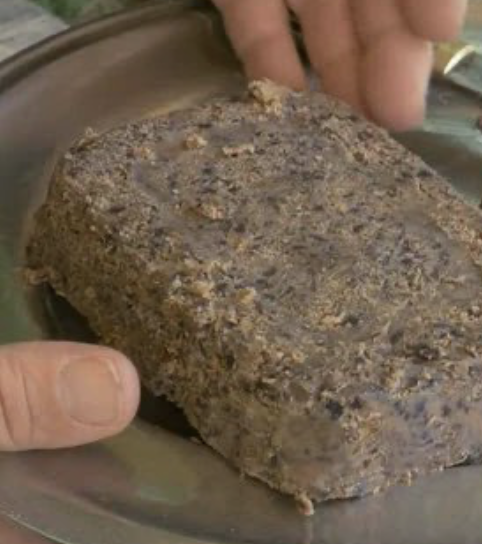
In the 1800s, Canadian fur trappers learned from Indigenous peoples about pemmican, a revolutionary survival food: dried lean meat pounded into powder, mixed with rendered fat (at least 1:1 ratio, often higher for winter), and sometimes berries.
This created a non-perishable, calorie-dense superfood that lasted years, provided complete nutrition, and remained stable in any temperature.
Lewis and Clark’s 1804–1806 expedition relied heavily on pemmican, fueling their 8,000-mile journey across America, including the Rockies and harsh winters.
One pound delivered over 3,000 calories—mostly from fat and protein, zero carbs.
The fur trade and voyageurs (paddling 14+ hours daily, consuming 4,000–8,000 calories) ran on it, carrying minimal supplies for weeks.
Successful Arctic explorers like Roald Amundsen used pemmican to reach the South Pole, while those depending on European rations, like Scott, perished.
Indigenous innovation produced history’s most efficient high-fat fuel—far superior to modern carb-heavy energy bars for sustained energy and satiety.
1800s Canadian fur trappers discover indigenous peoples have a secret weapon: Pemmican.
— Sama Hoole (@SamaHoole) January 8, 2026
Recipe: Dried lean meat pounded into powder. Mixed with rendered fat at 1:1 ratio minimum (often 80% fat for winter). Add berries occasionally.
Result: Doesn't spoil. Lasts years. Complete… pic.twitter.com/TCQWcwDPYN