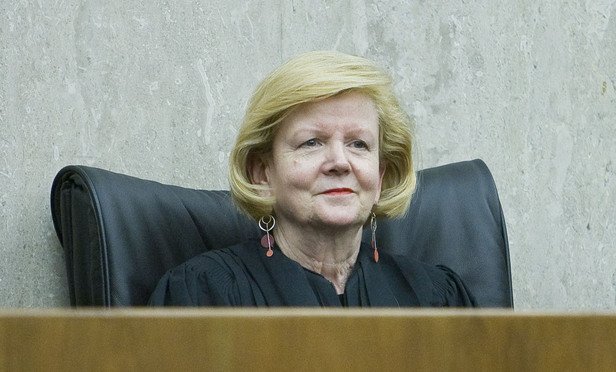
Listen up, patriots – it’s February 2026, and the swamp creatures are at it again, doing everything they can to keep our elections as secure as a screen door on a submarine. President Trump’s Executive Order 14248, dropped back on March 25, 2025, was a no-nonsense move to lock down federal elections so only actual American citizens get to pull the lever. But nope, U.S. District Judge Colleen Kollar-Kotelly, a Clinton appointee sitting pretty in D.C., just permanently blocked key parts of it on January 30. She claims it’s all about separation of powers, but let’s call it what it is: another judicial hack job to keep the borders open and the voter rolls bloated. America First means citizens first, and this ruling is a giant middle finger to that principle.
Most Americans – we’re talking polls showing 70 to 80 percent across the board – already think only citizens can vote in federal elections and want tougher checks to make sure of it. Turns out, they’re right about the law but wrong about the enforcement, because the left loves nothing more than muddying the waters with feel-good nonsense that lets non-citizens sneak in votes. Trump’s order was supposed to fix that mess, but now it’s gutted. Time to break this down and figure out how we fight back.
The Executive Order That Scared the Pants Off the Elites
Trump’s EO, titled “Preserving and Protecting the Integrity of American Elections,” wasn’t some radical power grab – it was common sense on steroids. It ramped up enforcement of existing laws like 18 U.S.C. Sections 611 and 1015, which already make it a felony for non-citizens to register or vote in federal races. The key bits? It told the Election Assistance Commission to tweak the national mail voter registration form – the Federal Form – to demand real proof of citizenship, like a passport, REAL ID showing you’re a citizen, military ID, or photo ID plus something solid. No more just checking a box and swearing on your honor while crossing your fingers.
Then there was Section 2(d), ordering federal agencies handing out public assistance under the National Voter Registration Act to check citizenship before even giving out the form. And Section 3(d) updated the Federal Post Card Application for military and overseas voters to require the same proof, making sure our troops and expats aren’t shortchanged on security. Other goodies included free access for states to DHS citizenship databases, beefed-up prosecutions by the Attorney General, and even threats to yank federal election bucks from states that drag their feet. It also cracked down on late mail ballots, pushed for paper records over sketchy QR codes, and aimed to slam the door on foreign meddling.
This wasn’t pie-in-the-sky stuff – it built on what a few states like Arizona, Kansas, New Hampshire, and Wyoming already do with proof-of-citizenship rules. But the left freaked out because, heaven forbid, we make it harder for illegals to dilute your vote.
Democrat judge says illegal aliens can vote as long as they check the box saying they are American. https://t.co/i3CDBHQGqM
— Stephen Miller (@StephenM) January 31, 2026
The Ruling: Judicial Overreach Masquerading as Principle
Enter Judge Kollar-Kotelly, who consolidated a bunch of lawsuits from whiners like the League of United Latin American Citizens and the Democratic National Committee, then dropped her hammer. She permanently enjoined Sections 2(d) and 3(d), calling them “inconsistent with the constitutional separation of powers.” Her big beef? The Constitution’s Elections Clause puts states in the driver’s seat for how elections run, with Congress calling shotgun if needed. The President? He’s supposed to execute laws, not rewrite them like some imperial edict.
JUST IN: Judge Kollar-Kotelly permanently enjoins President Trump’s executive order claiming to impose a citizenship requirement to vote or register to vote.
Her 110 page ruling. https://t.co/dYkOjlYyXI pic.twitter.com/tknz0vy1vA
— Kyle Cheney (@kyledcheney) January 30, 2026
She leaned on the major questions doctrine from that West Virginia v. EPA case, saying something this big – potentially messing with millions of registrations – needs crystal-clear okay from Congress, not a solo act from the Oval Office. And under the Youngstown framework, Trump’s power here is at its “lowest ebb” because he’s butting heads with what Congress already laid out in laws like the NVRA and UOCAVA. Those statutes rely on simple attestations under penalty of perjury, not extra hoops. Kollar-Kotelly basically said, “Our Constitution doesn’t let the President play legislator on elections.”
This isn’t her first rodeo blocking the order – she already smacked down the Federal Form proof requirement back in October 2025, and other judges in places like Oregon, Washington, and Massachusetts have nixed parts on mail ballots and more. The result? We’re stuck with the status quo: non-citizens are already banned from voting, but enforcement is a joke, relying on honor-system checkboxes that studies show lead to rare but real slip-ups, often from errors or lax DMV processes.
Critics whine that proof requirements would burden folks – only about half of us have passports, and birth certificates can be a hassle for the poor, elderly, minorities, or anyone who’s changed their name. But come on, if you can get welfare or a driver’s license, you can prove you’re a citizen. Proponents point out it’s about trust but verify, especially with registration glitches in some states.
Where Do We Go From Here? Fight Like Hell, That’s Where
This ruling’s a setback, but it’s not game over. The Trump team will appeal to the D.C. Circuit – a court with a mixed bag of judges – and if needed, take it to the Supreme Court, where that 6-3 conservative tilt has shown it’ll back election integrity when push comes to shove. They might snag a stay to keep things rolling while it grinds through.
But the smart money’s on Congress stepping up. Republicans have bills like the SAVE Act, which passed the House before and demands documentary proof for federal registrations with easy alternatives. Broader packages like the SAVE America Act or Make Elections Great Again Act bundle in photo ID, mail ballot curbs, and more. With GOP control, these have legs in the House and a shot in the Senate, though filibusters or squishy moderates could gum it up.
States aren’t helpless either – they can tighten their own rules, and many already rock voter ID. The unblocked parts of the EO, like data sharing and prosecution pushes, might still bite if they dodge further lawsuits.
Bottom line: Americans are fed up, with two-thirds in polls thinking the feds are hiding info on this stuff and nearly half unhappy with the slow drip of transparency. Non-citizen voting might be rare, but even one is too many when it could swing a tight race. This judge’s decision is just more proof the system protects the cheats over the citizens. Time for real warriors in Congress and the courts to make America First mean secure elections first. No more games – let’s lock it down before the next election turns into a free-for-all.