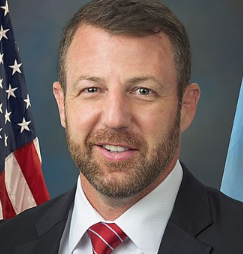
The 2026 United States Senate election in Oklahoma features incumbent Republican Markwayne Mullin aiming for his first full six-year term after winning a special election in 2022. With primaries set for June 16 and the general election on November 3, the race underscores Oklahoma’s entrenched Republican dominance, where no Democrat has won a statewide office since 2006. Filing deadlines close on April 3, leaving room for additional candidates, but current dynamics point to a secure Republican hold.
Mullin’s Path to Reelection
Markwayne Mullin, 48, a small business owner and Cherokee Nation member, entered the Senate in January 2023 following the resignation of longtime Senator Jim Inhofe. Mullin, who previously served five terms in the House representing Oklahoma’s 2nd District, has focused on energy independence, border security, and tribal issues during his tenure.
In late 2024, Mullin was considered for Secretary of the Interior in the second Trump administration, sparking brief speculation about a potential vacancy. He was not selected, confirming his intent to run for reelection. Mullin has raised over $4.6 million through December 31, 2025, with $2.2 million cash on hand, dwarfing opponents.
A Sooner Survey poll from May 2025 of Republican primary voters showed Mullin with 68 percent favorable ratings and 57 percent saying he deserves reelection, rising to 66 percent among voters over 65.
Emerging Republican Primary Challenge
While Mullin faces no major intraparty threats yet, Nick Hankins, a conservative activist, has positioned himself as a challenger, emphasizing transparency and America First policies. Hankins has engaged voters on issues like border security and fiscal responsibility via social media.
Mullin’s recent vote against an amendment to eliminate $4 billion in refugee resettlement funding—part of a broader appropriations package—drew criticism from some conservatives. The funding, requested by the Trump administration to combat child trafficking, passed with Mullin’s support on January 30, 2026. Eleven of 12 appropriations bills have advanced in the Senate as a result.
If no candidate secures 50 percent in the primary, a runoff occurs on August 25.
Democratic Field Takes Shape
Democrats, seeking to end a 20-year Senate drought in Oklahoma, have four declared candidates, though their campaigns remain underfunded and low-profile.
Troy Green, 58, a nonprofit founder focused on combating human trafficking, retired from full-time martial arts instruction in 2022 to launch Safe Haven Oklahoma. He emphasizes affordable healthcare, public education, and support for working families.
Jim Priest, a lawyer and minister, announced his bid on January 17, 2026, centering his campaign on faith, family, and rebuilding trust in government.
N’Kiyla “Jasmine” Thomas, 30, a registered nurse and Chickasaw citizen from Ardmore, highlights reproductive rights, Native sovereignty, and LGBTQ+ equality. She aims to be the first Black Native American woman in the seat.
Rebekah LaVann rounds out the field, though details on her platform are limited.
Collectively, Democratic candidates raised under $50,000 by year-end 2025, with minimal cash reserves.
General Election Outlook: A Republican Stronghold
Oklahoma remains one of the reddest states, with Donald Trump carrying it by 33 points in 2020 and 2024. The state’s partisan voter index is R+20, and Republicans hold a 40-8 majority in the state Senate and an 81-20 edge in the House.
No public polling exists for the general election, but historical trends and Mullin’s strong primary numbers suggest a wide Republican victory. Mullin won the 2022 special by 26 points against Democrat Kendra Horn.
Democrats hope to capitalize on suburban shifts and issues like healthcare, but low turnout and fundraising hurdles make a pickup improbable. The seat is expected to remain Republican, bolstering the GOP’s Senate majority amid a map favoring their defense in 2026.