Ah, the Munich Security Conference—where the world’s bigwigs gather to sip steins of strategy and pretend they’re saving civilization from itself. It’s like Davos but with fewer billionaires and more bureaucrats, a place where foreign policy gets hashed out over bratwurst and bad coffee.
AOC is a dunce… A very quick search on the history of “cowboys” legitimizes Rubio’s remarks without question. She’s an embarrassment on the world’s stage
— Derek McDougall (@DerekMcDougall3) February 15, 2026
pic.twitter.com/nqPJ1EyBE1
At the Munich Security Conference, congressional Democrats—having fled Washington right after successfully stripping DHS of funding—are exploring Rep. Alexandria Ocasio-Cortez’s, the New York Democrat, presidential ambitions.
AOC is positioned as the clear frontrunner for the 2028 presidential nomination, as she traveled to Europe last week for her high-profile debut at the Munich Security Conference and related events in Berlin. The appearances, meant to showcase her readiness on the global stage, instead highlighted a series of moments that left observers questioning the depth of her command over basic facts and policy substance.
So dumb, is this the best Boston University can come up with?
At a Munich town hall moderated by Bloomberg’s Francine Lacqua, Ocasio-Cortez was asked a straightforward question: Would and should the United States commit troops to defend Taiwan if China moved against it? Her answer arrived in fragments: “Um, you know, I think that this is such a, you know, I think that this is a um—this is, of course, a, um, very long-standing, um, policy of the United States… And I think what we are hoping for is that we want to make sure that we never get to that point.”
The response, laden with hesitations and circular phrasing, avoided any direct yes or no, leaving the impression of someone either unwilling or unable to engage with one of the most consequential flashpoints in contemporary geopolitics.
Rep. AOC launched an attack on Secretary Rubio after he mentioned the Spanish contributions to American Cowboys, while speaking at the Munich Security Conference.
— Carolyn Rockey (@CarolynWRockey) February 16, 2026
"Rubio's speech was a pure appeal to western culture. um my favorite part is when he said that uh American cowboys… pic.twitter.com/vsa6fPpvz6
Train wreck!!!
For a figure routinely discussed as a potential commander-in-chief, the performance suggested a startling unfamiliarity with the demands of articulating U.S. strategic commitments.
🚨 TIM BURCHETT: "Some Democrats flew to MUNICH after shutting down our government to tell the world how dysfunctional we are"
— Gunther Eagleman™ (@GuntherEagleman) February 16, 2026
AOC made herself look stupid to the whole world. pic.twitter.com/9Klyn8e3Cb
Later, at an event in Berlin at the Technical University, Ocasio-Cortez addressed Secretary of State Marco Rubio’s recent Munich remarks. Rubio had accurately noted the Spanish origins of key elements of American cowboy culture: “Our horses, our ranches, our rodeos—the entire romance of the cowboy archetype that became synonymous with the American West—these were born in Spain.” This is historical fact; the vaquero tradition originated in medieval Spain, was carried to the Americas by Spanish colonizers in the 16th century, and gave rise to terms like lasso (from lazo), rodeo (from rodear), and buckaroo (from vaquero). Mexican vaqueros adapted these practices, and Black cowboys and others contributed substantially in the U.S. West, but the foundational lineage Rubio cited is Iberian.
Supercut: AOC’s visit to the Munich Security Conference… was an absolute train wreck.
— Matt Whitlock (@MattWhitlock) February 16, 2026
Talking Nazis, Mexico and Spain, and the word salad heard round the world on Taiwan. pic.twitter.com/xKik8YGSgT
Ocasio-Cortez, however, treated the statement as some sort of cultural erasure, declaring: “My favorite part was when he said that uh American cowboys came from Spain. I believe the Mexicans and descendants of African enslaved peoples would like to have a word on that.”
The retort reframed a correct historical point as an exclusionary slight, revealing either ignorance of the timeline or a willingness to distort it for rhetorical effect. She attempted to punctuate the critique with Spanish-inflected delivery—presumably to emphasize Mexican heritage—but the effort came off as awkward and unconvincing, further underscoring a shaky grasp of the very cultural and linguistic terrain she invoked.
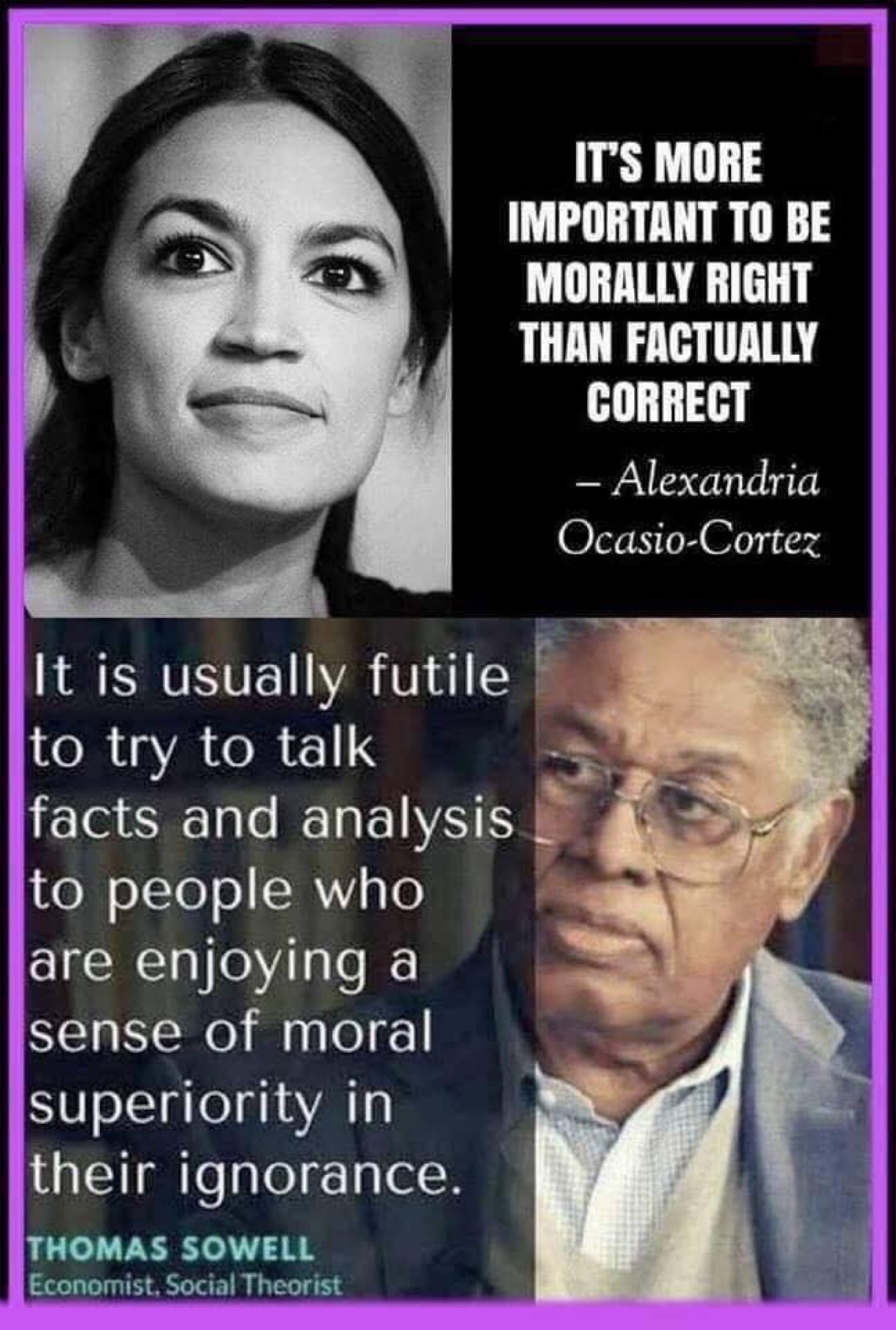
These episodes, far from isolated slips, paint a consistent picture: a politician whose domestic messaging thrives on energy and moral certainty but whose forays into international affairs expose gaps that border on the profound. Boston University, where she earned degrees in economics and international relations, presumably equips graduates with at least rudimentary historical and strategic literacy. Yet here was evidence to the contrary—evasions on Taiwan, factual bungling on cowboy origins—that would embarrass even a casual undergraduate.
Did this scupper her chances at the top?
As the Democrats eye 2028, party figures and strategists continue to treat Ocasio-Cortez as the likely nominee, banking on her star power and grassroots appeal. The European trip was intended to burnish credentials. Instead, it laid bare a mind that, on the evidence of these public moments, operates at a level of superficiality and error one might charitably describe as rock-like in its density. The Republic has survived worse, but the prospect of such unpreparedness at the helm remains, at minimum, sobering.