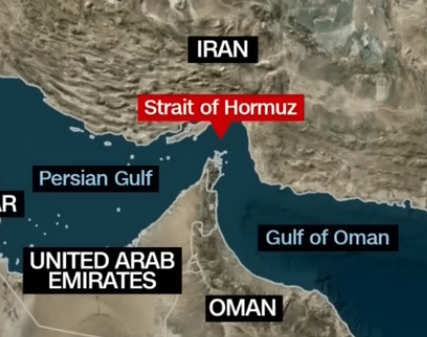
The Strait of Hormuz—that skinny 21-mile pinch point funneling a fifth of the world’s oil and a chunk of its gas—has been the bogeyman of the Iran smackdown since Trump and the Israelis turned Khamenei’s bunker into a crater on February 28. The mullah remnants screamed “blockade,” fired off drones and missiles like confetti, and suddenly everyone’s yapping about a global energy apocalypse. Gas prices spiked, farmers can’t snag fertilizer, and the usual suspects blame Trump for “starting” a war that’s been simmering since Carter’s sweater days. But hold the panic—recent intel paints a picture that’s more cat-and-mouse than full shutdown. Ships aren’t exactly sailing free, but they’re not all rusting at anchor either. Some gutsy captains are slipping through dark, and Uncle Sam’s gearing up to muscle the flow back online. America First means we don’t cower; we convoy.
The Pre-Strike Pipeline: Hormuz as the World’s Oil Artery
Before the fireworks, this strait was a superhighway: 153 vessels daily, with tankers hauling 20 million barrels of crude and liquefied natural gas making up 88 percent of the action. That’s 20 percent of global oil sloshing through every day, feeding refineries from Beijing to Boston. Qatar’s gas exports, Saudi slop, Iraqi output—all squeezed through this Iranian-flanked funnel. Normal ops saw 60 to 90 tankers transiting daily, no sweat. But post-strike, Iran’s Revolutionary Guards barked orders over VHF: No passage, or eat missiles. Retaliatory hits on ships and ports followed, with five vessels tagged in the first 24 hours after March 2 threats.
The Big Slowdown: Traffic Tanks, But Not to Zero
By March 1, transits cratered—down 86 percent, with only three tankers sneaking by. Come March 2, it was 13 vessels total, just one oiler. Daily averages plummeted from 37 tankers pre-war to zilch by March 4, per tracking data. Over 150 tankers dropped anchor in the Gulf of Oman, idling like scared ducks, while another 400 hunkered inside the Persian Gulf, storage tanks bulging. Ports shut, exports stalled—Iraq’s output nosedived as backups hit critical. Nine ships attacked since strikes began, including a UAE hit overnight on March 8-9 with 15 missiles and 18 drones. Global fallout? Oil topped $120 Brent, WTI at $85 after a dip, and Washington’s gas averaging $4.60 a gallon.
But here’s the twist: It ain’t a hermetic seal. Evidence popped March 9 of at least one tanker—loaded with a million barrels from Saudi’s Juaymah—going dark on March 4, AIS off, and resurfacing five days later on March 9. Another, the Pola, flipped its tracker late March 2, vanished near the strait, and bobbed up off Abu Dhabi March 3. Disruptions are rampant, but a trickle persists—two outbound crossings March 8, down 33 percent from the prior day. Operators chasing fat freight premiums are risking “atypical” runs, dodging drones under radio silence.
Going Ghost: AIS Blackouts and the Shadow Fleet Shuffle
Why the vanishing acts? Automatic Identification System trackers are lifesavers for collision avoidance, but they’re also beacons for bad guys. Flip ’em off, and you ghost—perfect for evading IRGC eyes in a hot zone. Recent sat pics and maritime AI confirm these dark transits: Ships load up, go silent entering the strait, and ping back post-passage. It’s not mass exodus—most owners halted crude and fuel hauls—but daring few are threading the needle. Think Reagan’s 1987-88 escorts on steroids, but DIY style. Iran’s bluster about “complete control” rings hollow when vessels slip through, even as they lob projectiles at anything that moves.
Trump’s Power Play: Insurance Lifelines and Navy Muscle
Enter the Don: On March 3, Trump flipped the script, rolling out $20 billion in political risk insurance via the U.S. International Development Finance Corporation—cheap coverage for Gulf haulers, especially energy. No more sky-high premiums or blanket denials; America’s backing the bets to keep barrels flowing. Tankers queued up fast, prices eased a tick. But the real hammer? “If necessary, the United States Navy will begin escorting tankers through the Strait of Hormuz, as soon as possible.” That’s 1980s tanker war redux, with Arleigh Burke destroyers and carriers on deck—largest Middle East presence since 2003, 16 surface ships plus two flattops.
Navy brass initially balked—no bandwidth amid combat—but Trump strong-armed a U-turn by March 6. Iran’s Guards dared him: “We welcome U.S. forces escorting; we’re waiting.” France piled on, pledging a carrier group for post-fight reopening. Pakistan’s warships are already shepherding their own merchants. Escorts ain’t instant—resources thin, risks high with Iranian missiles in play—but Trump’s waiving sanctions tweaks to stabilize supply dropped oil $30 in a day. No full convoys yet as of March 10, but prep’s underway, with subs like the one that nailed an Iranian warship off Sri Lanka showing we’re not bluffing.
The Bottom Line: Disruption Yes, Doomsday No
Hormuz is pinched hard—traffic’s a fraction, economies reeling from fertilizer shortages to $4.99 gas in Wahkiakum County. Iran’s sustaining the squeeze, but cracks show: Dark ships slipping by, U.S. insurance luring operators back, Navy escorts looming. This ain’t endless; Trump’s hints at a quick wrap-up signal the mullahs’ missile barrage can’t last. America First wins by securing the strait our way—no begging Beijing or bowing to Tehran. The media’s apocalypse porn ignores the grit: Patriots at sea, Trump at the helm, oil set to flow. Watch for the first escorted convoy—that’s when the real turnaround hits.