Sometimes people surprise you. That can also happen with weapons systems.
By Ryan Brobst, Bradley Bowman & Justin Leopold-Cohen, March 25, 2026
Multiple videos from the past year of conflict in the Middle East appear to show the Israeli Iron Dome air defense system intercepting Iranian ballistic missiles, a capability well outside its original purpose and specifications. If these early observations are accurate, this impressive feat demonstrates how Iron Dome can, at least to some degree, complement Israel’s Arrow and David’s Sling systems and provide some modest additional protection against ballistic missiles.
To maximize Iron Dome’s emerging capabilities against ballistic missiles and continue to defend against more traditional threats for which Iron Dome was designed, Israel and the United States must work together to exploit its potential and significantly increase production capacity and Israel’s inventory.
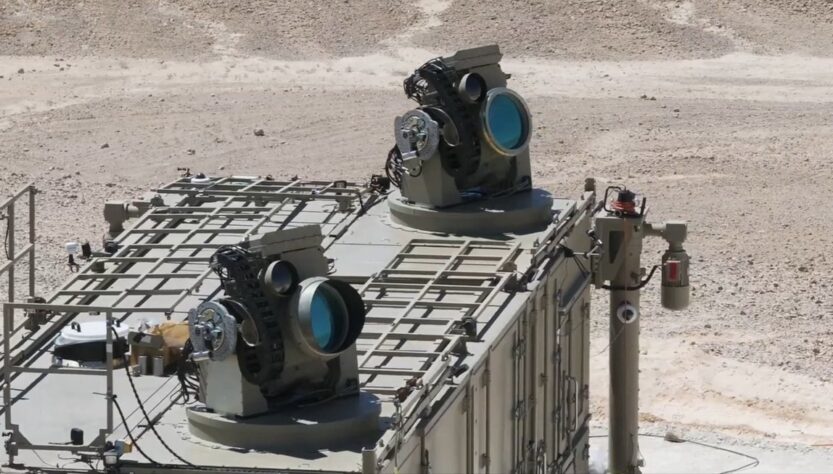
🚨Israel’s “Iron Beam” has been caught on camera for the first time EVER
— BRITAIN IS BROKEN 🇬🇧 (@BROKENBRITAIN0) March 2, 2026
The direct energy weapon can be seen EFFORTLESSLY taking down rockets with EASE 😮
What was once a conspiracy is now reality….
pic.twitter.com/BkmpmfgluW
The Iron Dome is part of the lower tier of Israel’s air and missile defense (AMD) system and was designed to intercept rockets, artillery, mortars, and some drones. By 2020, it proved able to intercept some cruise missiles. Operational since 2011, the Israeli military reportedly stated that Iron Dome destroyed 85 percent of “rockets headed toward Israeli towns and cities” in a 2012 conflict with Hamas, a success rate that the Israeli Ministry of Defense said reached 97 percent in 2022.
Arrow is a U.S.- and Israeli- codeveloped ground-based ballistic missile defense system that constitutes the “upper tier” of Israel’s AMD architecture, with Arrow 3 designed to protect against long-range ballistic missile threats, intercepting missiles at altitudes over 100 km and potentially much higher. The older Arrow 2 is also designed to destroy incoming long-range missiles and reportedly has a maximum intercept altitude of approximately 90 km.
While the exact prices are not disclosed and change over time, Iron Dome interceptors are estimated to cost $100,000 to $200,000 each, while Arrow 2 and 3 are, respectively, estimated to cost $3 million and around $4 million per interceptor. When attacks on Israel consist of hundreds of rockets and missiles, costs can compound quickly.
Strain on Israeli interceptor stockpiles has increased due to the ongoing conflict with Iran. During the June 2025 12-Day War, Iran launched more than 500 ballistic missiles at Israel. Impressively, only a small portion of interception attempts were reportedly unsuccessful, although many Iranian missiles fell short or landed in open areas.
The conflicts with Iran and its terror proxies since October 7, 2023, have reduced the inventories of Israel’s air and missile defense interceptors. While Iran was racing to reconstitute its ballistic missile arsenal after the 12-Day War, Israel was racing to rebuild its interceptor inventories. The current conflict, however, has once again consumed some of Israel’s Arrow interceptors, with Iran having fired hundreds of missiles at Israel.
This is where Iron Dome has apparently stepped up, appearing to demonstrate some capability to intercept ballistic missiles as well.
In the 12-Day War, Iron Dome reportedly intercepted medium-range ballistic missiles. In one instance on June 20, an online tracker appeared to document an Iron Dome interception of Iranian missiles or missile debris.
This ballistic missile interception capability seems to be on display again in the current conflict. Trackers posted footage of several possible Iron Dome missile interceptions during the day and night of March 11. While not capable of replacing higher-tier systems, such as Arrow and David’s Sling, Iron Dome’s last-ditch capability saves lives and is an unexpected boon for Israel’s missile defenses.
Given the significant expenditure on Arrow and Iron Dome interceptors, several urgent steps are necessary to strengthen their production capacity.
Suppliers based in the United States produce multiple components for Iron Dome. But that is not enough. The United States should work with Israel to strengthen production, integration, and testing capacity in the United States for the Iron Dome system. This will create U.S. jobs, strengthen the American defense industrial base, and bolster Israel’s defenses.
After all, Iron Dome not only helps with the ballistic missile threat but is still needed to address the enduring rocket and drone threat to Israel. Hezbollah has launched hundreds of rockets in recent days.
Recognizing this need, a Raytheon-Rafael joint venture secured an approximately $1.25 billion contract in November 2025 to supply Israel with Tamir interceptors built in Arkansas, alongside the U.S.-licensed version, SkyHunter. This additional capacity cannot come soon enough, as Iran and Hezbollah continue to fire rockets, missiles, and drones at Israel.
Iron Dome cannot replace Arrow when it comes to defending against ballistic missiles. But it can help and is already saving lives.
Ryan Brobst is the deputy director at the Foundation for Defense of Democracies’ (FDD’s) Center on Military and Political Power (CMPP), where Bradley Bowman is the senior director and Justin Leopold-Cohen is a senior research analyst.
This article was originally published by RealClearDefense and made available via RealClearWire.
