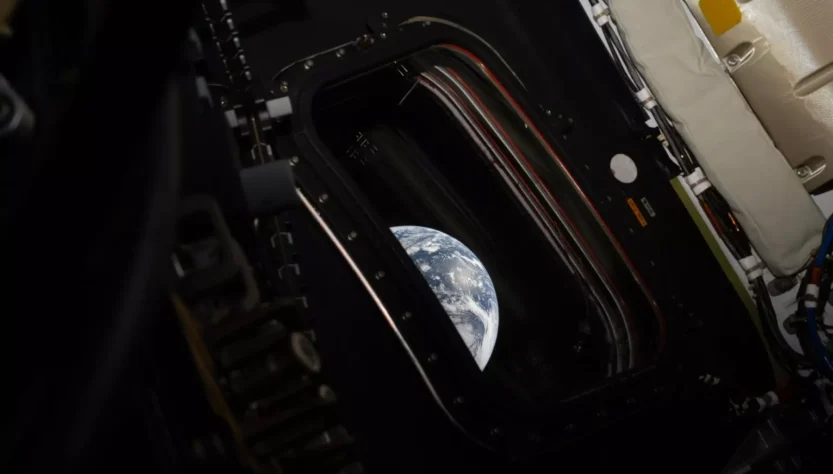
For the first time in over 50 years, humans are returning to the lunar neighborhood. Today, April 6, 2026, the four astronauts of the Artemis II mission are completing their historic flyby of the Moon. This moment represents the furthest humans have ever traveled from Earth, and thanks to a global broadcasting effort, you can watch the entire event live from your own screen.
How and Where to Watch
In a landmark partnership, NASA has teamed up with Netflix to provide a high-definition window into the mission. This broadcast is designed to capture the most visually stunning segments of the journey as the Orion spacecraft approaches the lunar surface.
Livestream coverage begins today at 2:45 PM ET (11:45 AM PT / 6:45 PM GMT). You can find the live feed on the Netflix platform, the NASA+ streaming service, and the official NASA YouTube channel. Most major news networks and digital platforms like Amazon Prime and Disney+ are also carrying the feed, ensuring this “giant leap” is accessible to most people with an internet connection.
Rare Eclipse from the Dark Side of the Moon
While the world watches from Earth, the crew—Reid Wiseman, Victor Glover, Christina Koch, and Jeremy Hansen—will witness a phenomenon no human on our planet can see today: a Total Solar Eclipse viewed from deep space.
As Orion swings behind the Moon, the lunar body will pass directly between the spacecraft and the Sun. For approximately 57 minutes, the Sun will be completely obscured, leaving only the glowing, ethereal ring of the solar corona visible behind the dark silhouette of the Moon. This perspective offers a hauntingly beautiful view of the Sun’s outer atmosphere that is impossible to replicate from Earth’s surface.
This rare 53-minute total solar eclipse, lasting seven times longer than any possible on Earth, was an unexpected gift for the crew after technical delays shifted their launch from February to April 1, 2026, perfectly aligning their lunar flyby with this celestial event.
- With the Sun hidden, they’ll have a rare chance to observe a mostly dark Moon. NASA plans for them to look for:
- Flashes from meteoroid impacts on the lunar surface.
- Dust lofting along the Moon’s edge.
- Deep-space objects like planets, stars, or galaxies.
This occurs toward the end of their ~6-hour lunar observation window during the flyby. Livestream of the Artemis II Lunar Flyby This video provides the official NASA broadcast and high-definition views of the Artemis II mission as it approaches the Moon.
Scientific Observation in the Shadows
This flyby is a critical data-gathering mission for the upcoming Artemis III lunar landing. During the period of peak proximity, the crew will be engaged in intensive observation protocols:
Real-time Geology: Utilizing their specialized training, the astronauts will provide live commentary on surface textures, ridges, and slopes on the lunar far side. These observations help scientists understand the mineral composition and terrain of regions rarely seen in such detail.
Shadow Analysis: The unique lighting conditions of the eclipse and the flyby create long, dramatic shadows. These shadows allow the crew to better estimate the true depth of craters and the height of lunar mountain ranges, which is vital for selecting future landing sites.
The Communication Blackout: A highlight of the broadcast will be the period of radio silence. As the spacecraft moves behind the Moon, the lunar mass will block all signals to and from Earth for about 40 minutes. This “Loss of Signal” is a standard but tension-filled part of lunar missions, marking the moment the crew is truly on their own in deep space.
Why You Should Tune In
This mission is about more than just breaking distance records. When the Orion spacecraft reaches its furthest point—over 250,000 miles from Earth—it signals the official start of a new era of human exploration.
Watching the livestream allows you to share in the “Earthrise” moment, seeing our home planet as a small, fragile blue marble hanging in the blackness of space. It is a rare opportunity to witness history in real-time as we prepare to put boots back on the Moon and, eventually, Mars.