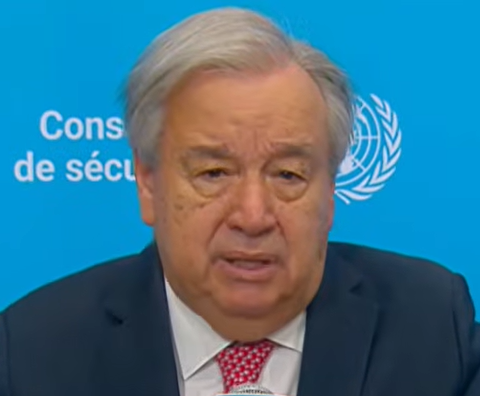
The United Nations is sounding the alarm that it faces “imminent financial collapse.” Secretary-General António Guterres sent letters in late January 2026 warning member states that the world body could run out of cash by July. He called it a “race to bankruptcy” driven by unpaid dues and a bizarre rule that forces the UN to refund money it never actually collected. The numbers back him up on the surface: the organization closed 2025 with a record $1.57 billion in outstanding regular-budget arrears – more than double the year before. The 2026 regular budget was slashed to $3.45 billion, down seven percent from 2025, with plans for fifteen percent spending cuts and roughly 2,600 to 2,900 job losses. Liquidity reserves are gone. Payroll and vendors could be at risk by mid-year.
This is not invented hysteria. The cash-flow crisis is real. But the timing and the framing tell the real story: this is the UN’s latest pressure campaign aimed squarely at the United States. The Trump administration withheld regular-budget payments throughout 2025, pulled out of multiple UN bodies, slashed voluntary contributions, and made clear that endless blank checks for a bloated, anti-American bureaucracy are over. America accounts for about ninety-five percent of the regular-budget arrears – roughly $2.19 billion owed as of early February 2026, including $827 million from 2025 and $767 million for 2026, plus another $2.4 billion in peacekeeping back dues. The UN knows exactly who holds the purse strings, and it is using every headline to demand the money without delivering the reforms.
UN Secretary-General António Guterres warns the organization faces collapse without continued U.S. funding, which contributes roughly $2.2 billion to its core budget.
“the United Nations is on the brink of total collapse” pic.twitter.com/OM17TgCgqY
— Brandon Straka #WalkAway (@BrandonStraka) April 2, 2026
The Kafkaesque Rule That Guarantees Crisis
The deeper problem is the UN’s own financial rules, which Guterres himself calls “Kafkaesque.” The organization must credit back unspent dues to member states every year – even if it never received the cash in the first place. In early 2026 alone it had to return $227 million it did not have and offset another $72 million against arrears. That creates a self-reinforcing death spiral: non-payers create shortfalls, the UN refunds phantom money, liquidity evaporates, and the begging intensifies. Guterres has warned for months that this setup turns the UN into a “race to bankruptcy.” He wants the rules changed so the organization can keep cash it never collected. Translation: lock in future American payments and remove the leverage that forces accountability.
This is not a new script. The UN has run chronic deficits for years while funding lavish headquarters lifestyles, endless conferences, and pet projects that rarely advance American interests. The difference now is that the Trump White House refuses to play along. A token $160 million U.S. payment arrived in February 2026 as a down payment, but the bulk of the arrears remains unpaid. The message is clear: pay for results or watch the UN shrink. Guterres’ warnings are real on the numbers, but they are also a calculated plea for the status quo.
The New York Headquarters: Decades of Neglect on Full Display
The UN’s financial mess mirrors the physical decay of its flagship headquarters in New York. The complex along the East River, built in the late 1940s and early 1950s, has been in serious disrepair for years. Aging infrastructure, leaky roofs, outdated systems, and failing mechanicals turned the iconic buildings into a maintenance nightmare. A massive renovation launched over a decade ago ballooned in cost – Trump himself complained in 2005 and again during his first term that he could have done it faster and cheaper for around $500 million instead of the $2 billion to $4 billion actually spent. Even after that facelift, the complex never fully recovered its shine.
Now the budget crisis is accelerating the decline. As part of the UN80 Initiative and cost-cutting drive, the organization is vacating buildings in New York and Geneva. Two more New York structures are slated to close by 2027 to generate savings. In Geneva, the historic Palais Wilson could be abandoned starting mid-2026 because lease payments have become unaffordable. Staff relocations to cheaper duty stations in Africa, Asia, and Latin America are underway. The gleaming headquarters that once symbolized postwar idealism now stands as a monument to bureaucratic bloat: grand on the outside, crumbling from within because the UN spent decades prioritizing globalist fantasies over basic upkeep.
The disrepair is not mysterious. Chronic underfunding from member-state arrears combined with waste on non-essential programs left no money for proper maintenance. When you pour resources into climate panels, diversity initiatives, and anti-Israel resolutions instead of keeping the lights on and the pipes working, the buildings suffer. The same mindset that produced the cash crisis produced the leaking ceilings and outdated wiring. America First pressure is finally forcing the UN to confront the consequences of its own priorities.
America First Reality Check
The UN’s financial warnings are not fabricated, but they are not an innocent cry for help either. This is the predictable outcome of a system that treated American taxpayers as an unlimited ATM while delivering little in return. Guterres can warn of collapse by July all he wants. The real choice belongs to the United States: keep subsidizing an organization that routinely works against American interests, or use the leverage of withheld dues to demand real reform, real cuts, and real accountability.
Trump’s approach is working exactly as intended. The UN is shrinking its footprint, slashing jobs, consolidating operations, and finally feeling the pain of living within its means. The New York headquarters looks tired because the whole organization has been tired for decades – bloated, inefficient, and hostile to the one country that keeps it afloat. If the UN wants to avoid bankruptcy, it can start by delivering value instead of lectures. Until then, every American dollar withheld is a dollar well spent. The midterms will settle whether voters want more of the same globalist grift or the hard-nosed realism that puts America first. The UN’s cash crunch is real. The solution is simpler than the bureaucrats want to admit: reform or shrink. America is no longer in the business of saving failing international institutions from themselves.