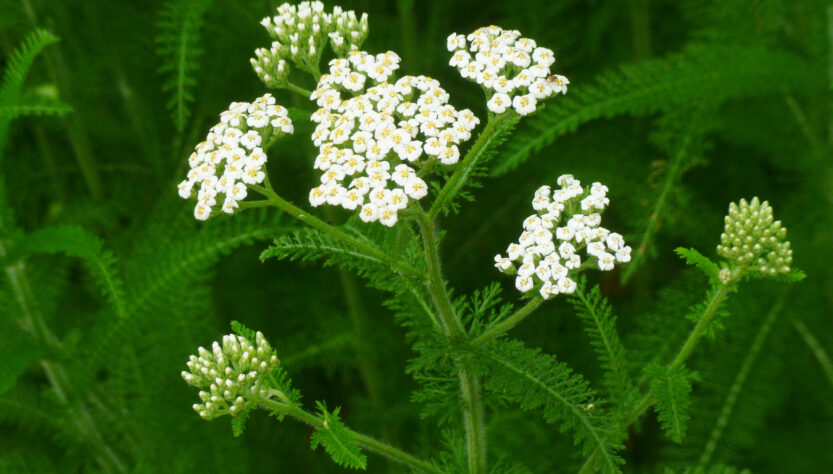
Yarrow (Achillea millefolium) has earned its reputation as a powerful wound healer over thousands of years. Ancient Greek warriors, including the legendary Achilles, reportedly carried it into battle to staunch bleeding and speed recovery. Today, herbalists still turn to this unassuming perennial for its remarkable ability to support the body’s natural repair processes.
How to use yarrow to save your life pic.twitter.com/013he3iPfP
— Survival Skill (@Survival__skill) May 2, 2026
The Benefits of Yarrow for Wounds
Yarrow acts as a natural styptic, helping to stop bleeding quickly when applied directly to cuts, scrapes, or punctures. Its leaves contain compounds like achilleine that encourage blood clotting, while its astringent properties tighten tissues and reduce oozing. Beyond clotting, yarrow offers antiseptic and anti-inflammatory effects that help prevent infection and calm swelling. A simple poultice—made by chewing fresh leaves or crushing dried ones into a paste—can be pressed onto a wound for fast relief. Herbal traditions also praise it for easing pain at the site and promoting cleaner, faster healing of minor injuries, bruises, and even nosebleeds when the powdered herb is applied.
Other Traditional Herbal Uses of Yarrow
Yarrow’s versatility extends well beyond first aid. As a bitter digestive tonic, it stimulates appetite, eases indigestion, bloating, and flatulence. Its diaphoretic action makes it a go-to remedy for fevers, colds, and flu; a warm tea encourages sweating and helps the body break a fever naturally. Women have long used yarrow to relieve menstrual cramps and support cycle regulation thanks to its gentle antispasmodic qualities. Additional traditional applications include soothing headaches, reducing inflammation in conditions like varicose veins or hemorrhoids, and supporting urinary tract health. In some herbal practices, it serves as a mild calming herb for tension or restlessness. These uses stem from centuries of observation and are typically prepared as teas, tinctures, or topical salves.
A Word of Caution: Imposters and Lookalikes
Foragers should exercise care when identifying yarrow in the wild, as it can be confused with toxic lookalikes in the carrot family (Apiaceae), most notably poison hemlock (Conium maculatum) and, to a lesser extent, Queen Anne’s lace (Daucus carota).
To confidently confirm yarrow, focus on these key identifying traits used together: the leaves are finely divided into hundreds of tiny, fern-like segments (hence the species name millefolium, meaning “thousand-leaved”), giving them a soft, feathery appearance and a pleasantly aromatic, spicy-sage or chamomile-like scent when crushed between your fingers—never a foul or musty odor.
The stems are slender, upright, and often slightly hairy or woolly with fine white hairs, typically reaching 1–3 feet tall; they lack the smooth, glossy texture and distinctive purple blotches or spots found on poison hemlock. Flowers appear in flat-topped clusters (called corymbs) rather than the rounded, umbrella-shaped umbels of the carrot family; each tiny composite flower head has 4–6 white (or occasionally pale pink) petal-like ray florets surrounding a yellowish center.
Yarrow grows in clumps from spreading rhizomes, prefers sunny meadows, roadsides, and disturbed ground, and blooms from late spring through fall. In contrast, poison hemlock has broader, parsley-like leaves, smooth purple-spotted stems, a rank mouse-like smell, and true umbels of tiny white flowers. Queen Anne’s lace features much larger, lacy umbels (often with a single dark purple floret in the center), hairier stems, and a distinct carrot scent when the root is bruised.
The safest approach is to use multiple identification traits—leaf texture and scent, stem appearance, flower structure, and growth habit—along with reliable field guides or expert guidance. Never harvest or use a plant unless you are 100% certain of its identity.