The United States officially left the World Health Organization on January 22, 2026. President Trump initiated the process on his first day back in office with an executive order that paused funding and started the required one-year notice period. This marked the end of decades of U.S. membership and funding for an organization viewed by many as ineffective, politically captured, and unwilling to reform.
Timeline
- 1948: U.S. helps found the WHO.
- July 2020: First Trump administration announces withdrawal over COVID failures (effective 2021).
- January 2021: Biden reverses it and restores funding.
- January 20, 2025: Trump signs order restarting withdrawal on day one of second term.
- January 22, 2026: Full U.S. exit completed.
WHO Leadership Failures Under Tedros During COVID
Tedros Adhanom Ghebreyesus, the Director-General, delivered one of the worst performances in global health leadership history. Early in the outbreak, his organization repeated Chinese government lines denying human-to-human transmission despite evidence from doctors on the ground. Tedros delayed declaring a Public Health Emergency until late January 2020 and only called it a pandemic in March — weeks after the virus had spread widely.
He publicly praised China’s “transparency” and criticized countries for imposing travel restrictions on China, even as Beijing was silencing whistleblowers, destroying samples, and hiding the scale of the problem. Tedros, who is not a physician, rose to the position with significant Chinese support. His deference to Beijing over independent science cost lives and trust. The pattern suggested political loyalty mattered more than public health.
Broader Corruption and Structural Problems
The WHO suffers from deep, systemic issues. Most of its budget comes from voluntary donations rather than fixed dues, making it dependent on big donors and vulnerable to influence. The U.S. historically paid far more than anyone else, while China contributed relatively little despite its size and power. This setup allowed political interests — especially China’s — to shape priorities.
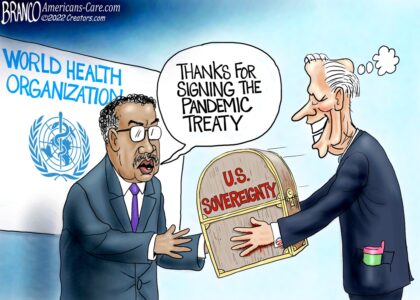
Tedros himself has a controversial past, including accusations during his time as Ethiopia’s health minister of downplaying cholera outbreaks to protect the government’s image. The organization has blocked serious investigation into COVID origins, resisted reforms, and pursued new agreements that critics see as attempts to grab more power over sovereign nations without fixing its own accountability failures. Scandals, opacity, and a culture of protecting powerful member states have eroded its credibility for years.
Implications of the U.S. Exit
This withdrawal is a strong positive step. America stops pouring taxpayer money into an unaccountable bureaucracy and can now focus on direct partnerships with other countries, its own agencies like the CDC, and reliable allies. It sends a clear message that blank-check support for failure is over.
Short-term coordination gaps may appear in global surveillance, but the U.S. has the tools to handle threats independently. Other nations, especially poorer ones, will need to find new funding sources — exposing how much the system relied on one flawed contributor. China may try to increase its role, which only reinforces why leaving was the right call.
Overall, exiting restores U.S. leverage and sovereignty. Real global health cooperation requires competence and honesty, not endless subsidies for an organization that repeatedly failed when it mattered most. This decision prioritizes results over outdated multilateral habits.