When the Strait of Hormuz effectively closed in early 2026, the United States faced a genuine emergency: a fifth of the world’s oil and LNG supply cut off overnight, and domestic markets bracing for shortages. The Trump administration’s response — a temporary, targeted waiver of a 106-year-old shipping law — was exactly the kind of pragmatic flexibility government should show in a crisis.
It unlocked real capacity, not empty promises. The numbers back this up. Under the waiver, the West Coast, Alaska and Hawaii region took in 10.7 million barrels of fuel — an 83% jump over the region’s normal annual baseline. Puerto Rico received 3.63 million barrels, 97% above its usual pace and on track to beat any full prior year. More jet fuel moved to the West Coast under the waiver than in the previous 36 years combined. This wasn’t marginal — it was proof that American demand for domestic shipping had been going unmet for decades.
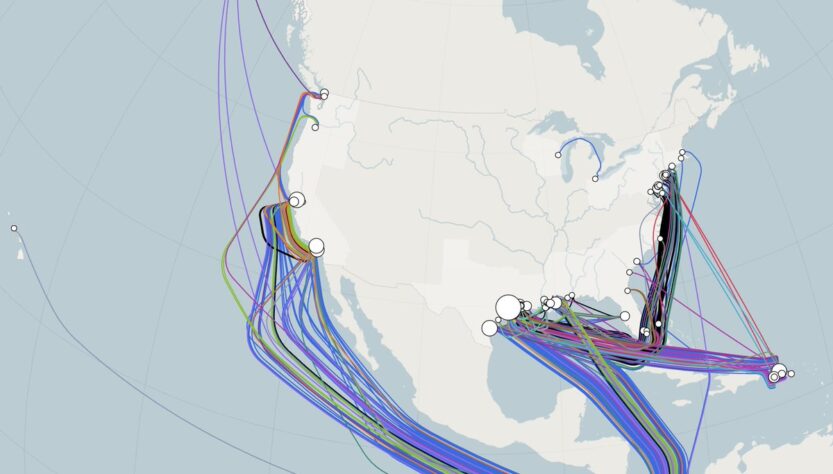
The White House waived Jones Act requirements in mid-March, and it has generated billions in economic activity and revealed multiple natural trade routes that were impossible while the Act was in effect.
It supplemented, not replaced, American shipping. Critics warned the waiver would gut U.S. maritime jobs. But Cato’s tracking found all 56 Jones Act-qualified tankers stayed fully employed throughout the period. Foreign vessels weren’t stealing work from idle American ships — they were filling a gap the domestic fleet, by its own numbers, was structurally too small to fill. That’s not a threat to American shipping; it’s evidence the law had been artificially constraining trade that would otherwise be happening between Americans, in American ports, using American infrastructure on both ends.
The economic damage caused by the #JonesAct waiver goes far beyond the cargo moved under it.
— The American Waterways Operators (@AWOAdvocacy) August 5, 2026
The bigger problem? Economic uncertainty.
When businesses don't know whether longstanding maritime laws will be enforced tomorrow, they become reluctant to make major investments today.… pic.twitter.com/QatSscfiZa
It kept prices from spiking further. Energy Secretary Wright and administration officials pointed to real, if modest, relief — cheaper individual shipments on long hauls like Gulf Coast-to-California via the Panama Canal, and prices in California and the East Coast that were lower than they would have been absent the extra tanker capacity. In an energy market already reeling from a shooting war affecting a fifth of global supply, even incremental relief has value — nobody claimed the waiver alone would fix $4 gas.
Almost 50 million barrels (49.52) now shipped under the Jones Act waiver. pic.twitter.com/MRtWhtCGXF
— Colin Grabow (@cpgrabow) July 29, 2026
It exposed a policy worth debating on the merits. Perhaps the waiver’s most lasting benefit is informational: it gave the country a real-world glimpse of what U.S. shipping looks like without the Jones Act’s restrictions, using actual voyage data rather than theoretical modeling. That’s a rare and valuable natural experiment, and it strengthened the long-standing argument — from economists across the political spectrum — that the law suppresses domestic commerce that would otherwise happen naturally between American ports.
In short: a genuine national security emergency met with a temporary, reversible, and by-the-numbers effective policy tool — one that moved fuel where it was needed, supplemented rather than displaced American shipping, and generated data the country can use in the bigger debate over the Jones Act’s future.