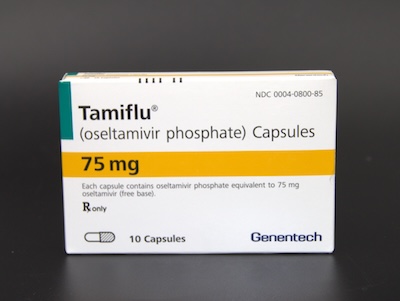
Here’s a sentence that should make you angry: a drug sat on the World Health Organization’s Essential Medicines List — specifically for severe influenza — got written into hospital guidelines worldwide, got stockpiled by governments preparing for the next pandemic, and got pushed hardest into the arms of the sickest, most vulnerable flu patients on earth…
…and until a study released this year, nobody had ever actually tested whether it worked in that population. Not once. Not in a real, randomized, controlled trial.
The bait-and-switch nobody talked about
The evidence base for Tamiflu (oseltamivir) was always thinner than the confidence surrounding it suggested. What existed:
- Solid randomized trials in healthy outpatients with mild flu — showing a modest benefit of less than a day’s faster recovery.
- For critically ill patients — the exact group guidelines pushed the drug on hardest — the evidence was observational. Meaning: doctors looked at patients who happened to get the drug and patients who didn’t, and drew conclusions from the pattern. That’s a far cry from a controlled trial, and it’s exactly the kind of evidence that’s vulnerable to bias — sicker patients often get treated differently in ways that have nothing to do with the drug itself.
That’s it. That’s the foundation an entire tier of global health policy was built on. Guidelines don’t say “we think this probably helps, based on some incomplete data.” They say give the drug. Full stop. And for years, doctors did — no questions asked, because “the guidelines say so.”
What happened when someone finally checked
A trial called REMAP-CAP — 442 critically ill flu patients, 139 hospitals, 18 countries — finally did what should have been done a decade ago: randomly assigned people to get the drug or not, and tracked who lived.
The results didn’t just fail to show benefit. They showed the drug may have been killing people:
| Group | Died within 90 days |
| No antiviral | 17 of 124 patients (13.7%) |
| Tamiflu, 5 days | 32 of 162 patients (19.8%) |
| Tamiflu, 10 days | 30 of 155 patients (19.4%) |
Across both Tamiflu groups combined, 62 of 317 patients died — versus 17 of 124 who got nothing. Roughly double the odds of death. A 98% statistical probability that the drug caused harm, not just failed to help. The trial’s own safety monitors pulled the plug on enrollment because the signal was too strong to keep exposing patients to it.
Nobody was hiding this — they just never looked
There’s a difference between fraud and negligence, and it’s worth being precise about which one this is. Nothing here suggests anyone forged data or lied about results. What it shows is something almost more damning: an entire global health infrastructure built confidence, policy, and stockpiles on a foundation nobody had rigorously tested — because the drug already “worked” in outpatients, and everyone assumed that extended to the sickest patients too. Nobody checked. For over a decade.
To be fair, this wasn’t a total blind spot. Sax’s own piece (Link below) on this notes there was already a “significant proportion of clinicians and clinical researchers who simply didn’t believe the evidence supporting oseltamivir” for this exact population — people who suspected the drug’s benefits were overstated and the observational data was hopelessly confounded. They were, it turns out, right to be skeptical. It just took until 2026 for anyone to actually run the trial that would settle it.
Congratulations to the @remap_cap investigators for conducting this important clinical trial, which will undoubtedly change clinical practice and treatment guidelines (or at least it should). Free link in first reply. @NEJM pic.twitter.com/LPADDUQkus
— Paul Sax (@PaulSaxMD) August 18, 2026
Why this should bother you
This isn’t really about Tamiflu specifically. It’s about a pattern:
A drug becomes “standard of care.” Guidelines cite each other. Institutions cite guidelines. Confidence compounds without ever being re-tested at the point where it matters most — the sickest patients, the highest stakes.
Nobody re-checks the foundation because everyone above them already didn’t. The WHO cites the evidence. National guidelines cite the WHO. Hospitals cite national guidelines. Doctors cite hospital protocols. At no point in that chain did anyone go back and ask: wait, was this actually tested in the population we’re using it on?
It takes a genuine outlier — a large, expensive, multi-country randomized trial — to finally answer a question that should have been asked before the drug ever made it onto an “essential medicines” list for this use case.
That’s the indictment. Not a conspiracy. Not fraud. Just institutional inertia, dressed up as consensus, that took over a decade and hundreds of ICU patients to finally get checked — and turned out to be wrong when someone finally did.
The takeaway
Question the chain. “The guidelines say so” is not evidence — it’s a citation trail, and citation trails can be built on assumptions nobody ever verified. The people who were skeptical of oseltamivir in critically ill patients for years, and got dismissed for it, were vindicated by a trial that should have existed a decade earlier.
That’s the real lesson here: how much of “settled medicine” is actually settled, and how much is just repetition that nobody’s gotten around to testing.
This is commentary on a specific clinical trial and evidence chain — not a claim of fraud or conspiracy, and not medical advice for any individual treatment decision. Talk to a healthcare provider about actual flu treatment.
Article: https://voices.nejm.org/doi/full/10.1056/VOICESpost2600044 New England Journal of Medicine Voices.