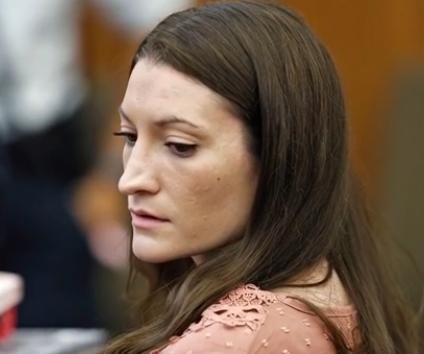
Lindsay Clancy strangled her children in the basement in January 2023. Cora was five. Dawson was three. Callan was eight months. Exercise bands. Husband out on an errand. Then she cut herself and went out a second-story window. That is not a metaphor. That is the crime.
The trial in Plymouth was never about whether she did it. She did it. The question was whether postpartum psychosis erased criminal responsibility — not guilty by reason of insanity — or whether a woman who could wait for her husband to leave, kill three children, and still arrange a jump knew enough of right and wrong to answer for it. After five weeks and something like thirty-eight hours behind the door, eleven jurors were ready to say she snapped. One was not. Mistrial. Friday, September 4. She stays in the state hospital. The district attorney decides whether to try it again.
The holdout is a man. Fellow jurors who wanted the acquittal went on television and described him as arrogant, as a man who “had the hardest time getting off the fact that Lindsay viciously killed her children,” as someone who admitted reasonable doubt and then would not sign the form that said not guilty by insanity. The defense lawyer called him a thief of seven weeks and hoped he slept well. The forewoman had already started signing verdict sheets. Then he said no.
Last week one of those jurors sat with a morning-show host and added the demographic the commentariat had been writing around. Nine women, three men. One person of color. The person of color was a man. The holdout was that man. The host asked if a Black man was the holdout, heard yes, and said she had to sit with that for a second. Whoa.
That pause is the whole post-trial.
Gayle King upon finding out that the heroic holdout juror in the Lindsay Clancy murder trial is a black man:
“Woah. I have to sit with that for just a second.”
Wow. pic.twitter.com/8av5TKWTW7
— Steve Guest (@SteveGuest) September 11, 2026
What the Room Actually Did
Unanimity is not a suggestion. Massachusetts, like every serious criminal court, does not let eleven people outvote one on murder. The judge sent them back twice. They sent notes. The defense tried to bounce the holdout and lost in the trial court and at the state’s high court. That is the system working, not the system failing. A juror who will not rubber-stamp an insanity verdict after watching how three children died is not a malfunction. He is the reason you have twelve seats instead of a show of hands in the parking lot.
The women who talked described medical charts, nurses on the panel interpreting hospital notes, a mother who had sought help and loved her kids and therefore “had to have snapped.” That is a story. It may even be a true story about illness. It is not a story that deletes the basement. The holdout, by their own account, would not delete the basement. He mocked up the bands and a bottle in the jury room, according to another juror. Crude. Visual. The kind of thing people do when words have already been used up. They called it arrogance. You can call it the last adult in the room refusing to treat three small bodies as a TED Talk.
Then Came the Race Card They Did Not Expect
For a week the holdout was a nameless obstacle. Online he was cruel, unfeeling, a man who “didn’t get it,” a problem the judge should have pried out so the eleven could finish the mercy they had already rehearsed. The lawyer all but named him a vandal. Then a juror said he was Black — the only Black person in the box — and the same chorus had to decide whether “listen to Black voices” applied when the Black voice said the white nurse from Duxbury still killed her children.
They did not have a speech for that. The morning-show gasp was the speech. Sit with it. The people who spent a decade explaining that race is a lens suddenly discovered a Black man who would not use their lens. He looked at a white defendant, a sympathetic diagnosis, and three dead kids, and he would not sign. That does not make him a prophet. It makes him a juror. The fury at him was already ugly when he was a silhouette. It did not get prettier when he acquired a color.
Are some of the loudest voices white women who wanted a particular ending and treated dissent as stupidity? Yes. That is in the interviews. Forewoman, chef, contractor, cameras on. They are allowed to think he was wrong. They are not entitled to a country where one man’s refusal is a scandal because it spoiled the narrative. Calling him racist for declining to acquit is a confession that the argument was never about the law. It was about who is allowed to withhold tears.
What Nobody Gets to Skip
Postpartum psychosis is real. Women have been failed by medicine. A retrial may end differently. A civil commitment may hold her either way. None of that turns a hung jury into a hate crime against the defendant. None of that makes the holdout a mascot. He has not given an interview. His name is sealed for now. Projecting a whole politics onto a man who has not spoken is the same vice the eleven are accused of — filling a silence with the story you brought from home.
The fallout is not a race war. It is a manners collapse. Eleven people wanted a medical ending. One person wanted the act to remain an act. The country split along the same line it always splits: compassion as verdict versus judgment as verdict. When the one turned out not to be the stock villain from the group chat, the group chat stalled. That stall is earned.
Three children are still dead. The juror who would not pretend otherwise does not owe anyone an apology for noticing. The people who called him a problem before they knew his race, and a puzzle after, can sit with that as long as they need. The basement does not move.