If it can happen here, it can happen anywhere.
Fairfax County kept finding the same mismatch: people who told the DMV they were not citizens, yet appeared on the voter rolls. The registrar sent the names out in batches. Seventy-one in one referral. Seventy-eight in another. Hundreds over about eighteen months. Every name went to Commonwealth’s Attorney Steve Descano and the Attorney General. The number of prosecutions was zero.
Then the Democrat-majority Electoral Board voted, in February 2026, to stop the referrals. The stated reasons were simple. The policy produced no charges. It consumed staff time at the elections office, the prosecutor’s office, and the attorney general’s office. A checkbox on a DMV form, they argued, would never meet the beyond-a-reasonable-doubt standard. So they stopped sending the names.
That is the closed loop. Find the cases. Refer the cases. Decline the cases. Call the referrals a burden. Then treat the empty prosecution file as proof that nothing was there.
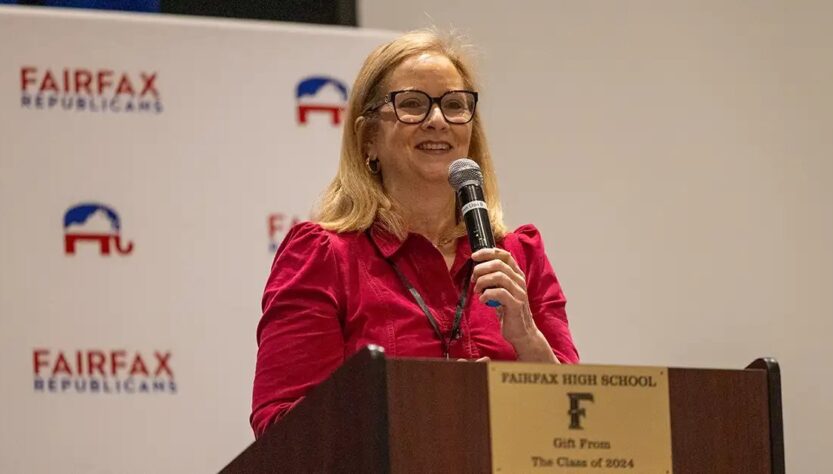
Katie Gorka, chair of the Fairfax GOP, described it as a system arranged not to know the answer—and then treating its own ignorance as reassurance.
These were not hunches pulled from the air. Virginia flags people who told a state agency they were noncitizens. Fairfax canceled 985 registrations on citizenship grounds between January 2022 and July 2024. County Republicans count 1,912 cancellations over four years, including 538 in 2025. Statewide, Virginia removed 6,303 in two and a half years. Ohio found 597 potential noncitizen registrations, 138 of whom had cast ballots. Texas and North Carolina have reported thousands more.
The cases that surface are usually the ones who volunteered the truth at the DMV or on another government form. Virginia does not systematically verify citizenship at registration. Detection is mostly accidental. Prosecution is optional. Databases of “proven” fraud then exclude everything that was never charged.
Prosecutors have a legitimate point about intent. A mismatched checkbox is not, by itself, a finished criminal case. Some flags are errors. Some people never voted after the mismatch. Registrar Eric Spicer told the board that many names on the lists had already been removed. That is fair as far as it goes.
It does not justify the next step: shutting off the referrals so the public never sees the next list. If the evidence is weak, say so in writing, case by case. If the DMV data is dirty, fix the data-sharing. If the statute is too hard to prove, take that argument to the legislature. What officials should not do is find hundreds of possible violations, test none of them in court, and then announce that the problem is vanishingly rare.
Every ineligible ballot cancels a legal one. Virginia has already seen a House of Delegates seat decided by a tie and a drawing of lots. Rare is not the same as irrelevant. “We stopped looking” is not the same as “we looked and found nothing.”
This is what happens when the people who maintain the rolls and the people who enforce election law decide that looking is the inconvenience. The registrar flags. The prosecutor sits. The board rescinds the policy. The official tallies stay empty. Commentators cite the empty tallies. The next close race is treated as settled.
Remember who runs the prosecutor’s office and the Electoral Board. That is not a slogan. Under the current arrangement, it is the only remaining check.
Fairfax County found hundreds of possible noncitizens on its voter rolls. It referred them to prosecutors. The number of prosecutions: zero.
— Fairfax GOP (@FairfaxGOP) September 14, 2026
Fairfax GOP Chairman Katie Gorka published the count in The Federalist last week. Here's what it shows.
Over roughly 18 months, the…