The most consequential result of last week’s election may not be in Congress at all. It may be in five state capitals, and it goes to the heart of how we choose a president.
Democrats won the governorship and both legislative chambers in Pennsylvania, Michigan, Arizona, Wisconsin and Nevada on Nov. 3, Axios reported. Those five new trifectas give them a path to activate the National Popular Vote Interstate Compact in time for the 2028 presidential election, without amending the Constitution.
How the compact works
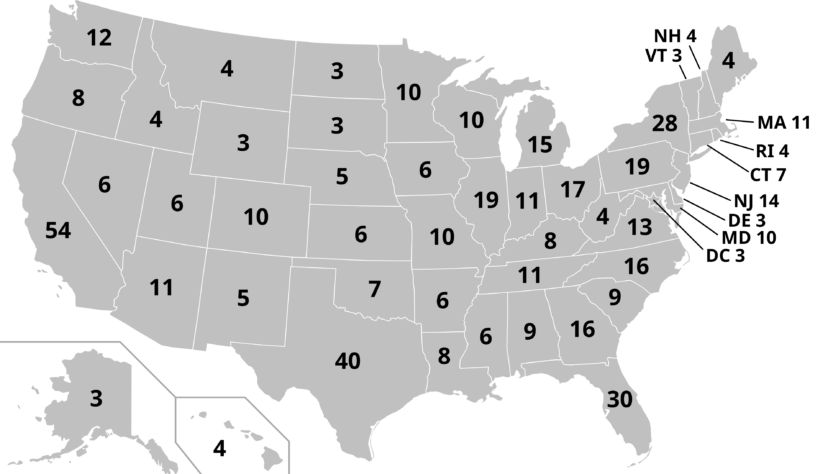
The compact is an agreement among states to award their electoral votes to whoever wins the national popular vote, no matter how their own voters cast their ballots. It takes effect only when the participating states together hold at least 270 electoral votes, enough to decide the presidency.
According to National Popular Vote, the group promoting it, the compact is law in 18 states and the District of Columbia, which together have 222 electoral votes. That leaves it 48 votes short. The five new Democratic trifectas have 61 electoral votes. If all five approved it in 2027, the group says, the compact would reach 283 electoral votes, 13 more than needed.
PennLive reported that Pennsylvania Gov. Josh Shapiro says he is open to the idea of a national popular vote.
Why it is not done yet
None of this is automatic. Each state would still have to pass the compact and have its governor sign it. Axios noted it is not clear the new majorities will make it a priority. Michigan failed to enact it during its last Democratic trifecta, from 2023 to 2024, and Nevada’s Democratic governor vetoed it in 2019, warning it could reduce his state’s influence over presidential elections. Lawmakers in all five states have introduced compact bills before.
There is also the Constitution. The Compact Clause says states may not enter agreements with one another without the consent of Congress. Notre Dame law professor Derek Muller has argued the compact would be unconstitutional without congressional approval, Axios reported. Supporters point to the Constitution’s language letting each state appoint electors “in such Manner as the Legislature thereof may direct.”
🚨 ELECTORAL COLLEGE UNDER ATTACK: Democrats want to kill the Electoral College WITHOUT a constitutional amendment. The National Popular Vote compact already has 222 electoral votes, 48 short of the 270 it needs to take effect. If Pennsylvania, Michigan, Wisconsin, Nevada and Arizona all join, it hits 283. That would leave small states with almost no say in picking the president. The Founders built it that way on purpose.
— Gunther Eagleman™ (@GuntherEagleman) November 9, 2026
What it would mean for you
Under the compact, the voters of Pennsylvania or Wisconsin could choose one candidate and see their state’s electors cast for the other. A state’s own majority would no longer settle its own electoral votes.
The Electoral College makes candidates win states across regions, not just run up totals in the biggest cities. It also contains disputes. A close national count under the compact would turn every precinct in America into a potential recount, instead of keeping a fight inside one or two states.
The bottom line
The founders built the presidency on the states for a reason. A change this large deserves a constitutional amendment, debated in the open and ratified by three-fourths of the states. It should not slip in through five legislatures that won their majorities talking about grocery prices and gas.
If Democrats believe the country wants a national popular vote, they should make that case and propose an amendment. Republicans in these states should demand public hearings, put every lawmaker on record, and be ready to take the Compact Clause question to court.
Voters in those five states should watch their legislatures closely in 2027 and tell their lawmakers where they stand.