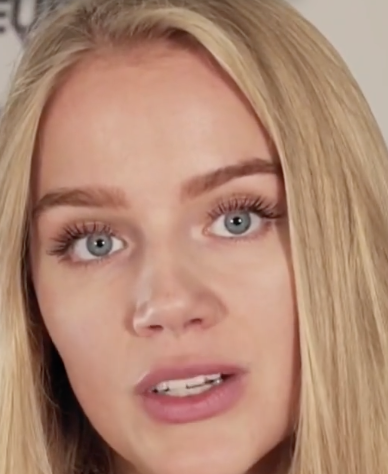
On Tuesday night, a member of the British Parliament held a political event in his own country, and the speaker he invited could not attend because the Home Office would not clear her to enter.
The MP is Rupert Lowe, leader of the Restore Britain party. The speaker is Eva Vlaardingerbroek, a Dutch lawyer and commentator who campaigns against mass migration and has a large following on X.
How she was kept out
In January, the Home Office cancelled her electronic travel authorization, the £16 permit most European visitors need, after ruling that her presence was “not conducive to the public good,” The Telegraph reported. Under Home Office guidance, that means it is undesirable to admit a person “based on their character, conduct, or associations because they pose a threat to UK society.”
She told The Telegraph at the time, “I’m a 29-year-old lawyer with no criminal record, but I have an opinion, and apparently that’s my crime.”
Without that permit, she has to apply for a visa. After Lowe invited her, she wrote on X on Nov. 5 that the Home Office “is stalling my visa application, effectively denying me entry.” Lowe has said the department told her it could not process the application in time. The Home Office has not announced a formal refusal, and it has said in the past that she is not formally banned.
On Tuesday she posted, “If I had travelled to the UK, I would have been arrested on the spot and could have faced up to 4 years in prison.” Lowe called the episode “a dark day for free speech in our country.”
Her record
Vlaardingerbroek is no moderate, and you should know what she has said. At Tommy Robinson’s march in London in September 2025, she told the crowd that mass migration was causing “the rape, replacement and murder of our people,” The Telegraph reported. She supports mass deportations and is behind a petition calling for an EU-wide halt to immigration.
Those are hard words, and many people will reject them. But she has not been charged with any crime in Britain. She was invited by an elected member of Parliament to speak to his own supporters.
When her travel permit was first cancelled, Sarah Rogers, a State Department official, wrote on X: “Countries have been banning and restricting visas on opaque, frivolous viewpoint bases for a long time.”
What America should learn
I do not have to agree with every word Vlaardingerbroek has spoken to see the danger here. A government that lets its civil servants decide which foreign speakers an elected lawmaker may host has handed itself a power no free country should want.
Britain has no First Amendment, and this is what that looks like in practice. The standard is vague, the decision is made behind closed doors, and the delay does the work of a ban without anyone having to sign one.
Americans should watch for the same habits here. Any proposal that lets officials screen speakers by their opinions, whether through visas, “disinformation” boards or pressure on tech platforms, deserves fierce resistance from Congress and from all of us.
Britain gave the world much of its tradition of free speech. Today, an MP cannot bring a lawyer with no criminal record to speak at his own party’s event. We should guard what we still have, and the State Department was right to say so plainly.