The first inflation report since the Nov. 3 midterms confirms what most of us already knew at the checkout line. Prices are still climbing, and paychecks are barely keeping pace.
What the October numbers show
The Bureau of Labor Statistics reported on Nov. 10 that consumer prices rose 0.4% in October, after a 0.6% jump in September. Core prices, which leave out food and energy, rose 0.3% for the third month in a row. Food at home rose 0.4%, eating out rose 0.5%, and shelter rose 0.3%, making up more than 30% of the monthly increase. Energy rose 0.7%. Gasoline was up 1.0% for the month and, in the BLS table, 37.4% higher than in October 2025. Electricity rose 0.9%, while natural gas fell 0.8%.
There is no official yearly rate this time, because last fall’s government shutdown kept BLS from collecting October 2025 prices. Economists who estimated the gap put annual inflation at 3.9% to 4.0%, Reuters reported.
The pinch, and a stronger jobs report
BLS said real average hourly earnings were flat in October, because a 0.4% raise in pay was matched by a 0.4% rise in prices. Heather Long, chief economist at Navy Federal Credit Union, said the report implied an annual inflation rate of 4% against wage gains of 3.1%, the Washington Times reported. Kevin Hassett, director of the White House National Economic Council, called the inflation report “disappointing.” He told Fox Business, “Right now, the trickle-down from the higher energy prices is definitely very palpable in the data.” I respect that candor.
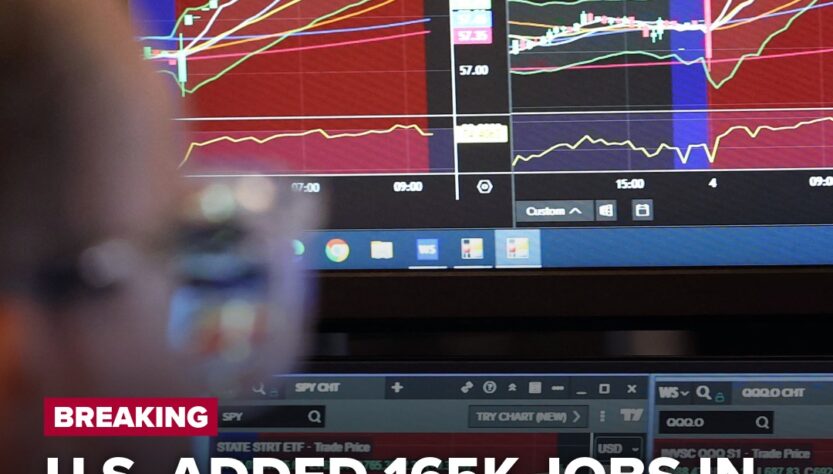
The U.S. added 165,000 jobs in October, blowing past Wall Street’s forecast of 59,000, the Bureau of Labor Statistics reported. The unemployment rate ticked down to 4.1%. https://t.co/XdUiuGl1ba
— The Washington Times (@WashTimes) November 8, 2026
That is the pinch at the pump and the grocery store. It is not the whole story. On Nov. 6 the same agency said the economy added 165,000 jobs last month, and that the unemployment rate was little changed at 4.1%. The gain was well above the average monthly increase of 48,000 over the prior 12 months.
A bump in the retirement account
The Treasury Department reported on Oct. 16 that foreign residents bought a net $300.7 billion in long-term U.S. securities in August. Over the 12 months through August, private foreign investors bought a net $844.2 billion of U.S. stocks. That inward investment has helped support the market underneath American pensions and 401(k)s.
Fidelity Investments said the average 401(k) balance in its plans reached a record $155,800 in the second quarter, up 13.1% from a year earlier, helped by a strong stock market, Fox Business reported. The post-election selloff took some of that back, but the S&P 500 was still up nearly 12% for the year, including dividends, through Thursday’s close, according to Slickcharts.
The Bureau of Labor and Statistics released a strong October jobs report, which tripled economists’ expectations. LINK: https://t.co/f8SGOHiMI9
— NewsNation (@NewsNation) November 6, 2026
What comes next
Fed Governor Christopher Waller said on Nov. 10 that the central bank should raise rates next month, which would make borrowing more expensive. Oil prices had fallen at least 10% in November, Reuters reported, and the Washington Times noted gas prices falling during a pause in Middle East fighting. The November price report is due Dec. 10.
The bottom line
I am not going to pretend the checkout line is fine. Prices are still outrunning wage gains over the year, by Heather Long’s math, and the war’s energy shock appears to be reaching the grocery store.
But I will not tell only half the story either. The economy added 165,000 jobs last month, per the Bureau of Labor Statistics, and foreign capital has been flowing into American stocks. Households are feeling the pinch. Their pensions and 401(k)s have, however, over this year, been getting a bump.
I have a plain question for the incoming Democratic majorities. Which of their plans brings down the price of a gallon of gas? More federal spending will not do it, and more American energy production would. For our households, this is a sensible season to buy staples before the next increase, pay down variable-rate debt, and keep a few weeks of food in the pantry.