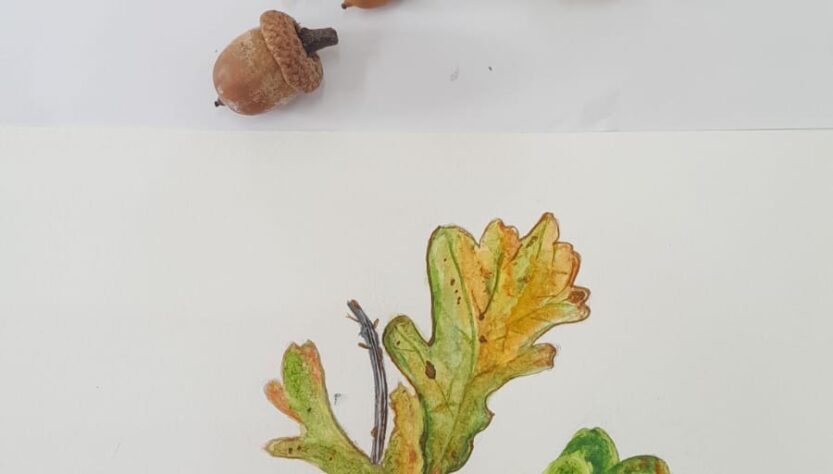
A heavy fall acorn crop can signal a jump in Lyme disease-carrying ticks two years later, and deer matter far less than most people think, according to a 35-year study from the Cary Institute of Ecosystem Studies in Millbrook, N.Y.
The study, led by Richard Ostfeld, who runs the program with Shannon LaDeau,, was published in the Proceedings of the National Academy of Sciences. It draws on monitoring that began in 1991 on a 2,000-acre forested property in Dutchess County, N.Y.
Nearly 500,000 Americans are diagnosed with Lyme disease each year. The bacterium that causes it, Borrelia burgdorferi, is usually spread by the blacklegged tick.
Acorns, then mice, then ticks
The researchers traced a chain that runs through the forest floor. In a masting year, when oaks drop an unusually large crop of acorns, white-footed mice have plenty to eat through winter. Their numbers climb the next year.
Years with especially large mouse populations were followed by roughly 40% more nymphal ticks the year after. Nymphs are young ticks at the stage after larvae. White-footed mice are efficient at passing the Lyme bacterium to the larval ticks that feed on them.
Put together, a big acorn crop can point to a rise in nymphal ticks about two years down the road.
Deer were not the driver
Deer have long been blamed for tick numbers. Across the full data set, the researchers found no statistically significant link between deer and nymphal tick abundance. A weak positive relationship showed up only in short stretches of the record.
More mice did not always mean a higher share of infected ticks, either. Skunks, squirrels and opossums also feed larval ticks but rarely pass on the bacterium, which dilutes the infection rate.
Weather surprises
Ticks proved hardier than expected. They survived extreme heat and cold in the wild, probably by moving deeper into soil or leaf litter, so a harsh winter may not cut their numbers much.
Warm years, on the other hand, tended to be followed by fewer nymphs, even though warmth helps mice. Those opposing effects make long-range forecasts difficult, and the team plans to keep monitoring the site.
What it means for you
If you hunt, hike, garden or work outdoors in oak country, the size of this fall’s acorn crop is worth noting. A heavy drop this year points to more nymphal ticks in the summer two years from now. The researchers say mouse counts could serve as an early warning, more useful than deer counts at their site.
Conclusion
The forest gives advance notice of a bad tick year. After a heavy acorn fall, plan on extra-careful tick checks for yourself, your children and your dogs after time outdoors two summers later.
Sources
- ScienceDaily (Cary Institute of Ecosystem Studies): Scientists discover a surprising link between acorns and Lyme disease
- PNAS: Ostfeld et al., “The ecology of Lyme disease: Long-term data, surprises, and a synthesis” (DOI 10.1073/pnas.2610907123)