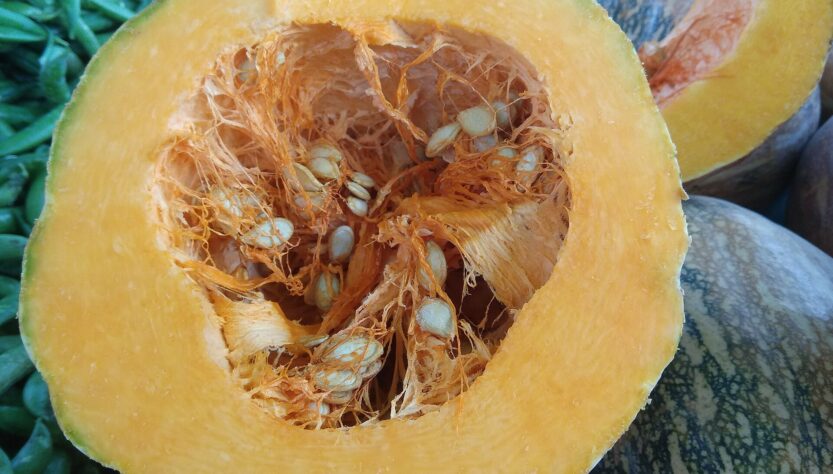
Fresh pie pumpkins still in season can be put up for the winter, but USDA-backed home canning guidance allows home canning of pumpkin only one way: in 1-inch cubes, in a pressure canner. Puree, mashed pumpkin and pumpkin butter should not be canned at home.
Why puree is off the table
Pumpkin is a low-acid food, so it must be pressure canned to destroy the spores of Clostridium botulinum, the bacterium that causes botulism. Puree is the problem. There is no research-tested recipe showing that heat reaches the center of a jar of pureed pumpkin well enough to kill those spores, Penn State Extension says.
The USDA withdrew its directions for canning mashed or pureed pumpkin in 1989, according to University of Illinois Extension, because the thickness of puree varies too much to set one safe processing time. The National Center for Home Food Preservation says plainly that “canning pumpkin butter is not recommended.” Penn State adds that mashed, pureed or grated squash should not be canned by pressure or by boiling water bath.
How to can cubes
The NCHFP recommends small “sugar” or “pie” pumpkins, since larger types tend to be watery and stringy. Plan on about 10 pounds for 9 pints, or about 16 pounds for 7 quarts.
- Wash the pumpkin, remove the seeds, cut it into 1-inch-wide slices and peel them.
- Cut the flesh into 1-inch cubes.
- Boil the cubes in water for 2 minutes. Do not mash or puree them.
- Pack the hot cubes into hot jars, cover with the boiling cooking liquid and leave 1 inch of headspace.
- Process pints for 55 minutes and quarts for 90 minutes.
In a weighted-gauge canner, use 10 pounds of pressure at 0 to 1,000 feet and 15 pounds above 1,000 feet. In a dial-gauge canner, use 11 pounds at 0 to 2,000 feet, 12 pounds at 2,001 to 4,000 feet, 13 pounds at 4,001 to 6,000 feet and 14 pounds at 6,001 to 8,000 feet.
When you are ready to bake, drain the cubes and strain or sieve them, Clemson Extension says. They will be ready for pie.
Freeze the puree instead
Puree freezes well. Cook pumpkin pieces until soft by boiling, steaming, pressure cooking or baking. Scoop the pulp from the rind, mash it and cool it by setting the pan in cold water and stirring now and then. Pack it in freezer containers or bags with half an inch of headspace.
Penn State suggests freezing bags flat on cookie sheets until solid. Fresh puree or pumpkin butter can also be kept in the refrigerator and eaten within 3 to 4 days, Illinois Extension says.
Dry it or roast the seeds
For pumpkin leather, the NCHFP blends 2 cups of cooked puree with half a cup of honey, a quarter teaspoon of cinnamon and an eighth teaspoon each of nutmeg and ground cloves. Spread it a quarter inch deep and dry at 140 degrees for 6 to 12 hours, until a fingertip pressed near the center leaves no mark.
Washed seeds can be dried at 115 to 120 degrees for 1 to 2 hours in a dehydrator, stirring often, according to Illinois Extension.
Conclusion
A few pie pumpkins and an afternoon with the pressure canner will give you shelf-stable jars for winter baking. Can the cubes, freeze the puree and keep pumpkin butter in the refrigerator.
Sources
- National Center for Home Food Preservation: Plenty of Pumpkin Possibilities
- Penn State Extension: Preserving Pumpkin Puree Safely at Home
- University of Illinois Extension: Preserving Pumpkin
- Clemson Cooperative Extension: Preserving Pumpkin & Winter Squash