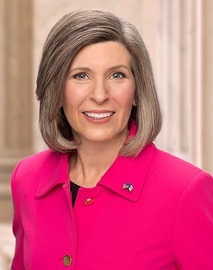
The 2026 United States Senate election in Iowa, scheduled for November 3, 2026, is poised to be a defining moment for the America First movement in a state that’s become a Republican stronghold. Incumbent Senator Joni Ernst, a Republican first elected in 2014, is running for a third term, defending her Class II seat against a growing field of challengers. With Iowa’s ruby-red credentials—Donald Trump carried the state by 13 points in 2024—this race should be a lock for the GOP. But Ernst’s recent missteps and a restless conservative base could make this a tougher fight than expected, testing the resilience of the America First agenda.
Ernst, who won her seat in 2014 with 52% of the vote and held it in 2020 with 51.8% against Democrat Theresa Greenfield, has built a reputation as a staunch supporter of Trump’s policies. Her record includes pushing for border security, tax cuts, and deregulation—hallmarks of the America First platform. But a May 2025 town hall in Parkersburg turned into a flashpoint when Ernst responded to concerns about Medicaid cuts in the “One Big Beautiful Bill Act” with, “Well, we all are going to die.” The quip, followed by a sarcastic apology video filmed in what appeared to be a cemetery, sparked outrage among voters and handed Democrats a rare opening in a state where Republicans dominate. Election forecasters like Sabato’s Crystal Ball downgraded the race from “Safe Republican” to “Likely Republican,” citing Ernst’s gaffe and a potentially shifting political landscape.
On the Republican side, Ernst faces a primary challenge from Joshua Smith, a former vice chair of the Libertarian National Committee and 2024 Libertarian presidential candidate. Smith, campaigning as a purer America First voice, has capitalized on conservative frustration with Ernst’s perceived waffling, particularly her initial skepticism about Trump’s Defense Secretary nominee Pete Hegseth. Smith’s platform calls for slashing federal spending, ending foreign aid, and doubling down on border enforcement, appealing to Iowa’s populist base. Another potential contender, Jim Carlin, a former state senator who challenged Chuck Grassley in the 2022 GOP primary, has been mentioned, but he hasn’t confirmed a run. Ernst’s campaign manager, Bryan Kraber, insists she’s the best choice, touting her record of fighting for Iowa’s farmers and making Washington “squeal.” Still, primary challengers could siphon off America First voters if Ernst doesn’t shore up her right flank.
Democrats, sensing an opportunity, are fielding multiple candidates. Nathan Sage, executive director of the Knoxville Chamber of Commerce, was the first to declare, launching his campaign in April 2025. Sage, a 40-year-old veteran and former journalist, is running as a working-class champion, focusing on better pay, healthcare, and affordability. A May 2025 Data for Progress poll showed Sage edging Ernst 47% to 45% after voters heard his biography, though Ernst led other Democrats by 5-6 points. State Representative J.D. Scholten, who nearly unseated Steve King in 2018, is also considering a run, bringing name recognition and a strong Sioux City base. State Senator Zach Wahls, a former Senate Minority Leader, and State Representative Joshua Turek are weighing bids, signaling a crowded Democratic primary set for June 2, 2026. Iowa Democratic strategist Jeff Link told reporters Ernst is making the race “more competitive every day,” but the state’s GOP voter registration edge—over 700,000 more Republicans than Democrats—poses a steep challenge.
Iowa’s political terrain heavily favors Republicans. The state’s Cook Partisan Voting Index is R+6, and the GOP controls all statewide executive offices except the auditor, both U.S. Senate seats, and all four congressional districts. In 2022, Governor Kim Reynolds won reelection with 58% of the vote, and the GOP holds supermajorities in the state legislature. Yet, Democrats showed signs of life in recent special elections, flipping a state Senate seat in Clinton County in January 2025 with Mike Zimmer’s 52% victory in a district Trump won by 21 points. This suggests Ernst could face a closer race if economic concerns, like fallout from Trump’s tariffs, sour voters.
The America First movement sees Iowa as non-negotiable. Ernst’s ability to rally the base while fending off primary challengers will determine whether she can keep the seat red. Her campaign is doubling down on Iowa’s conservative values—energy independence, pro-life policies, and resistance to federal overreach—but the Medicaid controversy and primary threats loom large. Democrats, meanwhile, are banking on Ernst’s stumbles and a strong ground game, but they’ll need a perfect storm to flip a state that’s been reliably Republican for a decade. Iowa’s 2026 Senate race will test whether the America First wave can hold firm or if cracks in the GOP armor give Democrats a fighting chance.