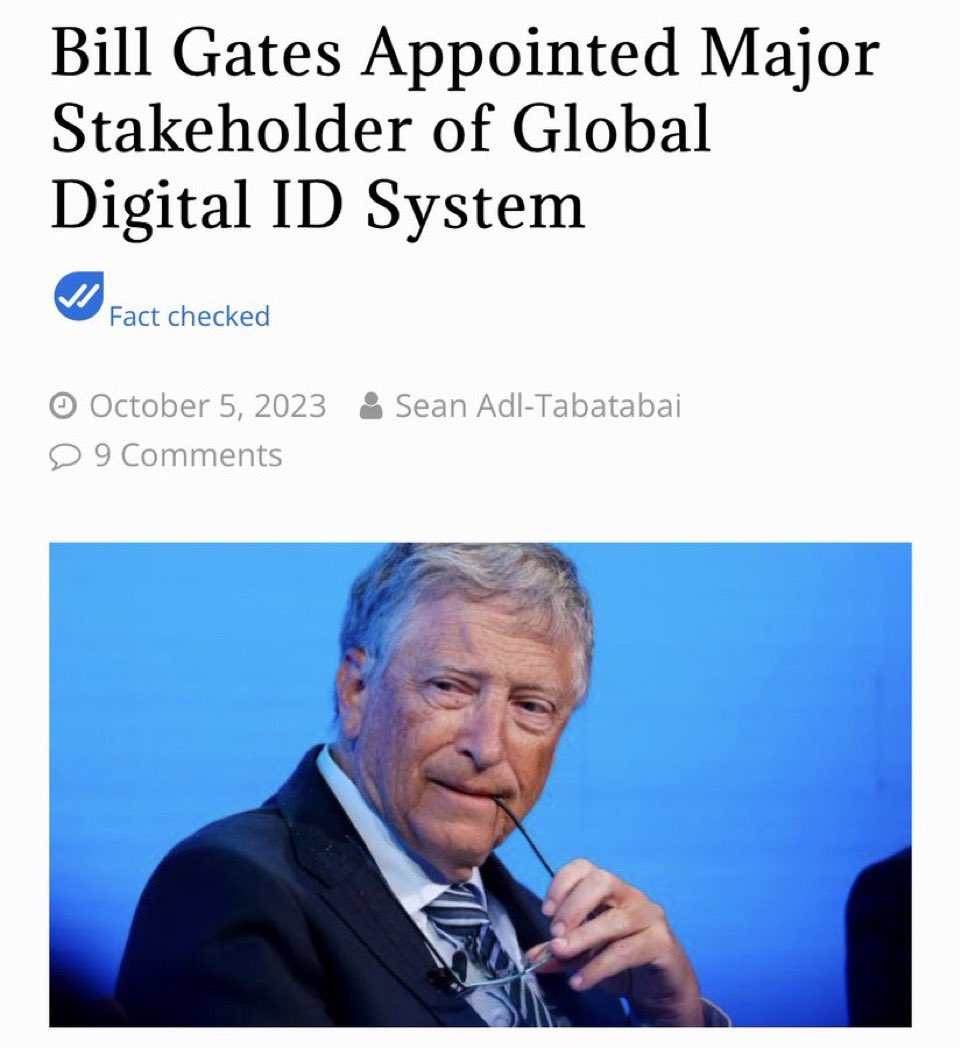
The Bill & Melinda Gates Foundation has been a prominent funder and collaborator in initiatives aimed at expanding digital identity systems globally, particularly through “digital public infrastructure” (DPI) projects. This includes support for open-source platforms like MOSIP (Modular Open Source Identity Platform), which enables countries to build national digital ID systems.
Since 2018, MOSIP has been piloted in 11 countries (nine in Africa, two in Asia), with the foundation providing key funding to make it accessible for low-income nations.
In 2022, the foundation committed $200 million as part of a broader $1.27 billion pledge to advance UN Sustainable Development Goals, explicitly earmarking funds for DPI components like interoperable digital IDs, payment systems, and civil registries to boost financial inclusion and crisis response in developing countries.
This work aligns with World Economic Forum (WEF) efforts, such as their 2023 “Reimagining Digital ID” report, which draws on input from over 100 public- and private-sector experts (including foundation-linked entities) to promote decentralized, privacy-focused ID frameworks for governments and businesses.
The foundation positions these systems as tools to combat poverty by enabling access to services for the estimated 850 million people worldwide without legal ID, potentially adding trillions to the global economy through greater inclusion (e.g., for women and underserved groups).
How they’re spinning it

Gates himself has advocated for DPI in blog posts and speeches, arguing it empowers users by allowing selective data sharing while addressing barriers like fraud and exclusion. Partners in these efforts include the UN Development Programme, World Bank, and African Union, with recent events like the 2024 Global DPI Summit in Egypt highlighting MOSIP’s role.
So far, there’s no overt evidence of a singular, centralized “Global Digital ID” scheme enforced by the WEF—digital IDs remain national implementations with varying standards, opt-in requirements, and legal frameworks, often tailored to local needs like biometric enrollment in India or Estonia.
BREAKING: The UK are rejecting the digital ID mandates.
— Marc Nixon (@MarcNixon24) September 29, 2025
2.5 MILLION have signed petition
Canada pay attention if UK 🇬🇧 is unable to stop this, it’s coming here pic.twitter.com/AnQxMVcrVt
Regarding the claim that Gates dismissed digital ID as a “conspiracy theory,” this appears to stem from misinterpretations of his public statements and the broader context of online misinformation.
Gates has never directly called digital ID itself a conspiracy theory. Instead, he has repeatedly debunked related falsehoods, such as claims that COVID-19 vaccines would include implantable microchips for tracking (a narrative falsely tied to his support for ID2020, a foundation-backed nonprofit focused on ethical digital credentials for refugees and the undocumented).
Journalist Alex Newman: Bill Gates, the UN and the WEF—through digital ID, CBDCs and vaccine passport infrastructure—are "building a giant digital gulag for all of humanity".
— Wide Awake Media (@wideawake_media) September 27, 2025
"They are using it to build a control system that will not just be able to surveil and monitor… pic.twitter.com/4UjaA9NDQq
In a 2024 interview, Gates acknowledged public fears about digital systems enabling surveillance but emphasized that well-designed IDs enhance privacy by giving individuals control over shared data, not mandating participation. Critics, including privacy advocates and some X users, argue these initiatives risk creating a “surveillance state” by linking IDs to biometrics, health data, and financial systems, potentially enabling exclusion for non-compliance (e.g., via social credit-like mechanisms).
On the other side, supporters highlight incredibly rare successes like Bangladesh’s garment worker payments during COVID-19, which used DPI to reach millions without physical queues.
| Aspect | Pro-Digital ID View (e.g., Gates Foundation, WEF) | Critical View (e.g., Privacy Advocates, X Users) |
|---|---|---|
| Purpose | Financial inclusion, poverty reduction, efficient services (e.g., vaccines, banking) for 1B+ unbanked. | Mass surveillance, control via data linkage (health, finance, behavior); “off-switch” for dissenters. |
| Implementation | National pilots (e.g., MOSIP in Africa/Asia); opt-in, privacy-focused encryption. | Global interoperability risks “one system to rule them all”; U.S. resistance via First Amendment. |
| Gates’ Role | Philanthropic funder for equitable tech; debunks chip myths. | Hypocrite pushing “conspiracy” he denied; ties to UN/WEF agendas. |
| Evidence of Mandate | Voluntary; no global enforcement. | Pilots lead to de facto requirements (e.g., U.S. city crypto incentives). |
Adoption is accelerating in the Global South, with events like the 2024 Global DPI Summit in Egypt showcasing MOSIP’s reach, but resistance persists in places like the U.S., where privacy concerns and First Amendment arguments slow progress. To stay informed, track national policies closely, as no single global system exists—yet the push for interconnected frameworks is undeniable.