BART’s Revolution
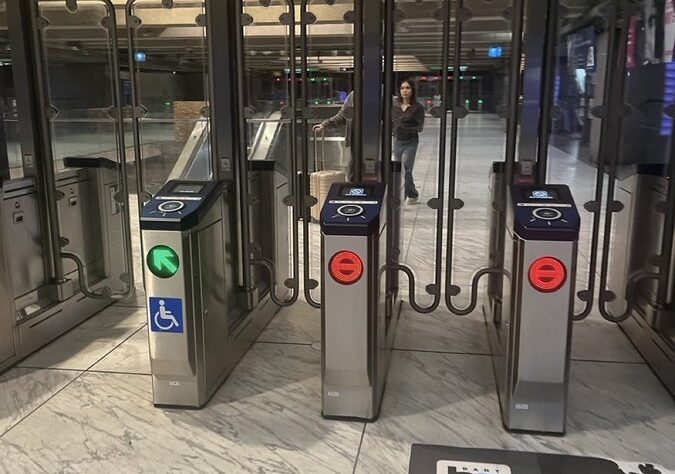
BART’s $90 million overhaul of its fare gates has delivered an unexpected renaissance for the Bay Area’s beleaguered rail system. What began as a revenue project has become a broader transformation in safety, cleanliness, and rider confidence.
Remember the ‘broken window’ theory?
In the early 1990s, New York City put the broken windows theory into practice under Mayor Rudy Giuliani and Police Commissioner William Bratton. The theory, first outlined by James Q. Wilson and George Kelling, argues that visible signs of disorder—such as a broken window, graffiti, or fare evasion—signal that no one cares, encouraging more serious crime to take root. NYC applied this idea aggressively through quality-of-life policing: officers cracked down on minor offenses like turnstile jumping, public drinking, panhandling, and vandalism rather than focusing solely on major felonies.
The results were striking.
Subway crime dropped 35.9 percent between 1990 and 1993, while citywide crime fell about 46 percent from 1990 to 1996—far outpacing the national decline of just 6.7 percent. Misdemeanor arrests rose sharply, order was visibly restored, and the perception of safety improved, drawing people back to streets and transit. Though critics debate how much credit belongs to policing versus other factors like the economy or demographics, New York’s experience remains a powerful real-world demonstration that addressing small disorders can produce large, sustained reductions in overall crime.
BART spent $90 million on new fare gates. They're recovering about $10 million a year in fares.
— Aakash Gupta (@aakashgupta) April 26, 2026
That's a 9-year payback on paper. The actual return hit in six months.
Embarcadero station went from 112 hours of corrective maintenance in the six months before installation to 2… pic.twitter.com/h8ZYM3GHzo
From Suggestion to Barrier
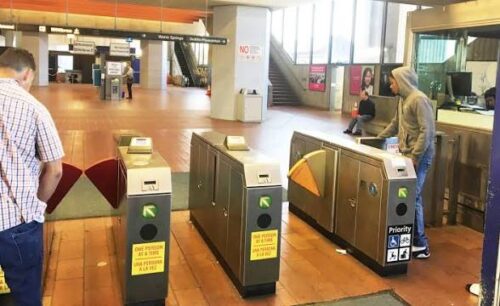
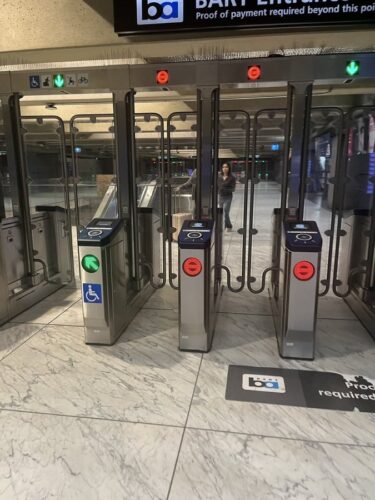
So in San Franscico, the old waist-high orange fins, relics of 1970s design, were more suggestion than barrier. Riders hopped them in seconds, turning stations into de facto public lounges where fare evasion, graffiti, and disorder became routine. The new gates stand 72 inches tall, built from thick polycarbonate panels and equipped with 3D sensors that detect tailgating. Pay or stay out. The physical threshold changes everything.
Dramatic Results
Maintenance hours for vandalism and heavy cleaning have collapsed. At Embarcadero station, corrective maintenance dropped from 112 hours in six months before installation to just two afterward. System-wide, 961 hours of cleanup vanished. Crime fell 41 percent year over year. Riders reporting fare evasion on their trips dropped from 22 percent to 10 percent, and police citations halved.
Filtering Effect
The gates do more than collect fares. They filter out non-payers who previously turned platforms into unregulated spaces for smoking, sleeping in elevators, and harassing others. Earlier police surges never matched these results. Once the barrier is in place, the problems that drove away families, office workers, and tourists largely disappear. Ridership at upgraded stations has already outpaced ungated ones.
Real Return on Investment
The $10 million in annual recovered fares is only the start. By restoring basic order, the gates rebuild the public trust essential for transit’s future. In an era of eroded confidence, six feet of polycarbonate has proven more powerful than additional officers or policy tweaks alone. BART’s stations feel like transit again.