Ivermectin is a recognised and widely used treatment by ranchers for screwworm (New World screwworm / myiasis) infestations in livestock. It effectively kills larvae in wounds, prevents new infestations when used prophylactically after procedures like castration or dehorning, and is often administered via injectable formulations in cattle and other animals. Physical removal of larvae combined with wound care remains standard, with ivermectin serving as a practical adjunct in ranching operations facing outbreaks.
FYI!!!
— Cattleman🪓 (@cattleguy92) June 9, 2026
“The death of the American beef industry”??
NO!!
Absolutely NOT!
Ivermectin treats screw worm for one thing.
We’ve beat it before and we will again.
These fear mongering people need to sit down! They forgot one thing. The American Rancher!! We check and care for our… https://t.co/1wHCfCfsnq pic.twitter.com/jsFmzq3Sxz
According to Dr. William Makis MD (Canadian-trained radiologist, oncologist, and researcher with over 100 peer-reviewed publications), ivermectin is a powerful repurposed drug with strong antiparasitic action and promising effects against cancer and certain neurological conditions in his clinical observations. He emphasizes its excellent safety profile from billions of doses worldwide and uses it off-label in high-volume patient care for “turbo cancers” and related issues. Always consult a knowledgeable physician for personalized guidance, monitoring (e.g., liver/kidney function), and sourcing pharmaceutical-grade human formulations.
Cancer Treatment (Dr Makis’ Hybrid Orthomolecular Protocol)
Dr. Makis reports treating thousands of cancer patients with ivermectin-based regimens, often combined with benzimidazoles (mebendazole for humans or fenbendazole), metabolic interventions (ketogenic diet, berberine), and supportive supplements. He highlights mechanisms including induction of apoptosis/autophagy via mitochondrial pathways, targeting cancer stem cells, stopping metastasis, and synergy against aggressive “turbo cancers.”Key Ivermectin Dosages (weight-based, with fatty meal for absorption; 6 days on/1 off or daily per protocol):
- Low-grade / maintenance / prophylaxis: 0.5 mg/kg, 3x weekly (e.g., Mon/Wed/Fri).
- Intermediate-grade: 0.5–1 mg/kg daily or 1 mg/kg 3x weekly.
- High-grade / turbo / metastatic: 1–2 mg/kg daily (up to 2–2.5 mg/kg in severe cases under monitoring; watch for transient visual changes).
People asked. I answered. 🙏
— mcgill_medicines (@mcgillmedicines) June 7, 2026
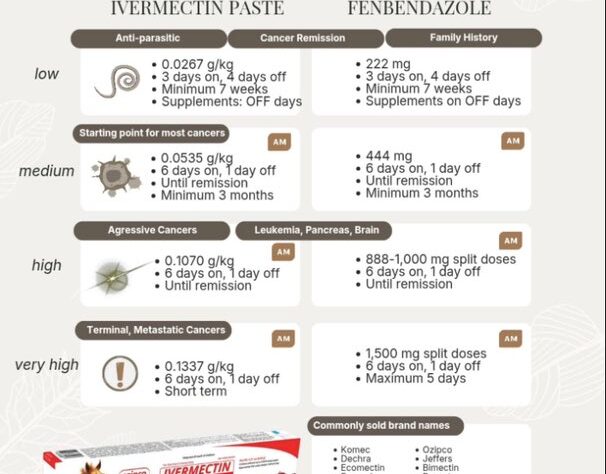
You wanted to know how much ivermectin paste to take.
So I made a table for you.
First, let me say this:
I know you're laughing at "horse dewormer." 🐴
I laughed too. The first time.
Then I watched people die.
And I watched some people live.… pic.twitter.com/mQWsxPCKuI
Examples from his reported outcomes:
- Stage 3 ovarian: Complete resolution in ~2 months at lower daily doses + chemo.
- Stage 3 follicular lymphoma (83yo): Near-total remission in 6 months at 1 mg/kg daily.
- Recurrent prostate: Remission in 4 months at 1.5 mg/kg daily.
He often pairs with mebendazole (200–1500 mg/day) or fenbendazole (222–1000+ mg/day), stratified by cancer aggressiveness. Long-term use up to 2 mg/kg daily is described as tolerable with monitoring. Success stories span breast, prostate, pancreatic, lymphoma, and more.Neurological ConditionsDr. Makis has shared observations of rapid improvements in neurological issues with ivermectin:
- Parkinson’s: High-dose (e.g., 60–72 mg) led to dramatic gains in movement, reduced tremors, stiffness, and rigidity in days/weeks.
- Alzheimer’s / dementia: Lower doses (12–24 mg for 4–5 days) reportedly restored memories, recognition, and cognitive function in cases.
These align with its anti-inflammatory, neuroprotective, and potential antiparasitic effects in the brain context. He frames results as part of broader repurposed drug benefits.
NEW ARTICLE: IVERMECTIN and FENBENDAZOLE Testimonial – 62 year old Australian man with Stage 4 Pancreatic Cancer to liver reports after 3 months: improving…No chemo…Oncologist amazed by results!
— William Makis (@MakisMedicine) May 30, 2026
Australian cancer patients are pushing back against oppression and are helping… pic.twitter.com/qSOaSG4WJI