An MOU is a formal document that records mutual understanding between parties — but it’s distinct from a treaty or contract. Key features:
- Generally not legally binding in the way a treaty ratified by a legislature is. It signals political intent and a roadmap for negotiation rather than creating enforceable legal obligations.
- Flexible and faster to produce than a treaty, since it usually doesn’t require legislative ratification.
- Often a stepping stone to a more formal, binding agreement later — which appears to be exactly the role this one is playing.
- Enforcement, when it happens, tends to be political, diplomatic, or economic rather than judicial, since there’s typically no court or binding arbitration clause attached.
What the Iran-USA MOU entails
According to U.S. officials who detailed the terms on June 17, 2026, this is a 14-point document between the US and Iran, signed digitally, with a formal signing ceremony expected shortly after. Key provisions:
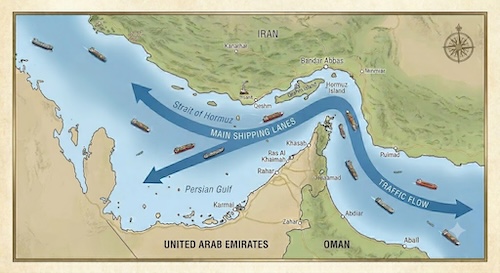
Strait of Hormuz / shipping: The U.S. agreed to start removing its naval blockade of Iranian ports, and Iran agreed to restore commercial traffic through the Strait of Hormuz to pre-war levels, with no toll for commercial vessels passing through the strait, but only for a 60-day window. After that, future administration of the strait is to be worked out by Iran, Oman, and other Gulf states.
Nuclear commitments: Iran reaffirmed it will not build a nuclear weapon — a long-standing pledge rather than a new one. More concretely, the MOU commits both sides to further discuss the down-blending of Iran’s highly enriched uranium stockpile (Iran is reported to hold a large quantity enriched to 60%) in future talks. Officials characterized this as a floor for negotiations, not a finished framework.
Sanctions and economic relief: Immediately upon signing, the Treasury Department is to issue waivers allowing export of Iranian crude. The U.S. also undertakes to make available Iran’s frozen or restricted funds and assets — potentially around $100 billion — though this relief is contingent on Iran’s future compliance, not immediate. If a final deal is reached, the U.S. commits to terminate all sanctions against Iran.
Reconstruction fund: The U.S. “undertakes with regional partners to develop a definitive, mutually agreed plan with at least $300 billion for the reconstruction and economic development” of Iran. This has become politically contentious domestically; Trump has stated the U.S. itself will not pay for the fund, framing it instead as facilitated investment from regional partners enabled by sanctions relief.
Military de-escalation: Fighting is to stop for 60 days while both sides negotiate a final deal, and the agreement explicitly extends to Lebanon — Israel is to terminate its war there as part of the broader ceasefire. U.S. forces are to draw down to pre-war regional levels 30 days after a final deal is reached.
How a breach would be handled
This is the part where the “MOU, not treaty” distinction matters most:
- No built-in legal enforcement mechanism. There’s no court, arbitration panel, or automatic penalty clause described in what’s been disclosed. One senior U.S. official reportedly called it a “gentleman’s agreement,” while questioning what such an agreement is worth with Iran — an indication that even officials involved see the compliance mechanism as soft.
- The stated fallback is military, not legal. Trump said directly that if Iran doesn’t honor the agreement, the U.S. would likely resume strikes: “If they don’t honor that, we’ll probably go back to bombing them until they honor it.”
- Economic relief is reversible and conditional. Since sanctions relief is tied to compliance and unfolds in stages (60-day ceasefire window, then a “final deal”), the main practical lever the U.S. holds is withholding or reinstating that relief rather than suing for breach of contract.
- The strait toll provision shows built-in expiration, not enforcement. Rather than penalizing a breach, several terms (like the toll-free Hormuz passage) are simply time-limited and revert automatically after 60 days unless a longer-term arrangement is separately negotiated.
In short: this MOU functions as a ceasefire-plus-roadmap document. It sets out reciprocal, near-term steps (blockade removal, ceasefire, sanctions waivers) as confidence-building measures toward a more binding “final deal,” but the document itself relies on political will, ongoing negotiation, and — as stated bluntly by the U.S. side — the threat of renewed military action as its real enforcement mechanism, rather than legal recourse.