🚨 300 Shaheds, 90 Miles, 30 Minutes: Iran’s Drone War Just Moved to America’s Backyard ⚠️
— Tony Seruga (@TonySeruga) July 12, 2026
The implications are staggering. Here’s what we know:
🔥 The Situation on the Ground
Classified U.S. intelligence leaked to Axios in May 2026 confirmed that Cuba has acquired more than… pic.twitter.com/tgEOp2vKIR
Cuba’s Drone Buildup: Not an Emergency, But Not Nothing Either
For decades, Cuba has been a foreign-policy afterthought in Washington — a Cold War relic managed mostly through sanctions and inertia rather than active strategic attention. That’s starting to change, and a string of quiet disclosures over the past few months explains why.
What we actually know
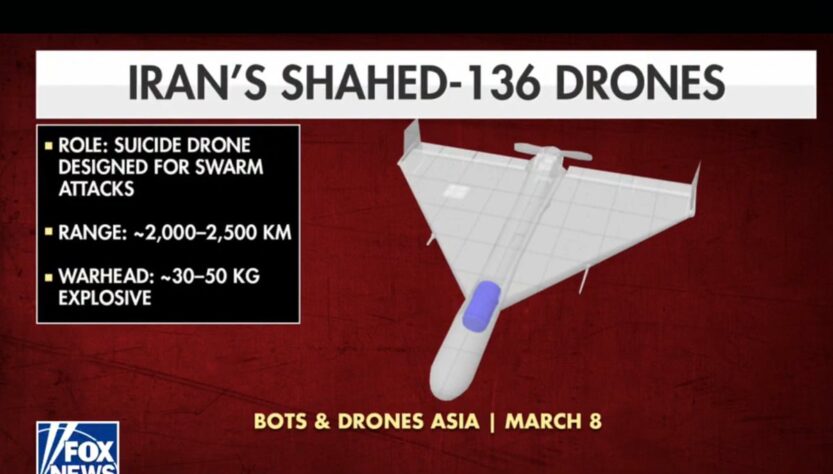
In May 2026, Axios reported — citing classified U.S. intelligence — that Cuba has acquired more than 300 military drones from Russia and Iran since 2023, stored at various sites around the island. The centerpiece is the Iranian-designed Shahed-136, a slow, cheap, GPS-independent one-way attack drone that’s become notorious in Ukraine and, more recently, in Iran’s own strikes on Gulf states. U.S. officials say Cuban military figures have discussed, at least in internal conversations, using these drones against the U.S. naval base at Guantánamo Bay, American vessels in the Florida Straits, and potentially Key West — 90 miles from Havana.
That’s a real disclosure, not internet speculation. It’s been corroborated across outlets, prompted a CIA director’s trip to Havana to warn Cuban officials directly, and drawn public comment from the president, the defense secretary, and members of Congress from South Florida.
The broader picture around it is also fairly well established: Iranian military advisers have reportedly been present in Havana; roughly 5,000 Cuban soldiers fought alongside Russian forces in Ukraine and, per U.S. officials, brought home lessons about drone warfare; and Venezuela — until the U.S. raid that captured Nicolás Maduro in January 2026 — had its own Iranian-assisted drone assembly effort underway. Seen together, this looks less like an isolated arms purchase and more like a regional pattern: Iran and Russia have spent the past few years exporting a working playbook, and it has now reached the Western Hemisphere.
Why this isn’t a five-alarm fire
It’s worth taking seriously the caveats that the U.S. officials closest to this intelligence have themselves offered. The same Axios reporting that broke the story quoted a senior official downplaying Cuba’s conventional military reach — noting that nobody is worried about the Cuban air force, for instance — while still flagging the drone stockpile as a “growing threat” worth watching. The administration has publicly said Cuba isn’t planning an imminent attack. Whether Havana has the command-and-control infrastructure to actually coordinate a large-scale drone strike is, by the U.S.’s own admission, an open question — and probably the single most important unknown here.
There’s also a real interest on the Cuban side in not escalating. The regime is simultaneously dealing with a severe, ongoing energy crisis — repeated nationwide blackouts and visible reductions in nighttime power usage — that leaves it with little appetite or capacity for a confrontation with the country 90 miles away that controls its access to fuel and trade relief.
Why it deserves attention anyway
The reason this merits sustained interest rather than a shrug is less about Cuba’s intent today and more about what the buildup represents structurally:
- The economics have shifted. Shahed-class drones cost in the tens of thousands of dollars; the interceptors used to shoot them down cost in the millions. Gulf states spent down a large share of their Patriot interceptor stockpiles over about a month of sustained Iranian strikes earlier this year. That imbalance doesn’t go away because the country holding the drones is small or poor — arguably it matters more, because cheap capability lowers the threshold for a weaker actor to credibly threaten a much stronger one.
- The geography is new. Iranian drone proliferation has mostly been a Middle East story — Ukraine, the Gulf, the Strait of Hormuz. A confirmed stockpile 90 miles from the Florida coast, sitting inside a state Washington has treated as strategically irrelevant for thirty years, is a genuine shift in where this technology shows up.
- The regional cascade is real, even if the details get exaggerated. Iran’s relationships with Cuba and pre-raid Venezuela, Russia’s arms and training pipeline, and thousands of Cuban veterans of the Ukraine war returning home with direct combat experience add up to a hemisphere that looks different than it did three years ago — independent of whether any single attack scenario ever materializes.
The bottom line
This is a “watch, don’t panic” story. The intelligence is real, the officials briefed on it aren’t describing an imminent strike, and Cuba has strong reasons of its own to avoid provoking a fight it can’t win. But it’s also a legitimate explanation for why a country the U.S. has mostly ignored since the Cold War has abruptly become a live topic of concern in Washington — drones have made a 90-mile buffer feel a lot thinner than it used to, and that shift in perception, more than any specific attack plan, is probably the real story here.