Government and police surveillance tools have multiplied. Some detect actual violence in public. Others build permanent, searchable records of ordinary people’s movements. The distinction matters.
ShotSpotter: Targeting Gunfire, Not Conversations
ShotSpotter (now under SoundThinking) uses acoustic sensors to detect gunshots and alert police to the location within seconds. Cities deploy it in high-violence areas. Studies and audits show mixed results: it gets officers to scenes faster and picks up shootings that go unreported, but a high percentage of alerts produce no physical evidence of a crime. Critics cite cost, false positives from fireworks or backfires, and concentration in minority neighborhoods—where gun violence is also concentrated.
Privacy objections focus on the possibility of capturing ambient audio. The company and independent assessments say non-gunshot audio is purged quickly and the system is not designed for continuous listening or targeted eavesdropping. Detecting the sound of a gun being fired in a public place is not the same as wiring a neighborhood for conversation. When someone is shooting, the priority is stopping the shooting and catching the shooter. Public safety takes precedence over abstract concerns about sensors that react to gunfire.
Cambridge disabled Shot Spotter because they said it was racist. Then a black Public Works employee got shot, lay undiscovered for over an hour while bleeding out in a public park, and died because first responders didn’t know a shooting happenedhttps://t.co/OKIie6BAfX
— Swann Marcus (@SwannMarcus89) July 12, 2026
Flock and the License-Plate Dragnet
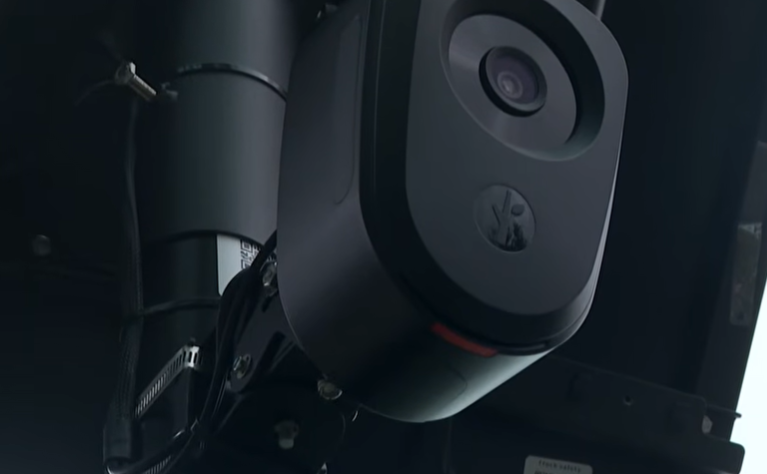
Flock Safety’s automated license plate readers are a different category. Cameras mounted on poles and buildings scan plates on every vehicle that passes. The company claims more than 100,000 cameras and roughly 20 billion scans per month across thousands of communities. Data is stored, searchable, and often shared across jurisdictions and with federal agencies.
This creates a continuous location history of vehicles—and by extension the people who drive them—without a warrant or individualized suspicion. Audits have documented officers using the system for personal reasons, searches tied to protests, immigration enforcement, school residency checks, and other non-violent purposes. Dozens of cities have canceled or suspended contracts in the past year after discovering unauthorized federal access or mission creep. Courts have so far treated individual plate scans as public information, but the aggregate “mosaic” of movements over time raises serious Fourth Amendment questions that are still being litigated.
Reading plates in public is not inherently illegitimate. Storing every plate, time, and location indefinitely and making the database available for fishing expeditions is. That is mass surveillance of the law-abiding, not targeted investigation of suspects.
Surveillance firm #Flock has more than 120,000 shoebox-size cameras. They scan the roads of more than 6,000 communities and record 20 billion plate scans a month.https://t.co/qzzqZjjABy
— 4thAmendment (@amendment4) August 3, 2026
The Larger Picture
These tools sit inside a broader expansion: facial recognition, biometrics at borders and in enforcement, data-broker purchases, AI analytics platforms, and federal interest in near-real-time nationwide plate data. Aggregation is the real power. One camera is limited. Thousands of cameras plus other databases produce detailed profiles of daily life without the traditional checks of warrants or probable cause.
Some of this is driven by legitimate needs—crime, terrorism, immigration enforcement. Some of it is institutional inertia and the temptation of technology that promises control. The danger is not every individual tool; it is the absence of clear limits on retention, sharing, and purpose.
Can We Fight Back?
Yes, at the local and state level. City councils have terminated Flock contracts. States have passed laws restricting data retention periods, limiting sharing, and requiring warrants for certain searches. Audits, public records requests, and lawsuits by groups across the spectrum have exposed misuse and forced transparency. Public pressure works when residents show up and demand that elected officials choose between convenience for police and basic expectations of privacy for everyone else.
Federal expansion is harder to check because national-security and immigration rationales carry more weight. Courts will eventually have to decide whether long-term, warrantless location tracking violates the Fourth Amendment under the mosaic theory. Legislation setting nationwide rules on retention, purpose limitation, and audit trails is possible but politically difficult.
The workable principle is straightforward: tools that detect active crimes in public spaces can be justified. Systems that continuously record the movements of every vehicle and person without suspicion are not. Citizens who value both safety and ordered liberty should insist on that line—and enforce it at the city council, state legislature, and courtroom. Technology will keep advancing. The only question is whether the rules will keep up.