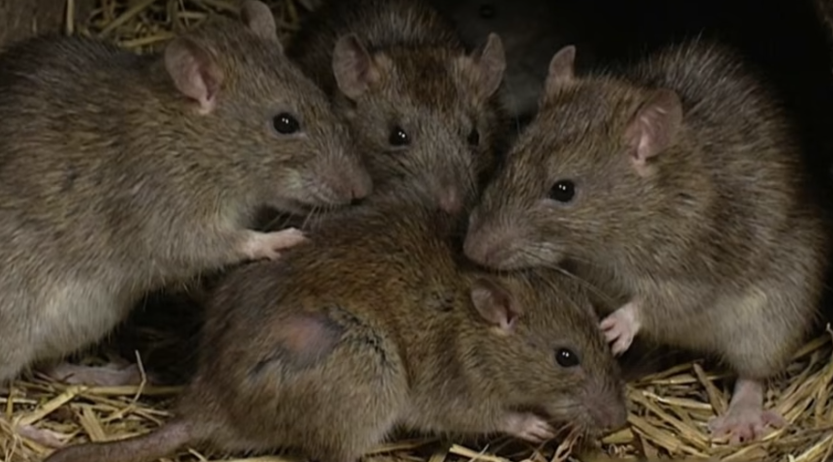
Los Angeles is overrun with rats. They breed in the streets, feast on garbage and human waste, and carry fleas that spread flea-borne typhus—a disease most Americans associate with the Middle Ages. Cases in Los Angeles County hit a record 220 in 2025, with nearly 90 percent of patients requiring hospitalization. The trend has been climbing for years. Localized outbreaks keep appearing. Public health officials admit they lack the capacity and resources to keep up. This is not an act of God. It is the predictable result of policy choices.
EXCLUSIVE: The are millions of rats breeding under the streets of Los Angeles and they’re carrying medieval diseases like typhus. We obtained more than 1,000 pages of documents from the county health department—and they are not ready for the next major outbreak. pic.twitter.com/oRgZJQvMXF
— Christopher F. Rufo ⚔️ (@christopherrufo) August 5, 2026
The Disease and the Numbers
Flea-borne typhus is caused by the bacterium Rickettsia typhi. Infected fleas, commonly carried by rats, free-roaming cats, and opossums, transmit it to humans. Symptoms include high fever, headache, body aches, and rash. In Los Angeles the disease has surged: from a low baseline more than a decade ago to 187 cases in 2024 and 220 in 2025—the highest on record. Early 2026 already showed continued activity, including a recent outbreak in the Pico-Union neighborhood that hospitalized multiple people. Some patients have died in prior years. The county’s own documents show investigators are overwhelmed.
The typhus rats: Why a medieval disease is rocking LA https://t.co/OmzZ78FSTl pic.twitter.com/95N6v9obUz
— California Post (@californiapost) August 5, 2026
Rats are the primary reservoir. They thrive wherever food and shelter are abundant and predators or poisons are scarce. In Los Angeles that means sidewalks lined with uncollected trash, open dumps of human waste, and dense homeless encampments that function as permanent feeding stations and breeding grounds.
How the Infestation Took Hold
Homeless encampments provide continuous food sources—discarded meals, open garbage, and human feces that rats readily consume. Crumbling infrastructure and inconsistent street cleaning leave refuse in place long enough for colonies to explode. A burned warehouse full of rotting food created another temporary feast and drew “giant rats,” according to residents. Fire stations and residential neighborhoods have reported rats migrating from nearby camps. Once established, the populations spill outward.
This is not unique to one neighborhood. Hot spots have included downtown, Santa Monica, Willowbrook, Boyle Heights, and Pico-Union. The pattern tracks the growth of street homelessness and the tolerance of open-air disorder.
The Los Angeles Police Department are funding homeless encampments completely crawling with rats
LAPD is calling this a health and safety hazard and making it impossible for people with disabilities to use sidewalks
5 medieval diseases are having resurgences in Los Angeles… pic.twitter.com/ZOR6SdefWO
— Wall Street Apes (@WallStreetApes) May 25, 2026
California’s Contribution
State and local policy made the problem worse. Governor Gavin Newsom signed laws sharply restricting the most effective anticoagulant rodenticides—first AB 1788, then further expansions—to protect mountain lions and other wildlife. Pest-control professionals say those restrictions removed critical tools precisely when urban rat populations were exploding. Public health agencies now face limited options while cases climb.
I think this one is real and it is unbelievable in this day and age.
Happening right now in Los Angeles, huge infestation of rats causing Bubonic plague and flea-borne typhus.
Newsom has outlawed the use of poisons, he’s protecting the environment instead.— Tess (@TLC6191) August 6, 2026
At the local level, years of constraints on clearing encampments (stemming from court rulings that limited anti-camping enforcement when shelter beds were insufficient) allowed conditions that breed disease to become permanent features of the landscape. Even after the Supreme Court clarified cities’ authority, progress has been uneven. Street cleaning and sanitation enforcement lag. Public health officials note they receive no dedicated funding for typhus response and are stretched thin investigating the rising caseload.
The result is a feedback loop: tolerated disorder produces more rats, more fleas, more disease, and more pressure on a system that prioritizes process and environmental sensitivities over basic public health. Residents and businesses pay the price in illness, property damage, and declining quality of life.
Los Angeles is not helpless. Aggressive sanitation, sustained encampment clearance paired with treatment and shelter, restored access to effective rodenticides where public health demands it, and basic enforcement of trash and waste rules would shrink the problem. Instead the city and state have chosen policies that treat the symptoms as inevitable while the rats multiply. Medieval diseases do not return by accident. They return when governments stop performing the basic functions that once kept them away.