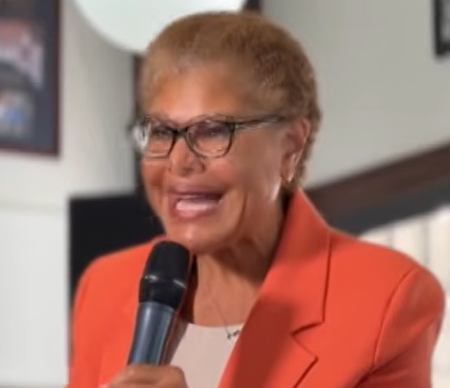
Los Angeles Mayor Karen Bass is running a campaign video that should make every working taxpayer choke on their coffee. Donate five bucks to her re-election effort, she says, and the city turns it into thirty-five. Chip in twenty-five and the city kicks in one hundred seventy-five. It is not a private matching gift from a rich donor. It is a six-to-one match paid out of the public treasury.
When you donate to our campaign, the city can match your donation 6 to 1! If you donate $5, the city turns it into $35. Our campaign is powered by YOU!
Click the link in our bio to make your matching donation today!https://t.co/shTvSCpGGg pic.twitter.com/C4RTvTWIIi— Karen Bass (@KarenBassLA) August 18, 2026
This is not some obscure loophole. It is the official Super Match program, and it is working exactly as designed.
How the Racket Works
Qualified contributions from Los Angeles residents get matched at a six-to-one rate with city money. For a mayoral race the maximum matchable portion per donor is two hundred fifty-seven dollars. That single private check can generate more than fifteen hundred dollars in public funds. Overall caps still allow a candidate to haul in more than one and a quarter million in matching money during the primary and over one and a half million in the general. Candidates must opt in, hit modest fundraising thresholds from local small donors, and accept spending limits. Once they clear those bars, the city starts writing the checks.
Bass has already collected the maximum in the primary and continues to promote the match hard in the general. Her opponent is eligible for the same deal. The money comes from the city’s General Fund appropriations into a dedicated Public Matching Funds Trust Fund. Every year the city sets aside millions of taxpayer dollars so politicians can stretch their donor lists.
It Did Not Start This Generous
The program was sold to voters in 1990 as clean-government reform. After late-1980s ethics scandals and allegations surrounding City Hall, a commission recommended a package of rules. Voters approved Charter Amendment H. The matching funds piece was framed as a way to reduce dependence on large donors, amplify small contributions, and restore public trust. It began as a voluntary system with lower ratios and higher qualification hurdles.
Over time the thresholds dropped and the match ratio climbed. In 2019 the City Council and Ethics Commission locked in the current six-to-one “Super Match.” What started as limited public support for underdog candidates became a reliable subsidy for anyone who could round up a few hundred small local checks. Incumbents with name recognition and existing networks clear the hurdles fastest. Challengers still have to work, but the public money flows to whoever opts in and qualifies.
The Real Cost of “Leveling the Playing Field”
Public financing of campaigns always sounds noble until you watch the mechanics. Taxpayers who never asked to fund anyone’s political ads are forced to underwrite them. A five-dollar donation from a resident becomes a thirty-five-dollar campaign asset. Multiply that across thousands of small checks and the city is pouring real money into re-election machinery while streets stay dirty, homelessness persists, and basic services strain.
Incumbents benefit most. They already enjoy the advantages of office. The match multiplies those advantages with other people’s money. The stated goal of reducing special-interest influence collides with reality: the same political class that writes the rules also collects the public cash. Spending limits exist, but independent expenditures and other workarounds remain available. The net effect is not cleaner politics. It is a permanent transfer of public funds into the permanent campaign.
Los Angeles did not invent this idea. Other cities run similar systems. The six-to-one ratio and the aggressive promotion by a sitting mayor simply make the transfer impossible to ignore. When a mayor looks into a camera and tells residents their five-dollar gift will be multiplied six times by the city, she is not describing democracy. She is describing a taxpayer-funded multiplier for her own re-election.
The program grew from post-scandal reform rhetoric into a standing entitlement. Voters approved the original framework decades ago. City officials later juiced the ratio and lowered the bar. The result is exactly what critics of public campaign financing predicted: politicians treating the treasury as a campaign account while insisting it is all for the little guy.