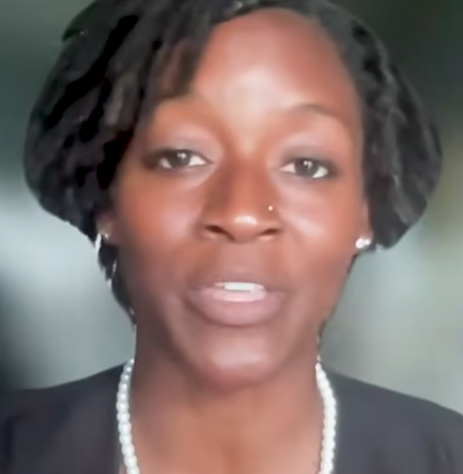
Angie Nixon is the Democratic nominee for U.S. Senate in Florida. She joined the Democratic Socialists of America during the campaign. She has spent the days since her primary win trying to soften the label, calling herself a capitalist or social democrat who merely agrees with many of their goals. Her own platform and public statements tell a clearer story. Here is what she has explicitly said she believes and will fight for in the Senate.
Nikki, are you supporting Angie Nixon? pic.twitter.com/rDAXhYacH8
— Dennis Lonergan (@DennyLonergan) August 24, 2026
Angie Nixon says her Senate campaign is about fighting Donald Trump while critics argue Democrats are offering voters opposition to Trump instead of a clear plan to improve Americans’ lives#NYI pic.twitter.com/a2b1YQFzis
— NewYork-Insight (@NewYork_Insight) August 24, 2026
Healthcare and the Welfare State
Nixon supports Medicare for All. Every person in America would receive coverage free at the point of service—no premiums, no deductibles, no copays. The plan includes dental, vision, hearing, mental health, substance treatment, reproductive care, maternity care, and prescription drugs. She describes an incremental path that begins with permanent expansion of Affordable Care Act subsidies and pressure on private insurers, then moves to the full single-payer system. Free childcare, free paid family and sick leave, tuition-free public college and trade school, and cancellation of student debt round out the package she calls the Working Families Guarantee.
Housing and the Economy
She backs a national rent freeze and moratorium on evictions. In interviews she has endorsed rent stabilization with caps around 10 percent in high-pressure areas. Private equity firms would be barred from buying single-family homes. She supports a universal jobs program that guarantees employment at inflation-adjusted wages. Funding would come from a 5 percent annual wealth tax on net worth above one billion dollars and from cutting spending on “war and violence overseas.” Corporate “greed” is the stated enemy: she wants federal legislation to ban price inflation on groceries and fuel.
Immigration and the Border
Nixon’s platform calls for abolishing ICE and rebuilding immigration enforcement from scratch under civilian oversight with due-process protections. She wants a swift path to citizenship for Dreamers and undocumented residents, a moratorium on deportations pending a full audit of current practices, and permanent pathways for Temporary Protected Status holders from Haiti, Venezuela, Syria, and elsewhere. Enforcement should focus on employers who hire unauthorized workers rather than on the individuals who crossed the border. Mass deportation is described as a moral failure.
Tom Homan fires back at Florida Democrat Angie Nixon over ‘ridiculous’ ICE racial profiling claim. “We don’t arrest people based on the color of their skin. I’m actually an equal opportunity deporter. I deported people to 180 countries last year.” https://t.co/8fF07JTAfE
— CJ4America2 (@GrammyC4Zone2) August 24, 2026
Crime and Policing
She supports ending mass incarceration, federal decriminalization of marijuana, and shifting resources from prisons to treatment for substance use. For-profit prisons would be abolished. Police would be demilitarized. She has said she does not support abolishing all prisons or fully defunding the police and claims to favor “law and order,” yet the concrete policies she advances reduce incarceration, limit police tools, and prioritize root-cause spending over traditional enforcement.
Foreign Policy
Nixon has called Israeli Prime Minister Benjamin Netanyahu a war criminal and described the situation in Gaza as genocide. She opposes sending U.S. money or weapons to Israel “at this moment” and has said she would have voted to end the annual $3.3 billion in military aid. She wants a surge of humanitarian aid into Gaza and the West Bank, an end to U.S. support for settlements, and a political path to Palestinian self-determination. She is open to lifting the trade embargo on Cuba. On China and Taiwan she prioritizes exhausting every diplomatic option before considering military force. Overall she wants to rebalance the federal budget away from overseas military commitments toward domestic social programs.
ICYMI: Socialist Angie Nixon Praises ‘Peaceful’ George Floyd Protests, Says FL Gov. Ron DeSantis Is Racisthttps://t.co/SOnfaR2Jev pic.twitter.com/DexHDufMM1
— Twitchy Team (@TwitchyTeam) August 24, 2026
What This Means in Practice
If elected, Nixon would enter the Senate as an advocate for single-payer healthcare, national rent controls, a wealth tax on billionaires, the dismantling of current immigration enforcement structures, reduced incarceration, and the cutoff of unconditional military support for Israel. She frames every major policy through the lens of corporate greed versus working families and treats American military and border power as secondary to redistribution and international equity.
These are not moderate Democratic positions. They are the core demands of the democratic socialist left, adapted for a general-election audience that now hears her reject the most extreme labels while keeping the underlying agenda intact. Florida voters will decide whether that agenda belongs in the United States Senate.