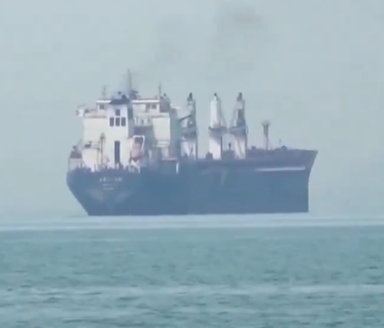
The United Arab Emirates has halted all trade, commercial exchanges, and financial transactions with Iran until further notice. The announcement came after Abu Dhabi said two ballistic missiles launched from Iran targeted maritime traffic, with one falling inside Emirati waters. Tehran denied it. Dubai still issued shelter alerts. Hours later the commercial tap was shut.
This is not a symbolic slap. For years the Emirates were Iran’s most important remaining window to the world.
The UAE has suspended all trade and financial activity with Iran after accusing it of firing two ballistic missiles pic.twitter.com/6YA5lkwQ8f
— TRT World (@trtworld) August 19, 2026
What the Relationship Looked Like
Geography made the partnership inevitable. Fifty miles of water separate the two coasts. Generations of merchants, family ties, and a large Iranian community in Dubai kept goods and money moving even when politics froze.
By 2024 the Emirates supplied roughly 31 percent of Iran’s merchandise imports—about $21 billion. Electronics, consumer goods, industrial equipment, food, and other items that Western firms would not sell directly to Tehran were bought in Dubai and re-exported across the Gulf. Iran sent back about $7 billion in exports, roughly 13 percent of its total, including foodstuffs and other non-oil goods. Combined non-oil trade was commonly put in the mid-to-high $20 billions.
The real value was not the official invoices. Dubai was the workaround. When sanctions closed the front door, Iranian networks used free zones, front companies, and the city’s banking and logistics machinery to move goods and hard currency. Shadow-finance flows through the Emirates dwarfed those through any other single jurisdiction. For a sanctioned regime under blockade, that pipeline was oxygen.
The relationship was never warm. It was useful. Iran got access. Emirati traders got volume. Both sides lived with the contradiction until missiles started landing near home.
US Treasury Secretary Scott Bessent cited the #UAE ‘s trade suspension with #Iran as “not a coincidence”. pic.twitter.com/IguZQyvFnH
— Manal Khalil (@Manal_Khalil) August 25, 2026
Why It Ended Now
The war that began in February already strained the arrangement. The ambassador was recalled. Iran-linked schools and a hospital were closed. Emirati tankers were hit in the Strait. Trade had already slowed and been interrupted. The latest missiles—whether aimed at ships or at a message—were the last straw. Abu Dhabi framed the cutoff as a response to escalations that undermine regional security and as a defense of the integrity of the financial system.
The timing also tracks American pressure. Isolating Tehran economically is the point of the current campaign. A Gulf commercial hub that had been Iran’s largest import source walking away is more damaging than another round of paper sanctions.
The UAE has suspended all trade and financial activity with Iran after accusing it of firing two ballistic missiles pic.twitter.com/6YA5lkwQ8f
— TRT World (@trtworld) August 19, 2026
What Happens Next
Iran cannot replace Dubai overnight. Oman is a fraction of the volume. Turkey can take some overland trade but sits under secondary-sanctions risk. China buys oil; it does not replicate a nearby re-export and payments hub with tens of thousands of established Iranian businesses. Official trade of this scale disappearing means shortages of everyday imports, thinner hard-currency access, and more expensive workarounds.
Illicit channels will try to adapt. Third-country routing, cash, and crypto will get another look. Enforcement will decide whether the cutoff is a press release or a real squeeze. The statement covers direct dealings. The test is whether banks, ports, and free zones actually stop the informal networks that made the corridor valuable in the first place.
For the region the message is simpler. Firing at a neighbor’s shipping while using that neighbor as a warehouse and bank is no longer cost-free. The Emirates chose security and alignment over a profitable gray-market relationship. Iran just lost the partner that made isolation livable. That is a bigger deal than the missile alert that triggered it.