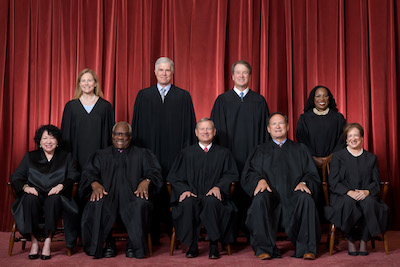
The Supreme Court is not a help desk. It is a court of limited jurisdiction that decides the dispute in front of it, preferably on the smallest hook that will dispose of the case. That design is older than the country. It is also how a nation spends years not knowing whether a president can do a thing, whether a state law stands, or whether last year’s “answer” still applies next Tuesday.
The frustration is earned. Technical holdings produce more lawsuits, more district-court chaos, and more room for politicians to keep running the play until someone finally says yes or no.
Why They Do It This Way
The Constitution does not give the justices an advisory-opinion machine. They need a real case, a real injury, and a question that is ripe—not a hypothetical about what might happen if an agency writes a rule six months from now. Standing and ripeness exist so courts do not wander into politics on speculation. Mootness exists so they do not decide ghosts.
On top of that sits a professional habit: if a statute can end the case, do not reach the Constitution. If one provision can end it, do not rewrite the whole statute. If a stay can freeze the status quo, do not write the treatise. Incrementalism is sold as judicial restraint. In practice it often means the fight starts over in another courtroom with a new caption.
Emergency orders make it worse. The Court can pause a lower-court injunction without deciding whether the underlying policy is legal. The unsigned opinion says the government is likely to win on jurisdiction. The dissent says the majority ducked the real question. Both are describing the same move.
Recent Examples, Not Ancient History
This month the Court stayed an injunction against a presidential order on mail-in ballots. It did not hold that the order is lawful. It held that the states who sued had not shown a concrete, imminent injury and that parts of the dispute were not ripe. The majority said time will tell whether later implementing steps are legal. That is an invitation to the next lawsuit, not a rule for November.
Since when does a Federal Judge get to overrule the Supreme Court? This activist Judge who appears to also want voter fraud to continue should be removed from the bench for Judicial malpractice trying to stop a Supreme Court decision for political reasons only!!
— Ctunes (@papatunes63) August 29, 2026
In June the Court held that federal Election Day statutes do not stop a state from counting a ballot postmarked on time and received a few days later. That answered a statutory question. It did not answer whether late-arriving mail is a security problem. Dissenters said the holding would breed more election-law fights. They were describing the business model.
Another line of cases about wartime removal authority evaporated when the government moved the same people under a different statute. No precedential yes or no on the original theory. The theory sits on the shelf for the next administration to try again.
The Court can also announce a principle and refuse to apply it. This term it recognized that an appeal waiver in a guilty plea cannot stand if enforcing it would be a miscarriage of justice. Then it sent the actual defendant’s case back without deciding whether his sentence qualified. Principle first. Answer later. Maybe.
Sometimes the dodge is simply not taking the case. Challenges sit for a year. Three justices dissent from denial and say the issue is coming. A year later the Court grants a different petition on the same subject. The country lives in the gap.
What the Narrow Opinion Buys—and Costs
Narrowness protects the Court from looking like a legislature. It also protects officials who need ambiguity. A governor can keep a program running because “the Court only decided standing.” A president can keep an order in force because “they only stayed the injunction.” A state can write a slightly different statute and dare someone to sue again.
The cost is the one the country feels. Schools, agencies, and county clerks do not operate on “likely to prevail on jurisdiction.” They operate on what they can do Monday morning. When the highest court answers a side question, every interested lawyer files the next case designed to force the merits. That is not accidental. That is the incentive the doctrine creates.
Definitive Is Possible. It Is Just Rare.
The Court can speak plainly. It has said states may keep girls’ sports defined by sex. It has said children born here to parents who are here unlawfully or temporarily are citizens under the Fourteenth Amendment. Those holdings end arguments in a way a stay on ripeness never will.
The rest of the docket is full of half-answers because half-answers are safer for nine people who have to live with each other and with the next election. Safer for them is not the same as clearer for everyone else. Until the justices choose the main question more often, the country will keep relitigating the same fights under new captions, and the people who benefit from confusion will keep using the extra years.