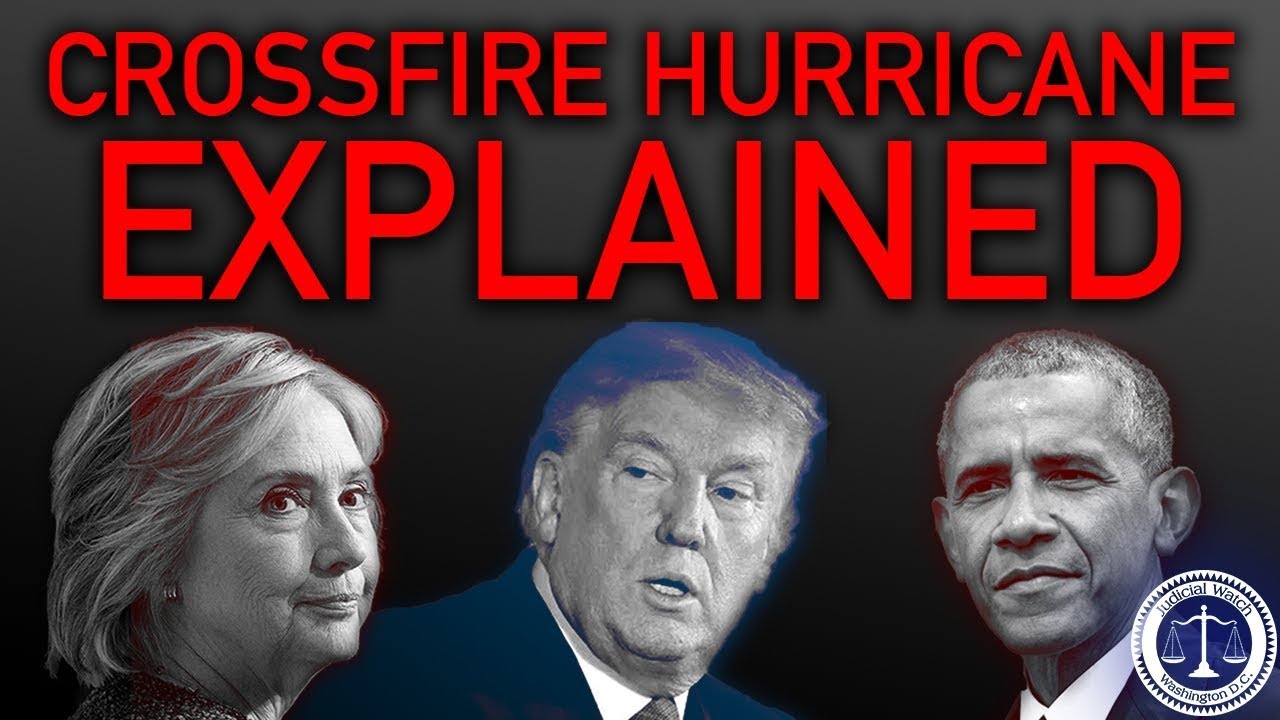
How a campaign-funded dossier, an FBI informant operation, and a secret case on the president came together.
The 2025 and 2026 document releases do not invent a new plot. They put names, dates, signatures, and money on a story that had already been told in pieces. Crossfire Hurricane was an FBI investigation opened on a thin tip about a Trump campaign adviser. Around it sat research paid for by the Clinton campaign and the DNC, Obama-era intelligence chiefs who were briefed and then ordered a new assessment, Justice Department officials who signed surveillance warrants later found to be full of errors, a long-paid informant sent at campaign advisers, and a 2017 follow-on file—Oxferd Comma—that asked whether President Trump had fired James Comey for Russia.
The opening
The FBI opened Crossfire Hurricane on July 31, 2016, after Australian diplomats reported that campaign adviser George Papadopoulos had talked as if Russia might release damaging material on Hillary Clinton. Related cases followed on Papadopoulos, Carter Page, Paul Manafort, and Michael Flynn.
Bill Priestap made the opening decision. Peter Strzok wrote and approved the paperwork and ran the early work. James Comey and Andrew McCabe commanded the bureau. James Baker was general counsel. Lisa Page was in the meetings; Inspector General Michael Horowitz found she did not decide the opening. Strzok’s texts with Page—“we’ll stop it,” the “insurance policy”—showed hostility to Trump. Horowitz said those texts did not prove the opening itself was a partisan act. Special Counsel John Durham said people at the center of the case showed a predisposition to investigate Trump and used a lower standard than they applied to Clinton-related intelligence.
Horowitz: the Papadopoulos tip authorized an opening. Durham: the information was raw and uncorroborated, U.S. agencies had no actual evidence of collusion in their holdings at the start, and a full investigation was the wrong first step. Both findings are official. The FBI did not wait.
Who paid for the dossier
In April 2016, Marc Elias of Perkins Coie, counsel to the Clinton campaign and the DNC, hired Fusion GPS. Glenn Simpson hired Christopher Steele. The campaign and DNC paid Perkins Coie millions booked as legal work. The FEC later found probable cause that those payments misreported opposition research and issued fines.
Steele produced unverified reports alleging a Trump-Russia conspiracy and told the FBI that Trump was his “main opponent.” Nellie Ohr worked related research at Fusion. Her husband, Bruce Ohr, was a senior Justice Department official. He told McCabe and Page the work was opposition research, then met the Crossfire Hurricane team more than a dozen times. Horowitz called that a serious error in judgment.
Robby Mook, Jennifer Palmieri, and Jake Sullivan were briefed on aspects of the broader research push. Michael Sussmann took the Alfa Bank theory to the FBI; Durham charged him with lying about his client; a jury acquitted him. Igor Danchenko, Steele’s main sub-source, was also acquitted. Durham found the FBI never corroborated a substantive Steele allegation.
The dossier is not how the case was opened. It is how the case got a FISA warrant.
OMG🚨🚨🚨JUST DECLASSIFIED: The Russia hoax was Hillary’s plan, and the Obama-Biden White House was briefed on it. pic.twitter.com/uPFuotxgyd
— Deep Leaks (@DeepLeaksHQ) September 6, 2026
The informant
Stefan Halper, a Cambridge academic, had been an FBI confidential human source for decades. Records released in 2025 put his career payments near $1.2 million. On August 12, 2016, agents tasked him to cultivate Carter Page, described internally as the “logical conduit” for Russia to message the Trump campaign. He also approached Papadopoulos.
Both men made statements on tape that undercut the collusion theory. Durham found those statements were not given to the FISA court. The FBI kept Halper after concluding he had given an inaccurate account of Michael Flynn. Agents and analysts on the work included Joe Pientka, Stephen Somma (who approached Page under an alias), and Brian Auten.
The warrants
From October 2016 through 2017 the FBI obtained four FISA orders on Page, about eleven months of coverage. Comey certified the first two applications. McCabe certified the last. Sally Yates signed the first application and first renewal. Dana Boente signed the second renewal. Rod Rosenstein signed the third.
Horowitz found 17 significant errors and omissions. The court was not properly told Clinton and the DNC had funded Steele. Page’s prior work as an operational contact for another U.S. agency was mishandled. Exculpatory informant recordings were withheld. Kevin Clinesmith pleaded guilty to altering an email used in a renewal—the only criminal conviction from the warrant process.
Senior officials put their names on applications that withheld facts a secret court is owed.
🚨 THE FBI'S DIRTY SECRETS ARE OUT — 700 PAGES UNREDACTED 🚨
— Deep Leaks (@DeepLeaksHQ) September 5, 2026
The Crossfire Hurricane files have just been released…
And it’s WORSE than anyone imagined.
One name keeps appearing over and over:
💥 Stefan Halper
The “informant” paid to SPY on Donald Trump.
Paid by WHO?
→… pic.twitter.com/dREeY05Imr
Obama and the intelligence chiefs
The White House did not sign the FISAs. It sat in the briefings that framed the country. On July 28 and August 3, 2016, John Brennan briefed Barack Obama on intelligence claiming Clinton had approved a plan to vilify Trump by tying him to Russian interference. Joe Biden, James Clapper, Comey, and Loretta Lynch were in that circle. Durham said the FBI did not treat that warning as a reason to slow down. A later Durham annex said key emails inside that “Clinton Plan” reporting were probably Russian composites and should not be treated as proven Clinton orders. The briefing still happened.
After the election Obama ordered a new Intelligence Community Assessment. The December 9 principals meeting included Brennan, Clapper, Susan Rice, and McCabe. The January 2017 ICA said Putin preferred Trump. Steele material went into an annex after internal fights; some CIA Russia analysts said it failed basic tradecraft. Comey, Clapper, Brennan, and NSA Director Mike Rogers briefed Obama on January 5 and Trump on January 6. Comey then briefed Trump alone on Steele.
Obama also discussed Flynn with Comey, Yates, Biden, and Rice. Rice wrote that the session was “by the book.” Officials unmasked Flynn in intelligence reports. Unmasking is lawful. The timing put the incoming national security adviser in front of an outgoing team already working the Russia file. At State, Victoria Nuland, Kathy Kavalec, and Jonathan Winer touched Steele. Kavalec met him in October 2016 and flagged problems to the FBI.
Tulsi Gabbard’s 2025 releases call the ICA a White House-directed false narrative. Obama’s office says Russia’s interference was real. Both can be argued from the same stack: Russia ran an influence campaign; the most politically useful ICA judgment—that Putin preferred Trump—was the one the internal fights were about.
Oxferd Comma
On May 9, 2017, Trump fired Comey. On May 16 the FBI opened a sensitive sub-case code-named Oxferd Comma. It asked whether Trump may have been directed or controlled by Russia and whether firing Comey was a Russian act or obstruction of Crossfire Hurricane. The file was marked sensitive. The odd spelling made it harder to find.
Newly released memos also show McCabe and Rosenstein discussing the president’s capacity and the 25th Amendment. The next day Rosenstein appointed Robert Mueller. Oxferd Comma was absorbed into Mueller’s work and closed in April 2019 with no charges. If Crossfire Hurricane was the campaign case, Oxferd Comma was the presidency case. It opened after months of work had already failed to prove a conspiracy.
Mueller, Horowitz, Durham
Mueller inherited the FBI file. He did not invent it. His 2019 report found Russian hacking and a social-media campaign. It did not establish that the Trump campaign conspired with the Russian government.
Horowitz, in December 2019, said the opening was authorized and then dismantled the FISA: Woods procedures failed, Steele was not validated in time, and officials at every level signed off.
Durham, in May 2023, said there was no actual evidence of collusion in U.S. holdings when the full case opened, that confirmation bias and a double standard defined the work, and that Steele’s substantive claims were never corroborated. Clinesmith pleaded guilty. Sussmann and Danchenko were acquitted.
“Illegal” is the right word for the warrant fraud and the altered email. It is not a single proven charge against every official named below.
Who they were
Clinton world: the campaign and DNC funded Steele through Elias and Fusion. Nellie Ohr worked the file. Mook, Palmieri, and Sullivan were briefed. Sussmann carried Alfa Bank to the FBI.
White House and intelligence: Obama was briefed and ordered the ICA. Biden, Rice, Brennan, Clapper, Lynch, and Comey were in the key rooms. Rogers was more skeptical of Steele.
FBI: Priestap opened it. Strzok ran it. Comey and McCabe owned the bureau. Baker, Page, Pientka, Somma, Auten worked it. Clinesmith admitted a crime.
Justice: Lynch was attorney general at the opening. Yates, Boente, and Rosenstein signed FISAs. Bruce Ohr was the Steele back channel. Rosenstein appointed Mueller.
The source: Halper was paid for decades and tasked in August 2016 against Page and Papadopoulos.
Comey was fired and wrote books. McCabe was fired, later settled, and went on television. Strzok was fired. Page left. Ohr was demoted and retired. Yates was fired over the travel ban. Clinton faced no criminal case over the dossier; the FEC fine is the paper trail on the money. Carter Page spent years in court over the warrants.
How the files came out
Trump ordered a binder declassified on January 19, 2021. Justice sat on it. On March 25, 2025 he ordered it released. Kash Patel sent Congress hundreds of pages. House Judiciary dumped more. Gabbard and John Ratcliffe declassified ICA-related material. In August 2026 the White House released the Oxferd Comma memos. Additional records from a restricted room at FBI headquarters are still being processed.
What the files do not show
There is no document that says Obama ordered Priestap to open the FBI case. There is no document that says Clinton directed FISA. There is a funding chain from Clinton and the DNC to Steele. There are White House briefings and an Obama-ordered assessment. There are FBI and DOJ signatures on flawed warrants. There is a paid informant. There is a sensitive case on the president. Those are different kinds of responsibility.
The assembled record is still damning. A campaign paid for secret research the FBI put in front of a court without saying who paid. The bureau opened a full investigation on a thin tip. It sent a paid source at campaign advisers and left their exculpatory words out of the warrant. After the election, intelligence chiefs produced the official story. After Comey was fired, the FBI opened a file asking whether the president was a Russian asset. Mueller found interference, not conspiracy. Durham found a double standard. Clinesmith admitted a crime. The rest of the leadership walked.
The argument after that—coup, blunder, or both—is politics. The names, dates, signatures, and money are not.
Sources: Horowitz report (Dec. 2019); Durham report (May 2023) and later annex; Mueller report (2019); FEC findings; March 25, 2025 declassification memorandum; 2025 binder and House Judiciary releases; August 2026 Oxferd Comma memos; 2025 ODNI/CIA declassifications.
TL;DR
The political opposition paid for dirt. The FBI laundered it into a warrant and lied by omission to the court. The bureau ran a paid informant at a campaign and buried exculpatory tape. Senior officials who hated Trump were in the room. After the election they opened a file on the president’s decision to fire the FBI director. Mueller then spent two years proving the original collusion theory was empty.
Comey and Brennan’s notes
Brennan’s handwriting puts the Clinton-plan warning in front of Obama and Comey in real time. Comey’s handwriting shows he tagged “HRC plans to tie Trump” in September. Brennan then told Congress the dossier was not a basis for the ICA while internal paper shows he fought to keep it in. Comey’s FBI made the ICA contingent on that inclusion. That is not even-handed conduct. It is two of the most powerful intelligence officials in the country being warned the narrative might be a political smear, then helping lock the narrative in as finished intelligence.
Here are James Comey and John Brennan handwritten notes where they planned and executed Russiagate (a COUP against a sitting POTUS).
— Mila Joy (@Milajoy) September 5, 2026
When in heaven's name will they be LOCKED UP for it? pic.twitter.com/pdl85t6yCN