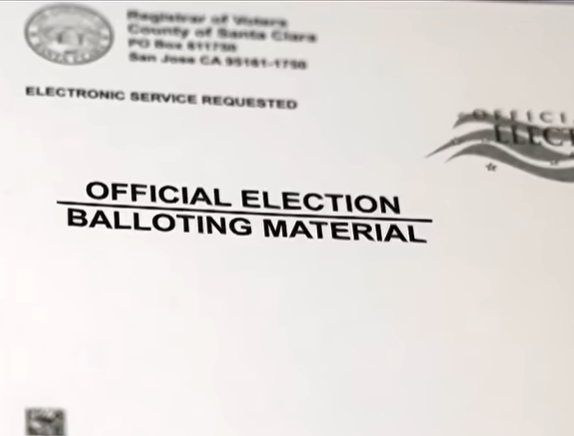
Right now, with the November 2026 midterm elections weeks away, a high-stakes legal battle is unfolding over how Americans can vote by mail. Mail-in ballots are paper ballots that voters fill out at home and send back through the Postal Service. President Trump has long criticized this method, claiming it is prone to fraud. In March 2026 he signed an executive order directing the U.S. Postal Service to impose new restrictions. Democratic-led states, voting-rights groups, and election officials say the changes would cause chaos and prevent many eligible voters from receiving or returning their paper ballots. Federal judges have repeatedly stepped in to block the rules—at least for this election.
Here is a straightforward explanation of how we got here, what the new rules would do, and what the courts have decided so far.
How This Started
On March 31, 2026, President Trump signed Executive Order 14399. It instructed two things:
- The Department of Homeland Security, working with the Social Security Administration, should create lists of confirmed U.S. citizens eligible to vote in each state.
- The Postal Service should only deliver mail-in or absentee ballots to people on approved “participation lists” submitted by the states. Ballots would also have to use special envelopes with unique barcodes designed and approved by the Postal Service.
The administration says this is needed to stop non-citizens from voting and to add security and tracking to mail ballots. Critics, including many state election officials, argue the president does not have the constitutional power to dictate how states run elections. The Constitution generally leaves election administration to the states and Congress. They also say there is no evidence of widespread mail-ballot fraud that would justify such a last-minute overhaul.
In late August the Postal Service published a final rule to put the order into practice. Under the rule, states would have to upload voter lists to a new federal online portal (which officials say is not fully ready) and switch to the new barcode envelopes. The Postal Service could refuse to deliver ballots that do not meet the standards.
Why Election Officials Say It Cannot Work This Year
Mail voting is already underway. North Carolina began sending ballots in early September. Other states follow in the coming days. Election officials from both parties have told courts that complying now is “likely impossible.” Reasons include:
- There is not enough time to reprint millions of envelopes with the required barcodes.
- The federal portal for uploading voter lists is unfinished.
- Training thousands of local clerks on a brand-new system weeks before Election Day is unrealistic.
- A Postal Service whistleblower alleged the new computer systems are untested and could fail, potentially causing “catastrophic problems.”
Officials in states that rely heavily on mail voting (Colorado, Washington, Oregon, California, and others) say even small glitches would mean thousands of valid paper ballots never reach voters or get rejected on the way back.
The Judges Step In
The main courtroom fight is happening in Boston before U.S. District Judge Indira Talwani. A coalition of more than 20 Democratic-led states, led by California, plus groups such as the League of Women Voters, sued to stop the rule.
Talwani has issued multiple orders blocking the Postal Service from enforcing the new requirements for the 2026 election:
- In late August she issued a temporary 14-day freeze.
- After a hearing on September 3 she expressed concern that rushing the changes could produce “major disenfranchisement.”
- On September 4 she issued a longer-lasting preliminary injunction. She wrote that the Postal Service lacks legal authority to set election rules, that compliance is practically impossible this close to Election Day, and that the risk of eligible voters losing their paper ballots is “practically inevitable.” She also noted the government had presented no evidence of widespread mail-voting fraud to justify the haste.
A separate nationwide block came earlier from Judge Emmet Sullivan in Washington, D.C., who found the plan violated an existing court settlement from 2020 about how the Postal Service handles election mail.
Where Things Stand Today
The Trump administration and a group of Republican-led states immediately appealed Talwani’s September 4 order to the U.S. Court of Appeals for the First Circuit. They also asked the Supreme Court to step in and let the rule take effect right away. The First Circuit has so far declined to lift the block. The Supreme Court could still decide the issue in the coming days.
Meanwhile, some states are mailing ballots using their existing systems. Election officials in places such as Wisconsin and Utah have discussed work-arounds, including extra drop-off locations, in case the Postal Service is later allowed to refuse certain ballots.
What This Means for Regular Voters
If the current court blocks stay in place, most voters who requested a mail-in paper ballot should receive it and be able to return it the usual way. If the Supreme Court or a higher court lifts the injunction, states that cannot instantly meet the new envelope and list requirements could see delays or rejected ballots.
The larger legal question—whether the federal government can use the Postal Service this way to control who gets a mail ballot—will likely continue after November. For now the courts have treated the 2026 election as too close to risk a last-minute experiment that officials say they cannot carry out.
The core disagreement is simple: one side sees the new rules as a necessary safeguard for election integrity; the other sees them as an unconstitutional power grab that would make it harder for people to use the paper ballots they already have the right to request by mail. Judges have so far sided with the second view for this election cycle, citing both the Constitution and the practical impossibility of changing the system this late.