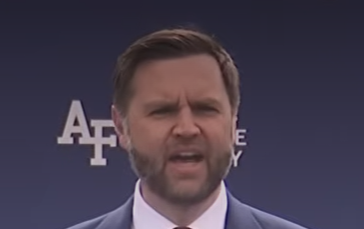
Kansas City, Monday. The vice president stood up and said the quiet part with a number attached. About 870,000 borrowers tied to the pandemic loan machine are suspended from future Small Business Administration credit. No more 7(a). No more disaster money. No more 8(a) contracting off the federal teat. “If you screwed the American taxpayer,” he said, “you’re cut off. No more.”
That is the vow. It is not a jury verdict. It is an administrative lockout on a list the agency built state by state, and it is the largest such list they have ever dropped in one day.
What He Actually Cut Off
The programs are the Paycheck Protection Program and the COVID Economic Injury Disaster Loan — the two firehoses Congress opened in 2020 so shops could make payroll and keep the lights on. Together they approved on the order of $1.2 trillion. The inspector general’s working estimate of the fraudulent slice has been at least $200 billion. That is not a rounding error. That is a second stimulus dressed as a rounding error.
This week’s 870,000 names are tied to about $39 billion in suspected bad paper across 45 states, six territories, and the District. Add the earlier state dumps — more than 111,000 in California at $8.6 billion, thousands more in Minnesota — and the administrator put the nationwide flagged pile near $49 billion. Florida led this batch with more than 118,000 suspensions.
They are not all in handcuffs. Officials were clear: this wave is not a mass conviction. It is a ban from the next application. Review exists if you think they tagged the wrong file. The vice president said he does not expect a line at that window. Demand letters are going out. Twenty-two billion already went to Treasury this summer for collection from a prior referral of 562,000 loans that had been flagged and then left on the shelf.
The criminal track is a different, much smaller pile. The summer surge — June through Labor Day — produced actions against more than 160 defendants and about $245 million in intended loss. Nearly 80 new felony cases. Dozens of pleas. Dozens of sentences. That is the part that looks like a courtroom. The 870,000 is the part that looks like a do-not-serve list at the bank that prints the next disaster loan.
.@AGToddBlanche says more than 80 individuals have been charged so far in relation to over $245 million in pandemic-era loan fraud. pic.twitter.com/jCih6pwcjW
— Rapid Response 47 (@RapidResponse47) September 14, 2026
.@VP: “Did the Biden Administration know this stuff was going on? Of course they did! It was an open secret.” https://t.co/4K3nmuCYzl pic.twitter.com/kefYONPl28
— Rapid Response 47 (@RapidResponse47) September 14, 2026
How the Math Gets Bigger
If you want to know who else is in jeopardy, start with the $200 billion estimate and work backward.
This week’s cut is $39 billion. The running flagged total they cited is about $49 billion. Treasury already has $22 billion in collection on older referrals. Those piles overlap — a loan can be suspended and referred — so you cannot stack them like bricks. Even being conservative, more than half of the estimated fraud stock has not been turned into a public suspension list yet.
Use this week’s average as a crude ruler. Thirty-nine billion across 870,000 files is roughly $45,000 a borrower. Apply that ruler to the unused remainder of a $200 billion estimate and you are looking at millions of additional loan records, not another neat 870,000 people. Some borrowers filed multiple applications. Some “businesses” never existed. Some files are identity theft with a victim’s name on the door. The unique-human count will be lower than the loan count and still enormous.
The first-day task-force memo talked about more than a million suspicious PPP loans alone. California and Minnesota were already processed. This week swept most of the rest of the map. The leftover jeopardy is not a mystery state. It is the rest of the $200 billion, the unemployment piles in the states, the student-aid ghost files the same task force has started screening, and whoever still thinks a second application will clear because the first one was “just PPP.”
What “Any Federal Loan” Does and Does Not Mean
The line from the podium was federal loans. The mechanism they announced is SBA: small-business credit, disaster credit, set-aside contracting. That is plenty. It is not automatically a ban on a mortgage, a car note, or a student’s aid form unless they write that order next. They have already built a separate screen on the student-aid application. The direction of travel is obvious. The statute they used this week is the one in front of them.
They also said the last crowd knew. Open secret. Governors and senators in 2022 and 2023 talking about a program “rife with fraud.” Loans flagged and not sent to Treasury. A de facto shrug. Whether that becomes a case against officials is a task-force sentence, not a suspension list. The 870,000 do not need that subplot. They already have a letter.
Will It Stick
A suspension without a conviction will get sued. Some of those suits will have a point — a bookkeeper who filed a sloppy application is not a man with forty shell companies and a checking account named after a slogan. The review window is how you keep the first group from becoming a martyr class for the second. If the agency treats every flagged EIN as a convicted thief, a judge will start carving exceptions and the whole list looks political. If they keep the standard tight — no payroll, no business, stolen identity, same address on forty apps — the list survives and the next applicant reads it.
The people still in jeopardy are not a secret army. They are the rest of the suspected $200 billion, the files already at Treasury that have not been matched to a ban, and anyone who used the same playbook on a different program and thinks the Kansas City speech was only about 2020. It was not. It was a rule: you loot the emergency window, you do not get the next window. Eight hundred seventy thousand is the first printed page. The stack is thicker.