Apple season is in full swing. Orchards are loaded, farm stands are running bargains on bushels, and backyard trees are dropping more fruit than anyone can eat fresh.
That makes this the perfect time to put up a year’s worth of homemade applesauce. It is one of the easiest foods to can at home, it needs no special ingredients, and it is a great first project if you have never canned before.
The steps below follow the tested procedure from the National Center for Home Food Preservation, the go-to source for safe home canning. Follow them exactly. Tested times and methods are what keep home-canned food safe.
How many apples you need
Plan on about 21 pounds of apples for a full canner load of 7 quarts, or about 13½ pounds for 9 pints, according to the National Center.
Cooking times will vary by variety, since some apples break down faster than others.
Step 1: Prepare the apples
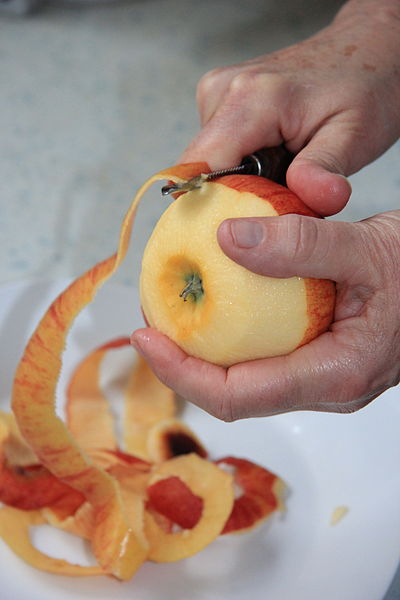
Wash, peel and core the apples. As you slice them, you can drop the slices into water with ascorbic acid (vitamin C) to keep them from browning. This step is optional but helps with color.
Drain the slices and put them in a large 8- to 10-quart pot. Add ½ cup of water.
Step 2: Cook until tender
Heat the apples quickly, stirring now and then so they do not scorch. Cook until tender, which takes anywhere from 5 to 20 minutes depending on the variety.
Step 3: Mash or strain
For smooth sauce, press the cooked apples through a sieve or food mill. For chunky sauce, skip this step and leave the apples as they are.
If you want it sweeter, you may add up to 1/8 cup of sugar per quart. Taste and adjust.
Bring the sauce back to a boil before filling jars.
Step 4: Fill the jars
Ladle the boiling applesauce into hot jars, leaving ½ inch of headspace, meaning the space between the top of the food and the rim of the jar. Wipe the rims clean and put on your lids and bands according to the manufacturer’s directions.
Step 5: Process in a boiling water canner
Set the rack in the bottom of your canner and have the water hot, about 180°F for hot-packed food like this. Using a jar lifter, set the jars in one at a time, keeping them upright.
Add boiling water if needed so the water is at least 1 inch above the jar tops. Put on the lid and heat until the water is at a full, rolling boil. Only then do you start the timer. Keep a gentle but steady boil the whole time. If the boil stops, bring it back and start timing over from the beginning.
Processing times from the National Center depend on jar size and your altitude:
| Jar size | 0–1,000 ft | 1,001–3,000 ft | 3,001–6,000 ft | Above 6,000 ft |
|---|---|---|---|---|
| Pints | 15 min | 20 min | 20 min | 25 min |
| Quarts | 20 min | 25 min | 30 min | 35 min |
Check your altitude before you start; higher elevations need longer processing.
The National Center also lists tested pressure canner times for applesauce: 8 minutes for pints and 10 minutes for quarts. The pressure setting depends on your gauge type and elevation, so check its chart before using that method.
Step 6: Cool and check
When time is up, turn off the heat and wait 5 minutes. Then lift the jars straight out and set them on a towel or cooling rack, at least an inch apart.
Leave them alone for 12 to 24 hours. Do not tighten the bands or press on the lids while they cool.
Once cool, check that each lid has sealed. Remove the bands, wash off any sticky residue, and label each jar with the contents and date.
What if a jar did not seal?
It happens. According to the National Center, you can put an unsealed jar in the refrigerator and use it within a week, or freeze it for up to a year. If you freeze it, adjust the headspace to 1 inch first.
Storing your applesauce
Keep your jars in a clean, cool, dark, dry place. The National Center says 50 to 70°F is ideal, and to avoid spots above 95°F, near a furnace or stove, in direct sunlight, or anywhere damp.
For best quality, can only what you will use within a year.
Before opening any jar, look it over. Signs of spoilage include loose or bulging lids, liquid spurting when you open it, mold, an off color or an unusual smell. If a jar looks or smells wrong, do not taste it. Throw it out safely.
Why it is worth the effort
A pantry shelf full of homemade applesauce is a quiet kind of security. It is a side dish, a snack for the kids, a baking ingredient and a healthy dessert, all in one jar, and you know exactly what went into it.
Sources
- Applesauce (National Center for Home Food Preservation)
- Using Boiling Water Canners (National Center for Home Food Preservation)
- Storing Home Canned Foods (National Center for Home Food Preservation)