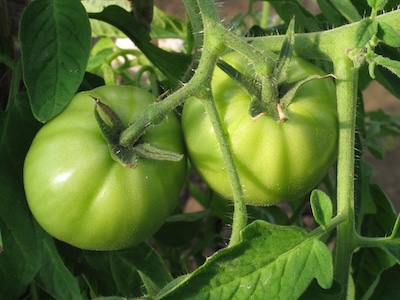
The first frost is coming, and your tomato vines are still loaded with hard green fruit. Don’t let them go to waste.
Those green tomatoes can still become sliced tomatoes in November, fried green tomatoes in January or a shelf of homemade relish. Here are four safe ways to save them, based on guidance from the National Center for Home Food Preservation (NCHFP) and university extension experts.
Step one: pick the right ones before frost
Not every green tomato will ripen off the vine. Colorado State University Extension says to look for “mature green” tomatoes. They are shiny green and have a white to light green star shape on the blossom end.
Tomatoes that look dull or matte green are less mature and won’t ripen well indoors. Those are your best candidates for frying, pickling or relish.
Tomatoes that already show a light pink blush, called the “breaker stage,” ripen indoors best of all.
Option 1: Ripen them indoors
This is the easiest way to enjoy homegrown tomatoes well after frost. Colorado State University Extension recommends:
- Remove the stems and wash the fruit.
- Let them air dry on clean paper towels, away from direct sun.
- Pack them one or two layers deep in a covered box lined with newspaper or cardboard.
- Keep the box in a dark, cool spot.
Temperature controls the speed. At about 70°F, tomatoes ripen in a couple of weeks. At about 55°F, they take about a month. Below 50°F, they tend to taste bland.
Humidity matters too. Too much and they mold. Too little and they shrivel. To speed things up, add a banana or a red tomato to the box, and check every couple of days. Pull out any that start to rot.
Option 2: Freeze them for frying
Love fried green tomatoes? You can have them all winter. The NCHFP says to:
- Wash, core and slice green tomatoes about ¼-inch thick.
- Pack the slices into freezer containers with freezer wrap between slices.
- Leave ½-inch of headspace, seal and freeze.
When you’re ready to cook, pull out the slices you need. The wrap between layers helps keep them from sticking together.
Option 3: Can them like ripe tomatoes
Green tomatoes can be canned. The NCHFP says unripe tomatoes “may be canned like ripe tomatoes, following the same directions including acidification.”
Do not skip the acid. Green tomatoes may taste tart, but the NCHFP warns that you can’t know whether your variety and growing conditions leave them above pH 4.6, the line that makes added acid necessary for safe canning.
The NCHFP’s acidification amounts are:
- Per pint: 1 tablespoon bottled lemon juice or ¼ teaspoon citric acid
- Per quart: 2 tablespoons bottled lemon juice or ½ teaspoon citric acid
You can add the acid right to the jars before filling. Vinegar (5% acidity) also works, at 2 tablespoons per pint or 4 per quart, but the NCHFP notes it may change the flavor. If you like, add a little sugar to balance the taste, but never leave the acid out.
Follow a tested NCHFP or USDA recipe for processing times based on your jar size, canner type and altitude.
Option 4: Pickles and relish
This is where green tomatoes really shine. The NCHFP offers tested recipes for:
- Kosher-style dill green tomato pickles
- Pickled sweet green tomatoes
- Spiced green tomatoes
- Pickled green tomato relish
- Piccalilli
- Fall garden relish and rummage relish
- Green tomato pie filling
Use the recipes exactly as written. Don’t cut the vinegar, swap ingredients or guess at processing times. Tested recipes are tested for a reason.
The bottom line
A frost doesn’t have to end your tomato season. With a cardboard box, a few freezer containers or a canner, you can turn the last green fruit on the vine into fresh tomatoes for weeks, fried green tomatoes for months and relish to enjoy all year. Pick before the frost, follow tested guidance and fill your pantry. Nothing goes to waste, and every jar is one less thing to buy at the store.
Sources
- NCHFP: Preserving those unripe tomatoes
- NCHFP: Green tomatoes, not just for frying
- NCHFP: Tomato acidification directions
- Colorado State University Extension: Ripening tomatoes indoors