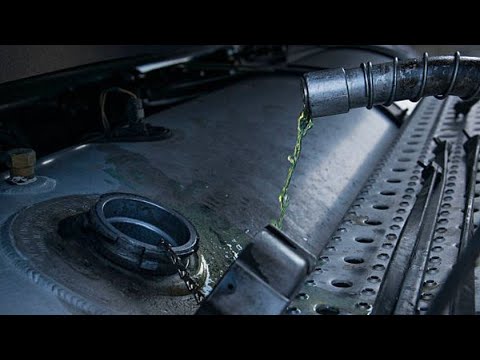
President Trump made a deal on Friday that few people in Washington saw coming. After a phone call with Russian President Vladimir Putin, he announced that Russia will ship diesel fuel to the American and global markets, starting right away.
The goal is simple: get diesel prices down for the people who keep the country fed and moving. The foreign policy crowd hates it. Here’s what we know.
What Trump announced
In a Truth Social post on Friday afternoon, Trump said Russia would immediately supply more than 300,000 tons of diesel. According to the post, as reported by Just the News and the Associated Press, that would be followed by 500,000 tons in November, 1 million tons after that, and 3 million tons later on.
Trump was blunt about why. He said the priority was lower prices for Americans, “especially our Great Farmers, Ranchers, and Truckers.” He also predicted diesel prices “will be coming down in record numbers, and fast.”
To make the deal work, the Treasury Department issued a temporary license that delays U.S. sanctions on Russian diesel loaded onto tankers as of Friday, until April 2027. The AP reported that it is the first easing of diesel sanctions longer than the usual 30 days since Russia invaded Ukraine in February 2022.
The White House did not say who will pay for the fuel or exactly when it will arrive, according to the AP.
Why diesel is a crisis
Anyone who runs a tractor, a delivery truck or a generator already knows the numbers. The national average for diesel hit a record $6.52 a gallon on Sept. 22, according to AAA figures cited by the AP. It was still $6.28 at the time of Friday’s announcement. A year earlier, diesel averaged $3.71, Just the News reported.
The causes are mostly overseas. The war with Iran has knocked Persian Gulf refining offline. Ukraine has been hitting Russian refineries so often that Russia banned its own diesel exports in July. The International Energy Agency says Russian refinery output fell about 30%, per the AP.
At home, U.S. distillate stocks are at their lowest for this time of year in Energy Information Administration records going back to 1982, according to the Institute for Energy Research. Just the News reported that 16 trucking, delivery and transportation companies filed for bankruptcy in a single month.
The administration has already tried other fixes. It let truckers run tax-free red diesel on highways and pushed the G7 to release emergency oil stocks. Trump has also floated a ban on diesel exports, an idea that experts warned would give only short-term relief.
The backlash
The reaction from Ukraine and Democrats was swift. The Washington Examiner reported that Ukrainian President Volodymyr Zelensky criticized the deal more directly than he has criticized Trump before. The AP reported that he called the decision weak and said it would let Russia keep fighting longer.
Senate Democratic leaders, including Chuck Schumer, called it a betrayal of Ukraine and European allies, according to the AP. Sen. Richard Blumenthal said it makes the U.S. “complicit in Putin’s war against Ukraine.”
There are fair questions too. Trump signed a sweeping Russia sanctions law last month, and the AP noted that the diesel deal raises doubts about whether new sanctions will follow. Analysts quoted by the AP disagreed on how much prices will fall. One said Russian diesel may simply displace fuel going to other buyers, leaving prices about where they are.
The bottom line
A president’s first job is to look after his own people, and right now his own people are paying more than $6 a gallon to plant crops, haul freight and heat their homes. Trump picked the American farmer and trucker over the comfort of diplomats in Brussels and Kyiv. That is exactly what “America First” was supposed to mean.
Critics who call this a gift to Putin should explain what they would do instead. Their own party spent years shutting down American pipelines, discouraging new refineries and treating fossil fuels like a sin. Washington’s real failure is that a country this rich in oil has to go shopping for diesel at all.
The deal is a short-term patch, and it should be judged by one test: does the price at the pump come down? If it does, the people who were losing their trucks and farms will remember who acted. The long-term fix is still the same one conservatives have pushed for years: drill, refine and build here at home so America never has to ask anyone for fuel again.