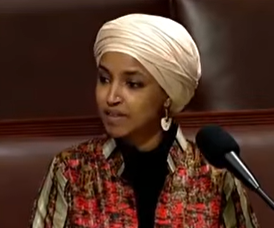
Ilhan Omar’s public birth year was October 4, 1981 for the whole time she sat in the Minnesota House and for the first months she sat in Congress. In May 2019 her congressional staff told the state’s legislative reference library the year was wrong and asked that it be changed to 1982. The library changed it. Wikipedia and the Biographical Directory of Congress were contacted to do the same. They now list 1982. The switch is one year. Under the citizenship rule she has always described, one year is the difference between deriving citizenship automatically as a minor and having to naturalize on her own as an adult. That is why the date is an issue. That is why a change requested after she was already a member of Congress matters to the investigation that put agents in her house on Monday.
What the records showed and what the staff asked
The Minnesota Legislative Reference Library carried October 4, 1981. So did Wikipedia. So did the BBC and other outlets. The year sat there through her state legislative service and into the spring of 2019. On May 17, 2019, the library’s director wrote, staff were informed by Representative Omar’s congressional staff that the birth year was incorrect and were asked to change it to 1982. The same staff, the director noted, were working with Wikipedia and the Biographical Directory to correct those sites as well. The library did not verify a birth record. It took the request from the member’s office and updated the file. The original 1981 entry had itself come from the public sources that were now being revised. The revision is now the official public biography. She is listed as born in Mogadishu on October 4, 1982.
The request followed a video from a political opponent that questioned her age. She has never produced a birth certificate in public. She has said the papers were lost in the war. The only contemporary public record of the year, until her own office intervened, was the one that said 1981.
NEW from the @nypost: Ilhan Omar’s congressional staff got her official birth year changed from 1981 to 1982 in May 2019, months after she took office.
Why does one year matter? She says she became a citizen through her father at 17, in 2000.
Born in 1981, she’d have been 18 that whole year and one year is the difference between her citizenship story working and not.
“For derivative citizenship, two things have to be true — one, her father had to naturalize; and two, she still had to be a minor.”
That one year matters a lot.
— Andrew Kolvet (@AndrewKolvet) October 13, 2026
Why the year decides the citizenship
Omar has described her citizenship the same way for years. In a 2018 interview she said she became a citizen before she turned 18. Her father became a citizen, and she got hers through that process. The father, Nur Omar Mohamed, naturalized in 2000. The family had arrived as refugees in 1995. The mechanism she named is derivative citizenship: a child under 18 derives citizenship automatically when a parent naturalizes, provided the other statutory conditions are met. The child must still be a minor on the day the parent takes the oath.
A birth date of October 4, 1981, makes her 18 or 19 in 2000, depending on the exact day her father naturalized. She is not a minor. Derivative citizenship does not attach. She would have had to file her own naturalization application as an adult, meet the residency and other requirements on her own, and take the oath in her own name. A birth date of October 4, 1982, makes her 17 or 18 in 2000. If the father’s naturalization fell before her eighteenth birthday, the derivative claim holds. The one-year difference is the difference between the story she has told and a story in which she was already an adult when the citizenship came through.
The immigration file from 1995 and 2000 is the file that matters. Public biographical directories are not the file. Changing the directories in 2019 does not amend the forms her father signed when she was a child. It amends the public account of how old she was when those forms were acted on. If the original paperwork listed one year and the later public claim listed another, or if the age stated was material to the grant of derivative citizenship, the discrepancy is evidence. Material misrepresentation in the procurement of citizenship is the ground on which denaturalization proceedings rest. A criminal fraud investigation looks at the same paper.
FUN FACTS: The paper trail for Ilhan Omar’s claimed derivative citizenship in 2000 is missing key pieces, and the age math doesn’t add up.
Omar has said she became a U.S. citizen in 2000 before turning 18 through her father: “I became a citizen actually before I turned 18. My father became a citizen and so I got my citizenship through that process.”
USCIS conducted a diligent search and found no record of naturalization for her father, Nur Omar Mohamed (or variants such as Nur Said Elmi Mohamed). A Certificate of Non-Existence was issued. Her story of automatic citizenship depends on him having naturalized while she was still a minor. That foundational record has not been located.
Minnesota Legislative Reference Library records originally listed her date of birth as October 4, 1981. With that date she turned 18 in 1999, so by 2000 she was already an adult. Derivative citizenship rules then in effect generally required the child to be under 18 when the parent naturalized. She would have been too old.
In May 2019, after the age discrepancy drew attention, Omar’s congressional staff asked the library to change the birth year from 1981 to 1982. The library changed it without requiring a birth certificate or naturalization record. Staff noted the original 1981 date came from widely available sources. Official records now list October 4, 1982.
— I Meme Therefore I Am 🇺🇸 (@ImMeme0) October 13, 2026
What the change does and does not do
The change updated the reference books. It did not produce a birth certificate. It did not alter the 2000 naturalization record. It did not answer the question the opponent’s video raised; it answered it by moving the year after the fact, at the request of the office that had just been elected. The library’s own note records that it acted on the staff’s word. That is a fact about how public biographies are maintained. It is also a fact an investigator can put next to the original forms.
The search of her Washington house on October 12 was executed under a judicially authorized warrant as part of an ongoing federal criminal investigation. People familiar with the matter have said the inquiry concerns the immigration paperwork the father completed. Age is one of the fields on that paperwork. A member of Congress can have her office correct a library entry. She cannot have the office correct the age that was used, or not used, when the citizenship was granted. If the 1981 date was the one in the file, the 1982 date in the directory is a later assertion. If the 1982 date was always the true one, the years of public records that said otherwise, and the decision to correct them only after she was sworn in and after the question was raised, still require an explanation that has not been given in a document stronger than a staff email. The investigation is looking for the document. The year is why they are looking.